How Nickel Plated Copper Bus Bars Reduce Power Loss in Distribution Systems
Aug 28, 2025
Modern power distribution systems cover urban grids and industrial parks. Power loss here directly affects energy efficiency and operating costs. Nickel plated copper bus bars are upgraded parts. They add a thin nickel layer on high-purity copper. Traditional unplated bus bars do not have this layer. Now industries want lower loss (like China's "14th Five-Year" energy efficiency goals). So this bus bar becomes a key choice. This article will explain how it cuts power loss. It will cover core advantages and application fields. It will also introduce reliable products from Xiamen APOLLO.
Low Surface Resistance Cuts Current Transmission Loss
1. Nickel Layer Lowers Contact Resistance
Nickel plated copper busbars have a smooth and dense nickel surface. When connected to switches or terminals, it fits tightly with other parts. This makes contact resistance much lower than unplated copper. So less power turns into heat when current flows.
2. Uniform Material Avoids Local Resistance Spikes
Nickel-plated bus bar uses uniform copper as its base. The nickel plating is also even. There are no weak spots with high resistance (like oxide spots on unplated copper). This keeps current transmission stable. It avoids sudden power loss from local resistance increases.
3. High Conductivity Maintains Low Loss
The copper base of this plated bus bar keeps excellent electrical conductivity. The nickel layer is thin enough. It won't block current. This combines copper's conductivity and nickel's wear resistance. So overall transmission loss stays as low as possible.
Nickel Coating Resists Oxidation to Prevent Loss Increase
1. Unplated copper bus bars form oxide layers on their surface over time. These layers raise resistance. They also increase power loss. Nickel plated copper flat bus bar's nickel layer blocks air from touching copper. It stops oxide from forming. This keeps resistance stable.
2. Distribution cabinets can be humid or dusty. In such places, copper easily corrodes. The nickel layer on nickel plated copper flat bus bar resists moisture and dust. It avoids resistance rises from corrosion. So it keeps low power loss for a long time, even in harsh environments.
3. During maintenance, unplated copper bus bars may get scratched. Scratches make oxidation faster. The nickel layer on plated bus bars is tough. It resists scratches. This reduces oxidation risks. So power loss won't get worse over time.
Stable Mechanical Connection Reduces Dynamic Power Loss
1. Nickel Layer Enhances Connection Tightness
Nickel-plated bus bar has a slightly textured nickel surface. It increases friction with connectors. So the connection won't loosen from vibration (like vibration from nearby transformers). Loose connections cause high resistance and power loss. This bus bar avoids that.
2. Wear Resistance Extends Connection Reliability
During installation or maintenance, the nickel layer on standard nickel plating flat busbar resists wear. Even if you take it apart and put it back together many times, the surface won't wear down. This keeps contact resistance low. It prevents power loss from bad connections.
3. Temperature Stability Keeps Resistance Steady
Distribution systems often have temperature changes. These can happen between day and night or across seasons. Standard nickel plating flat busbar combines nickel and copper. This combination has stable resistance in different temperatures. Unlike aluminum, its resistance won't change much. So power loss stays consistent in all conditions.
Wide Applications in Low-Loss Distribution Scenarios
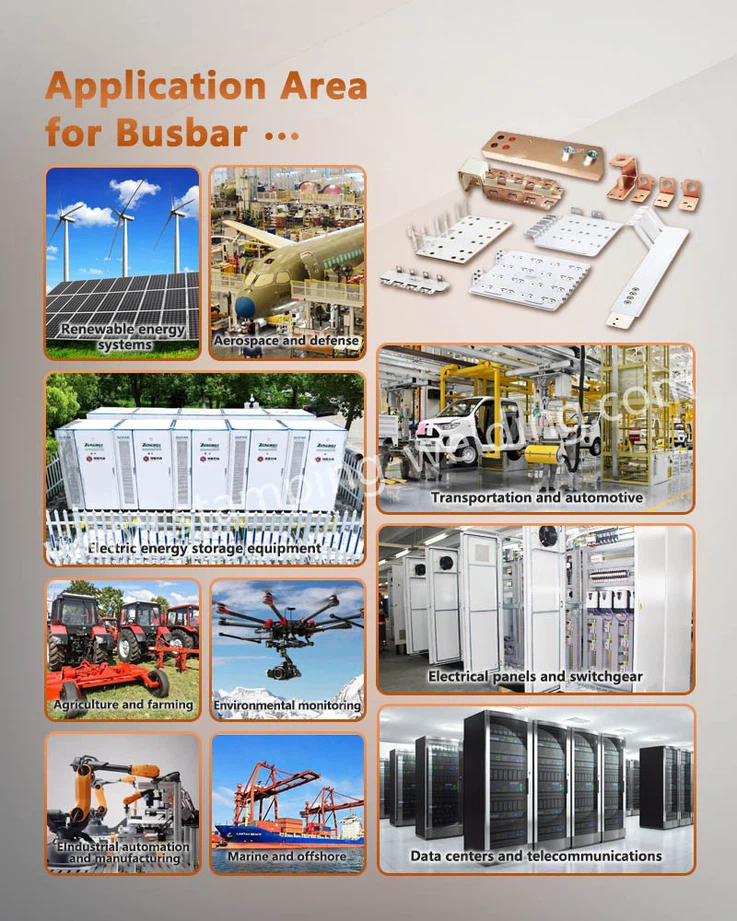
This plated bus bar is used in places where low power loss is very important. In urban power grids, it connects distribution transformers. It cuts loss when power is sent to residential areas. In data centers, it sends power to server racks. Low loss keeps servers running stably. It also lowers cooling costs. In industrial parks, it powers heavy machinery. Less loss means less energy waste and lower production costs. Even in new energy systems (like wind farm converters), standard nickel plating flat busbar ensures low loss when connecting to the grid. This improves the whole system's efficiency.
Xiamen APOLLO's Low-Loss Nickel Plated Copper Bus Bars
Xiamen APOLLO specializes in making nickel plated copper bus bars for high-efficiency distribution systems. Our products use 99.99% pure copper as the base. This ensures top-tier conductivity. We use an electroplating process. It adds a 3-15μm uniform nickel layer. This meets IEC 61439 standards for low resistance.
We offer global delivery by sea, land, and air. Whether you need small batches for data centers or large orders for urban grids, we ship on time. International orders usually take 7-15 days. All our busbars (including nickel plated copper flat bus bar and standard models) have ISO 9001 and CE certifications. These guarantee loss reduction performance and safety. We also offer custom services. Do you need nickel-plated bus bar with specific thickness, length, or pre-drilled holes? Our team designs solutions to fit your distribution system's needs. At Xiamen APOLLO, we help you cut power loss and improve energy efficiency with our high-quality plated copper bus bars.

contact us