In-depth analysis of pressure welding technology principles and industry applications
May 08, 2026
Pressure welding, as the core process in material forming technology, refers to a welding method that applies pressure (heated or not) to the weldment during the welding process, causing it to undergo plastic deformation or achieve metal bonding through atomic diffusion. Different from traditional fusion welding, pressure welding is a typical solid-phase welding, and its technical element lies in the synergistic effect of the heat source and pressure. This process does not require filling materials. By adjusting temperature, pressure and time, the surfaces to be welded are in close contact with each other in the solid state and recrystallization and diffusion occur, thereby achieving a strong bond between atoms.

Technical principles and classification
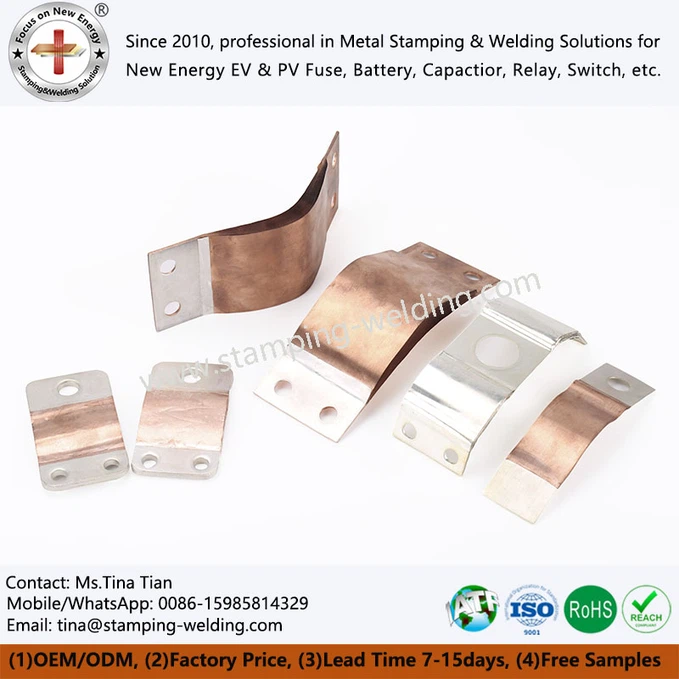
The mechanism of pressure welding is to use pressure to break the oxide film on the metal surface, exposing the clean metal matrix, and promoting atomic migration under thermal activation. According to different heating methods, it is mainly divided into two categories: one is hot pressure welding, such as forge welding and gas pressure welding, which heats the metal to a plastic state and then applies pressure; the other is cold pressure welding, such as Flexible Copper BusBar, which relies entirely on plastic deformation caused by huge pressure to achieve connection. Divided by operating methods, common pressure welding technologies include:
Resistance welding: uses resistance heat generated by current passing through the joint contact surface to heat, and completes welding with electrode pressure. Typical applications include spot welding and seam welding. Friction welding: Heat is generated through relative friction on the surface of the weldment, causing the end face to reach a thermoplastic state and then quickly forged. Ultrasonic welding: Uses high-frequency oscillation energy to locally heat and clean surfaces, suitable for joining sheets or wires. Diffusion welding: In a vacuum or protective atmosphere, by maintaining high temperature and high pressure for a long time, the atoms on the contact surface are mutually diffused and combined.
Process features and advantages
Pressure welding technology shows significant advantages in industrial manufacturing. First of all, since the welding process usually does not go through the melting stage, it avoids the burning loss of alloy elements and the intrusion of harmful elements. The quality of the joint is dense and it is not easy to produce pores or slag inclusions. Secondly, the heating temperature is relatively low and the time is short, resulting in a very small heat-affected zone, which can retain the mechanical properties of the base material to the greatest extent. In addition, this process does not require filler materials such as welding wire, welding rods or flux, which not only reduces Flexible BusBar Copper costs, but also improves the safety and health conditions of the working environment.
Material adaptability and application areas
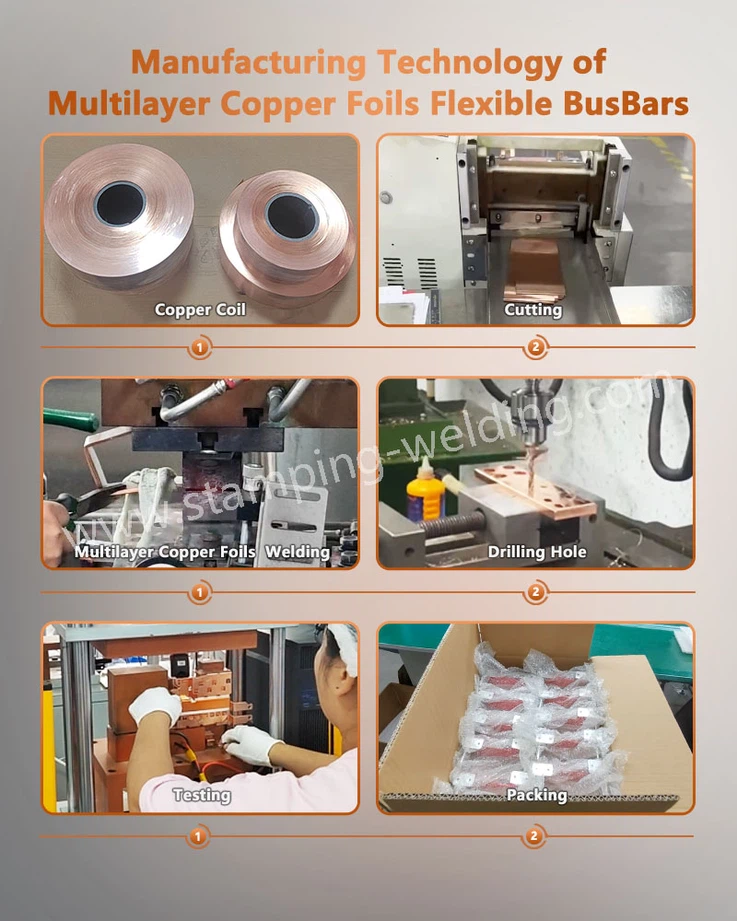
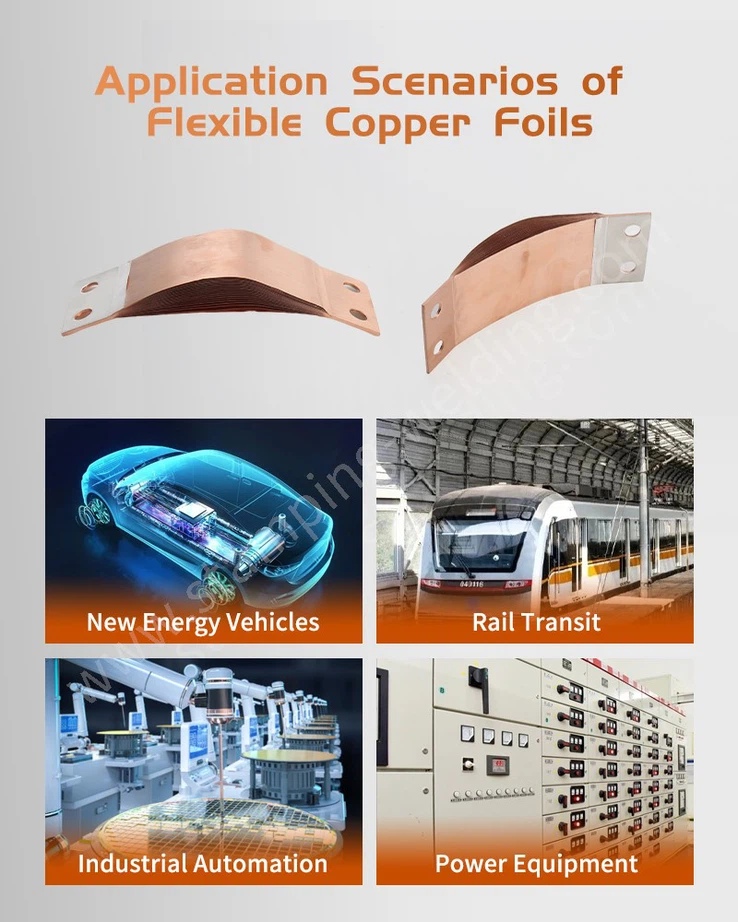
Pressure welding has a wide range of material adaptability and is especially good at solving the problem of joining dissimilar metals. It can successfully achieve the combination of carbon steel and stainless steel, aluminum and copper, and even metal and non-metal (such as aluminum and plastic), which is difficult to achieve with traditional fusion welding. At the application level, pressure welding is widely used in automobile parts, Multi Layers Copper Foil Flexible BusBar, aircraft manufacturing, the petrochemical industry, machinery manufacturing and other fields. For example, in the automotive industry, it is used to manufacture closed parts and wheel rims; in the aerospace field, it is used to manufacture high-precision components such as landing gear, engine valves, and titanium alloy components.
contact us
In response to the needs in the electrical connection field, our company can provide Press-Welded Connectors products of various specifications, which can meet the requirements of different equipment for efficient and stable power transmission, and can cooperate with the pressure welding process to achieve reliable connection solutions.