Industry In-Depth Analysis: Customized Aluminium Busbars Technology Iteration and Application Upgrades Reshape the New Landscape of High-Efficiency Power Distribution Components
Mar 14, 2026
Industry Background: Lightweighting Drives Demand
The current power distribution system is undergoing rapid iteration, and the new energy and high-end manufacturing industries are expanding rapidly. Lightweight, low-cost, and compact equipment have become core industry trends. Traditional copper bar face the dual disadvantages of cost and weight, while Customized Aluminium Busbars, with their advantages of aluminum material properties and customized processes, are rapidly becoming the mainstream conductive components for power distribution. Customized aluminum bars can break the limitations of standardized bar adaptation. By combining aluminum bars with aluminum busbars to complete the aluminum bar product system, they can accurately adapt to the power distribution needs of high current and special spaces. They have become the preferred solution in new energy, power, data center and other fields, driving the development of power distribution bars towards lightweight, customized, and cost-effectiveness.
Customization Dimension: Fully Customized Design
The core competitiveness of customized aluminum busbars lies in their comprehensive personalized design. Various parameters can be flexibly adjusted according to specific project and equipment needs, achieving seamless integration with existing systems. This is mainly divided into four core customization directions:
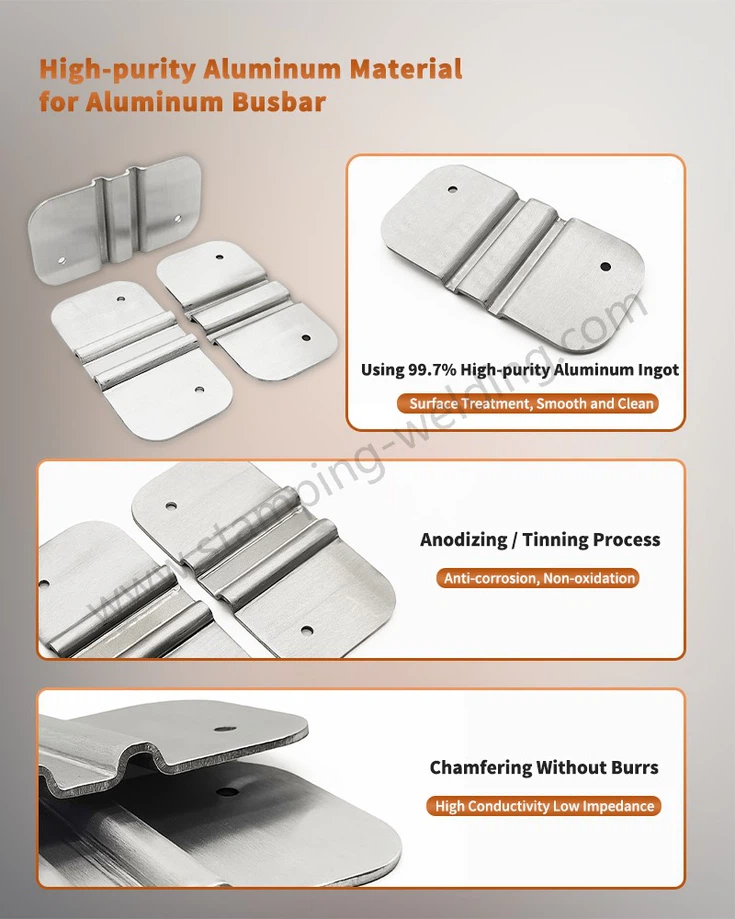
- Material Selection Customization: The industry mainstream choice is high-conductivity 1350 pure aluminum (EC-grade conductor), or 6101 aluminum bus bars and 6061 aluminum busbars, which balance conductivity and mechanical strength. For high-intensity special working conditions, 6101 T61 aluminum bus bars can also be selected, comprehensively adapting to the electrical and mechanical performance requirements of different scenarios.
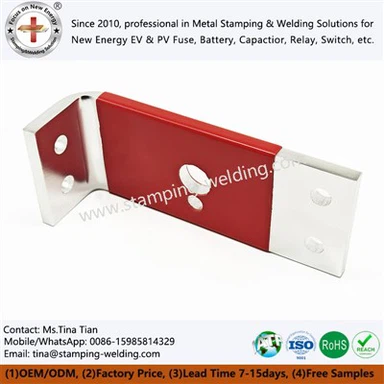
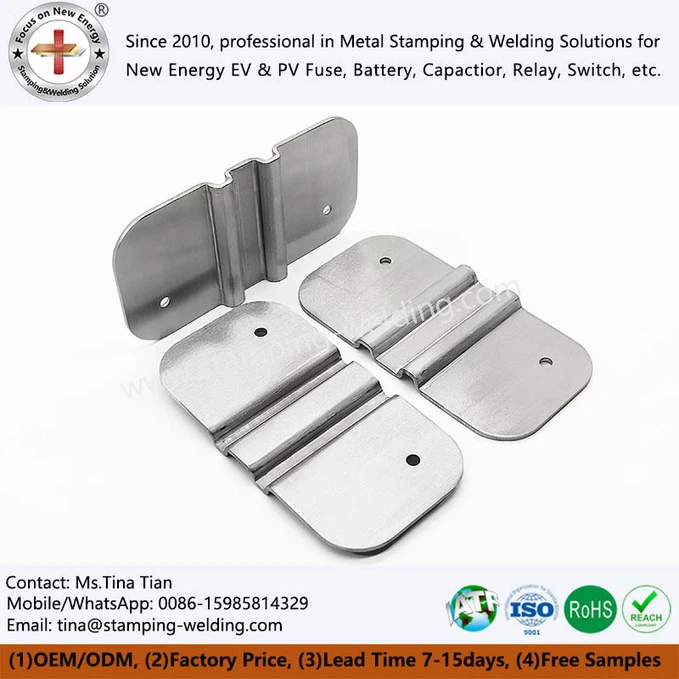
- Physical Shape Customization: Can be processed into standard flat busbars or tubular busbars with better heat dissipation efficiency. Special bends and irregular structures can also be customized for confined and complex equipment spaces, completely breaking the spatial layout limitations of standardized bars and adapting to non-standard installation environments.
- Size and Specification Customization: Wall thickness, cross-sectional diameter, and overall length can all be precisely customized according to actual needs. Pre-drilled holes with corresponding diameters at specified locations can be preset, achieving seamless integration with existing power distribution equipment and systems, eliminating on-site modification and secondary processing.
- Customized surface treatment: To delay the oxidation of aluminum surfaces and reduce conductive contact resistance, tin-plating is conventionally used to make tin-plated aluminum busbars. Nickel plating or a special insulating coating can also be selected according to the requirements of corrosion resistance, wear resistance and insulation, so as to comprehensively improve the product's durability and operational safety.
Application scenario: Multi-domain penetration
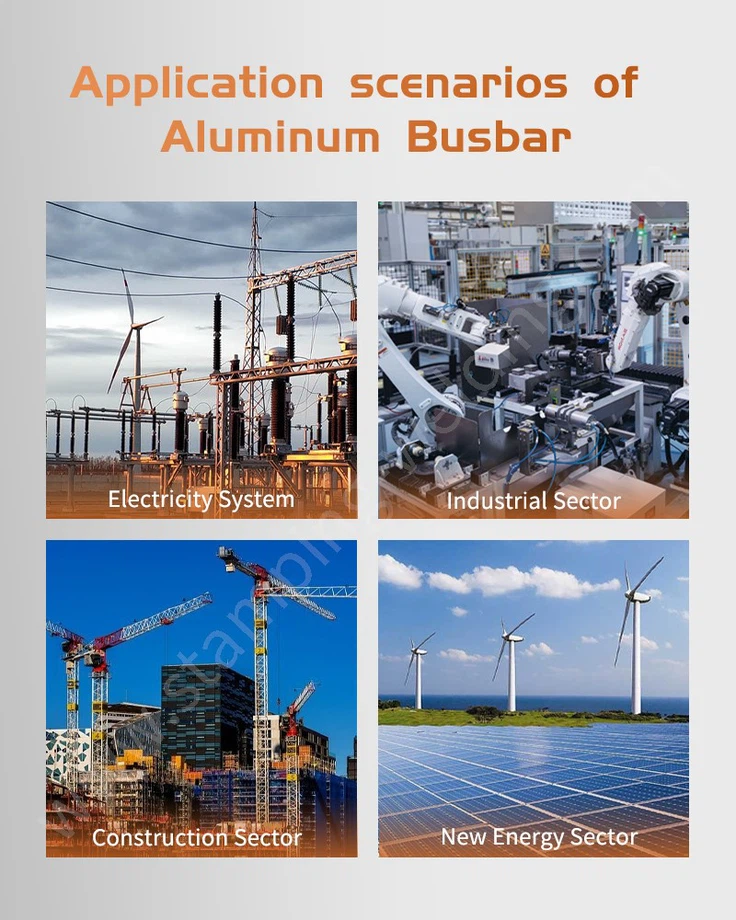
Leveraging its advantages in customization and cost-effectiveness, the application scenarios of Customized Aluminium Busbars continue to expand, covering multiple fields with stringent requirements for power distribution performance, equipment weight, and cost control. In the new energy field, they are widely used in electric vehicle charging systems, internal connections of battery packs, and photovoltaic inverter power distribution, adapting to the lightweight and safety requirements of vehicle-mounted high-voltage power distribution. In the power system field, they are mainly used in substations, high and low voltage switchgear, aluminum busbar trunking, and large industrial power distribution networks, undertaking the task of stable transmission of high current. In the high-end manufacturing field, they have become core components of data center power distribution and aerospace power supply systems, optimizing the utilization of internal space and improving overall power distribution efficiency with their compact and customized structure.
Industry Outlook: Unleashing Market Potential
With the advancement of the dual-carbon strategy, the accelerated upgrading of lightweight power equipment, and the increasing demand for non-standard power distribution in various industries, the market demand for customized aluminum busbars will steadily rise, and product processes and customization capabilities will continue to be optimized. In the future, relying on the upgrading of aluminum processing technology and the technological iteration of aluminum bar manufacturers within the industry, customized aluminum bars will further improve conductivity, mechanical strength, and adaptability, gradually replacing some traditional copper busbar applications and becoming the mainstream conductive component in medium and low voltage power distribution and new energy supporting fields, helping the industry achieve the dual goals of cost reduction, efficiency improvement, and lightweighting.
Contact Us
For details regarding the customization of parameters, material selection, and solution design for Customized Aluminium Busbars, please feel free to contact us.