Industry technology analysis: Structural advantages and application scenarios of Laminated Copper BusBar
May 05, 2026
Structural Characteristics and Electrical Performance Analysis
As an advanced power distribution connection solution, the core advantage of Laminated BusBar for Mersen lies in the design of multi-layer composite structure. This structure is precisely superimposed and connected by multiple layers of thin copper sheets or copper foils, providing a more stable circuit connection point than traditional single-sided or double-sided circuit boards. This design not only enhances the anti-interference capability but also makes it less susceptible to the negative impact of external environmental factors, thus ensuring the high reliability of the system.
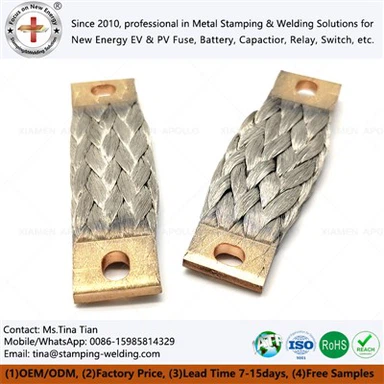
In terms of space utilization and integration, Laminated BusBar for Mersen demonstrates excellent wiring capabilities. It can arrange complex circuits in a very small space to achieve miniaturization and lightweight of electronic products, which is crucial for space-constrained devices. As a high-density connection component, Laminated Flexible BusBar effectively reduces the overall volume and weight, while meeting the complex needs of a variety of signal and power transmission.
Optimization of electrical performance is another significant feature of laminated busbars. Its internal structure and number of layers can be customized and adjusted according to the frequency of the transmitted signal, which makes it perform well in the field of high-frequency transmission. Especially in audio, video and communication applications that require low noise and high signal-to-noise ratio, copper foil layers can effectively absorb and shield electromagnetic interference. This characteristic makes Laminated BusBars ideal for ensuring signal integrity and purity.

Overview of key application areas
In the field of communication infrastructure, Laminated Bus Bar for Hign Frequency Welding Power IGBT is widely used due to its high density, high speed and low noise characteristics. Whether it is optical modules, optical communication transceivers or central processing units, these devices have extremely high requirements on the performance of circuit boards, and the laminated structure can meet these stringent standards. Automotive electronic systems often operate in harsh environments and therefore have strict standards for component reliability, density and noise immunity. Laminated Bus Bar for Telecom can meet these requirements and is widely used in key components such as automotive radar, navigation equipment, and car audio to ensure the stable operation of vehicles under complex working conditions.
Industrial control systems, such as PLC and CNC, also benefit from the high reliability and anti-interference capabilities of Laminated Bus Bar for Telecom. In industrial sites full of electromagnetic interference, Laminated Flexible BusBar can ensure the stability and safety of the control system and prevent system failures caused by external interference.

Technical differences between Laminated BusBars and double-layer copper busbars
From a structural point of view, the laminated copper bus is composed of multiple layers of thin copper sheets, and the layers are tightly bonded through a special process. This structure not only maintains high electrical conductivity but also gives the component excellent heat dissipation performance and mechanical strength. In contrast, double-layer copper busbars usually consist of two layers of thicker copper plates separated by insulating materials, and the structure is relatively simple.
In terms of performance comparison, the multi-layer design of the Laminated BusBars increases the overall conductive area, thus improving the conductive efficiency to a certain extent. At the same time, its multi-layer structure is conducive to rapid heat dissipation and effectively reduces the operating temperature. In contrast, although the double-layer copper bus relies on insulation design to reduce current loss, its heat dissipation performance may be slightly inferior.
The difference in application scenarios also reflects the different positioning of the two. Due to its excellent heat dissipation and mechanical properties, Laminated Bus Bar is often used in high-power electronic equipment, electric vehicles and other occasions that have high requirements for heat dissipation and stress tolerance. Double-layer copper busbars are more commonly used in low-voltage power distribution systems and household appliances.

Solutions for special working conditions
For high-frequency welding power sources, the low inductance characteristics of Laminated Bus Bar for High Current Inverter are particularly important. Laminated Bus Bar for High-Frequency Welding Power IGBT can effectively cope with the challenges brought by high-frequency switching and ensure the stability of the welding process. This design reduces energy losses and improves the overall efficiency of the system.
In the field of rail transportation, electric locomotives have strict standards for the reliability of the power distribution system. BusBar for Electric Locomotive not only needs to withstand vibration and shock, but also has excellent electrical conductivity and heat dissipation properties. The modular design of BusBar for Power Electronics makes it ideal for electric locomotive power distribution systems.

contact us
We are committed to providing top-notch power connection solutions to customers around the world. If you are looking for high-performance Laminated Copper BusBar products, please contact us and we will provide you with customized technical support and product selection services.