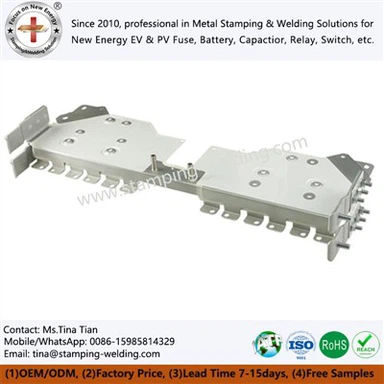
The secret to the temperature resistance of Nickel-Plated Bus Bar
May 04, 2026
In power transmission and energy storage systems, copper bars serve as core conductive components, and their surface protection processes directly determine the reliability of components in extreme environments. As the requirements for equipment stability in industrial applications increase, Nickel Plated Copper Busbars are gradually replacing the traditional tin-plating process and becoming the preferred solution in high-voltage and high-current scenarios due to their excellent comprehensive performance. Nickel plating of copper bars is not only for aesthetics, but also builds a layer of "nano-scale protective armor" on the surface of the copper substrate, so that it can still maintain excellent electrical conductivity and mechanical properties in high-temperature, high-corrosion and high-wear environments.

Key factors affecting the temperature resistance
The core parameters that affect the temperature resistance performance of Nickel Plated Bus Bars include the thickness of the nickel plating layer, the plating process and the quality of the copper substrate. Thicker coatings can delay the high-temperature oxidation process, while advanced electroless plating or electroplating processes can form a dense and uniform protective layer, significantly improving the heat-resistant boundary. At the same time, the high-purity copper bus base material helps maintain the overall mechanical and electrical stability during thermal cycles.

Industry application and testing standards
In order to ensure the reliability of Flat Bar Red Pure Copper Nickel Plating under actual working conditions, the industry usually implements strict testing procedures: Thermal shock test: Place the sample in a constant temperature oven at 250°C for 1 hour. After taking it out, cool it with water at room temperature and check whether the coating is peeling or peeling (in line with GB/T 5270 standard). High temperature and high humidity test: simulate harsh environments to verify the corrosion resistance of the coating at 85°C/85% humidity. Contact resistance test: Monitor the change rate of contact resistance during high temperature aging to ensure that it is stable at a low impedance level for a long time.

Comparison of temperature resistance
In high-temperature application scenarios, nickel plating has overwhelming advantages over traditional tin plating, mainly reflected in physical stability and chemical inertness. Resistance to high temperature creep and wear: The nickel plating layer has high hardness and strong wear resistance. In environments with high temperatures and mechanical vibrations (such as new energy vehicle motors), the nickel plating layer can effectively reduce fretting wear on the contact surface, while the softer tin plating layer is prone to wear and tear, leading to an increase in contact resistance.
Eliminate the risk of "tin whiskers": The tin plating layer is prone to growing "tin whiskers" in high temperature and high humidity environments, which can easily cause short circuit failures. The Nickel Plated Copper Flat Bus Bar has no tin whisker growth problem at all, ensuring electrical safety for long-term operation. High-temperature soldering stability: Although tin plating is easy to solder, it is easy to recrystallize or melt during the high-temperature reflow soldering process. The nickel plating layer has good wettability during high-temperature welding and can withstand higher thermal shock, reducing the risk of false welding.

contact us
Our company focuses on the customized production of high-reliability Nickel-Plated Bus Bar, using fully automatic nickel plating lines and precision inspection processes. If you need to know the technical parameters of different thicknesses, widths and mounting hole configurations, please contact us to obtain targeted solutions.