


Injection molded insulated busbars: innovative application of new energy hardware materials
Feb 14, 2025
Technical characteristics of injection molded insulated busbars
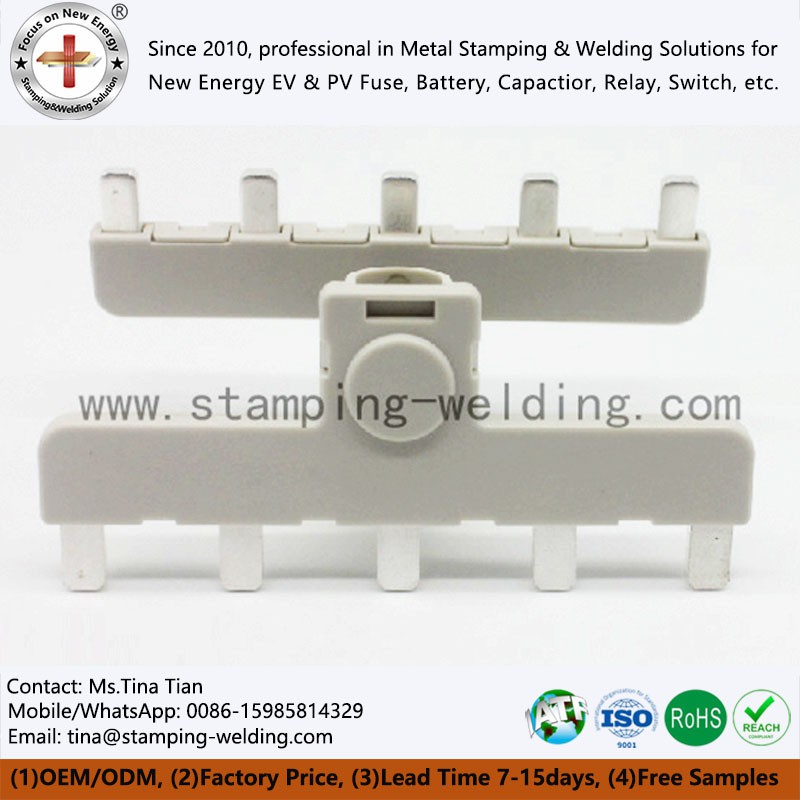
Pole 4 Phase Pin Type Insulated Busbar uses a high temperature and high pressure injection molding process to closely combine the conductive busbar with insulating materials to form an integrated structure. This process not only improves the electrical insulation performance of the busbar, but also enhances its mechanical strength and weather resistance.
Material selection
PA66 Plastic Insulation Busbar conductors usually use high-conductivity T2 copper or aluminum alloy, and the insulation materials use high-performance engineering plastics such as PPS+GF30, PA66, and PA12. These materials not only have excellent electrical insulation (up to 20kV/mm), but also meet the UL 94-V0 flame retardant rating.
Process advantages
PP Plastic Insulation Busbar realizes the seamless combination of busbar and insulation material, effectively preventing foreign matter intrusion and liquid leakage. In addition, the integrated design simplifies the assembly process and reduces the complexity and errors of manual assembly.
Customized design
The Pole 4 Phase Pin Type Insulated Busbar supports customization of complex shapes and sizes to meet the special needs of different application scenarios.

Application advantages of injection molded insulated busbars
High sealing
Through the injection molding process, the busbar is closely combined with the insulating material to form a highly sealed structure, which is suitable for scenarios where liquid or gas needs to be isolated.
Strong mechanical properties
PP Plastic Insulation Busbar has good wear resistance, pressure resistance and corrosion resistance, and has a long service life.
Excellent electrical performance
The high flame retardancy and electrical insulation of the insulating material ensure the safety of the Pole 4 Phase Pin Type Insulated Busbar under complex working conditions.
Easy to install
The integrated design reduces assembly steps, installation difficulty and cost.
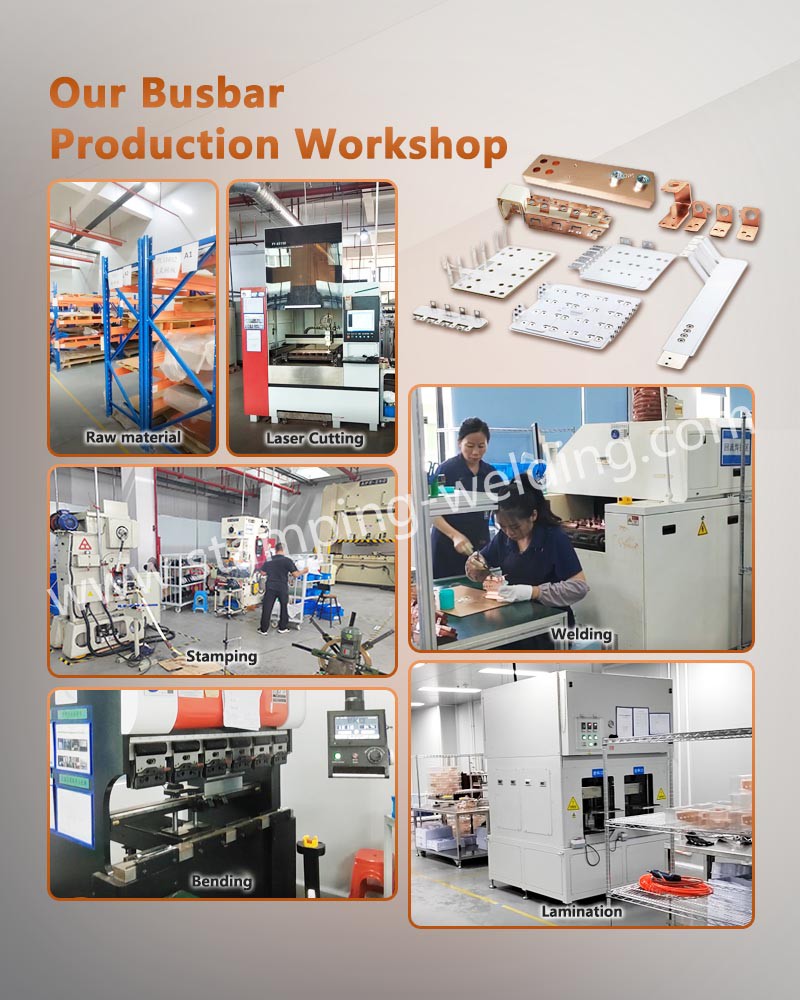
Production process and quality control
Conductor Pretreatment
The conductor material undergoes pre-processing such as cutting and bending to ensure dimensional accuracy.
Injection molding
The insulating material is injected into the mold through an injection molding machine and tightly combined with the conductor. Temperature, pressure and cycle need to be strictly controlled during the injection molding process to avoid bubbles and defects.
Post-processing and testing
After injection molding is completed, the busbar needs to go through steps such as cooling, deburring and quality inspection to ensure the performance of the PP Plastic Insulation Busbar.
Industry development trends and challenges
Although PA66 Plastic Insulation Busbar has many advantages, it still faces some challenges in practical applications. For example, weld line defects may occur during the injection molding process, resulting in reduced insulation performance. In addition, the industry lacks unified internal defect detection standards, making quality control more difficult.
In order to solve these problems, the researchers proposed a detection method based on the withstand voltage breakdown test, which determines whether there are internal defects in the sample by comparing the breakdown voltage value with the insulation withstand voltage of the material itself.

contact us


