Intelligent laminated busbar: the core technical support for upgrading new energy equipment
Feb 28, 2026
Core technical features of Intelligent laminated busbar
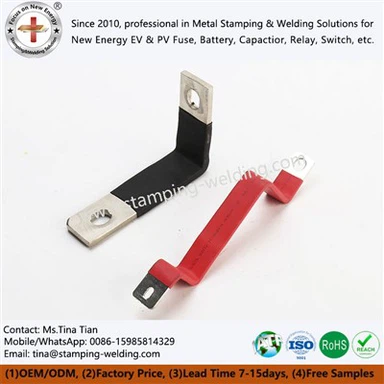
The Laminated copper busbar is not a simple conductive carrier, but an intelligent unit that integrates multi-dimensional capabilities. Its core technical features are mainly reflected in three aspects: perception, communication, and optimization. In terms of real-time monitoring of multiple parameters, it integrates micro temperature sensors, Hall current sensors, voltage acquisition chips, and insulation monitoring modules, which can capture real-time temperature, current, voltage, and insulation resistance data of key nodes of the busbar, accurately reflecting the operating status of the equipment and providing data support for subsequent management and optimization. In terms of integrated communication and edge computing, the built-in CAN/LIN or Ethernet interface of the Laminated bus bar for computers can efficiently transmit monitoring data to the device control system. At the same time, it has the ability of edge computing to preprocess data, achieve millisecond response, and improve the timeliness and accuracy of device operation. In terms of adaptive energy optimization, it can dynamically adjust current allocation based on real-time monitoring data, adapt to the energy requirements of new energy equipment under different working conditions, and further improve energy utilization efficiency.

Key application scenarios of Intelligent laminated busbar in new energy equipment
The BusBar for power electronics, with its unique technological advantages, has been deeply adapted to core new energy equipment such as new energy vehicles, large energy storage power stations, and photovoltaic inverters, playing a key role in different scenarios. In the high-voltage system of new energy vehicles, intelligent stacked busbars are connected to core components such as battery packs, motor controllers, and on-board chargers. During fast charging, temperature monitoring can be used to track current thermal effects, triggering cooling adjustments or power limit protection in a timely manner to avoid thermal runaway. At the same time, current balancing algorithms can be used to extend battery cycle life. In large-scale energy storage power plants, the Laminated bus bar for industrial can monitor the current and voltage differences of battery clusters, achieve precise energy management, and the insulation monitoring module can early warn of aging hazards, reduce safety risks, and effectively reduce operation and maintenance costs. In photovoltaic inverters, it can monitor IGBT temperature, coordinate with the cooling system to adjust fan speed, improve conversion efficiency, and record operating data to provide support for remote operation and reduce on-site inspection frequency.

Technological challenges and development directions
At present, the promotion and application of Laminated flexible busbars in the field of new energy still face three core technological challenges: firstly, the integration process of microsensors is difficult, which requires effective integration of sensors in limited busbar space while resisting complex electromagnetic interference; The second issue is the security of data transmission, which requires adaptation to the complex electromagnetic environment of new energy equipment and the development of highly anti-interference communication protocols; The third issue is cost control. The addition of sensors and communication modules will increase manufacturing costs and affect their large-scale application. In response to these challenges, the future development direction of Laminated copper bars is clear: firstly, deep integration with AI technology, predicting the aging trend of busbars through big data analysis, achieving predictive maintenance, and further improving equipment reliability; Secondly, we will promote material innovation by combining flexible conductive materials with 3D printing technology to enhance the adaptability and installation flexibility of busbars; The third is to develop wireless monitoring technology, reduce wired connections, lower installation difficulty, and adapt to more complex scenarios.
Industrial value and development prospects
The Motor drive laminated bus bar effectively solves the core pain points of new energy equipment in terms of operational safety, energy efficiency, and operation and maintenance management by integrating sensing, communication, and control capabilities into traditional stacked busbars, providing important technical support for the upgrading of the new energy industry. With the maturity of sensor integration technology, breakthroughs in anti-interference technology, and reasonable cost control, Capacity laminated bus bars will gradually become the standard configuration for new energy vehicles, energy storage, photovoltaics, and other equipment, further promoting the development of the new energy industry towards a smarter, safer, and more efficient direction, and assisting the global energy transformation process.
contact us
If you want to learn more about the adaptation solutions and technical details of Intelligent laminated busbars in new energy equipment, please feel free to consult and connect with us at any time. We will provide professional technical answers and targeted suggestions to help your new energy equipment achieve intelligent upgrading and efficient and stable operation.