Knowledge analysis of power cabinet industry
May 31, 2026
Product definition
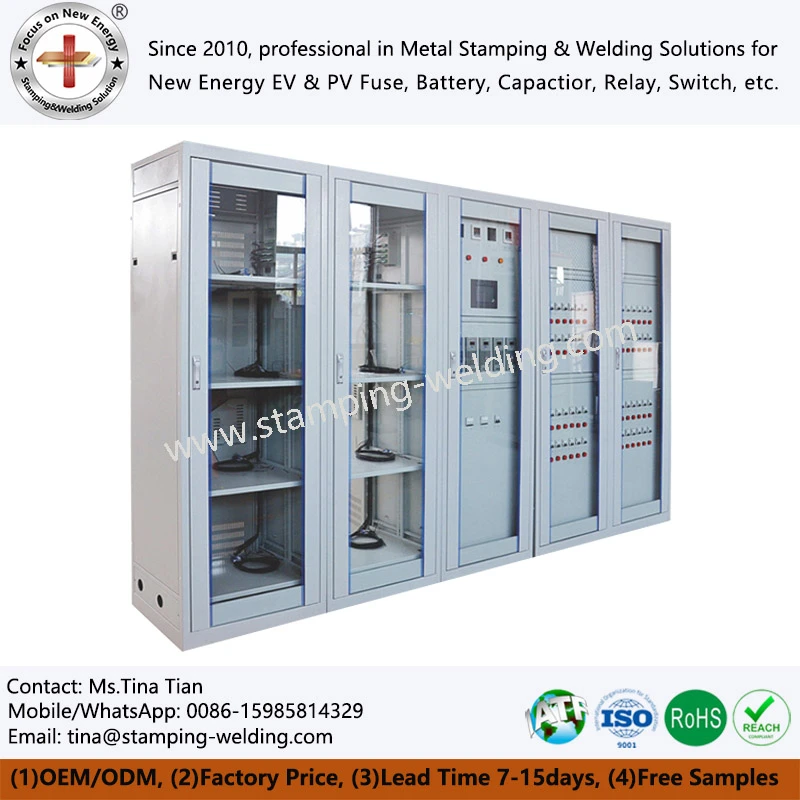
DC delta rectifier cabinet is a kind of DC power supply equipment specially designed for substations, power plants, communication base stations, rail transit, data centers and smart grids. It mainly provides stable and reliable uninterrupted DC power supply for control loads, power loads and emergency lighting of power systems of 110kV and below. Different from ordinary AC power distribution cabinets, the core value of DC power cabinets is that when the AC mains power is interrupted, it can rely on the internal battery pack to continue to supply power to protection devices, control loops and emergency lighting, thereby ensuring that the fault isolation capability and operational continuity of the power system are not lost due to power outages.
A complete DC power cabinet usually consists of four parts: AC input system, charging module array, battery pack and monitoring unit, and supports four remote functions (telemetry, remote control, remote signaling, remote adjustment), making it capable of unattended operation. In the product definition of DC delta rectifier cabinet, the output voltage level is the core specification parameter - common DC outputs include 110V (for load control), 220V (for power loads and protection devices) and 48V (for communication equipment). Different voltage levels correspond to different charging management strategies and insulation monitoring requirements. Although electrical cabinet price is a comprehensive inquiry term, for DC power cabinets, the battery pack often accounts for the highest proportion in the price structure (up to more than 40% of the cost of the entire cabinet). Therefore, when selecting, you should not only focus on the price of the cabinet itself, but should also comprehensively evaluate the full life cost of battery type and capacity.
System architecture and product design
Modern DC power cabinets generally adopt modular and intelligent layered design ideas. Its core architecture can usually be divided into three levels: energy conversion layer, energy storage buffer layer and intelligent control layer. Each layer works together through an internal communication bus. The core of the energy conversion layer is the high-frequency switching charging module, which uses soft switching topology such as LLC resonance to convert the three-phase 380V AC input into a stable DC output. The conversion efficiency can reach more than 93%, and the power factor is not less than 0.92. The charging module adopts N+1 hot backup configuration - that is, the actual number of required modules is N, and a spare module is added. When any working module fails, the spare module is automatically put in without affecting the system output. All modules support hot-swapping, and operation and maintenance personnel can replace faulty modules without power outage. The maximum imbalance of output current between modules is less than ±3%. The energy storage buffer layer is mainly composed of battery packs. Valve-regulated sealed lead-acid batteries are currently the mainstream, with capacities ranging from 17Ah to 1,000Ah.
In high-end application scenarios, lithium iron phosphate batteries are gradually being adopted. Their cycle life can reach more than 5,000 times and their energy density is higher. However, a dedicated battery management system is required to ensure safety. As the "brain" of the system, the intelligent control layer integrates the monitoring module, insulation monitoring module and battery inspection module. The new generation monitoring system supports large-size LCD touch screen display, which can monitor hundreds of parameters such as bus voltage, charging current, battery terminal voltage and cell temperature in real time. It also supports four remote functions through RS485, CAN bus or Ethernet interface, making it easy to access the SCADA system or DCS system of the substation. In the product systems of international brands such as eltek cabinet and delta rectifier cabinet, the above-mentioned three-layer architecture is also adopted. The difference lies in the difference between the topology of the charging module and the communication protocol stack of the monitoring system - the former pays more attention to the adaptation to the dynamic environment monitoring system of the communication base station, while the latter has more mature support for the IEC61850 standard in power system applications.
core technology
The core technology of DC power cabinets focuses on three directions: high-frequency charging modules, intelligent battery management, and reliability of system power supply. In terms of high-frequency switching power supply technology, modern DC power cabinets have completely replaced traditional silicon rectifiers and thyristor rectifiers, using high-frequency soft-switching technology to achieve high efficiency and low ripple output of charging modules. Typical technical indicators include: input voltage range 380V±15% (the wide range design makes it suitable for remote substations with large power grid fluctuations), ripple coefficient ≤0.1% (low ripple is beneficial to extending battery life and reducing interference to downstream control equipment), and current and voltage stabilization accuracy is better than ±0.5%. In terms of modular design, N+1 hot backup and live hot-swap technology make system expansion and maintenance extremely convenient - when the system load increases, you only need to insert additional charging modules to increase the output capacity without replacing the entire cabinet.
In terms of battery management technology, the intelligent monitoring module automatically switches the battery between equal charge and float charge states and automatically adjusts the charging voltage according to the ambient temperature (the temperature compensation coefficient is usually -3mV/℃/single cell) to prevent overcharging at high temperatures or undercharging at low temperatures. The new generation system is equipped with AI diagnostic function. By analyzing the battery voltage curve, internal resistance change trend and charge and discharge historical data, it can predict the remaining life of the battery and give replacement recommendations, realizing the transition from regular inspection to condition maintenance.
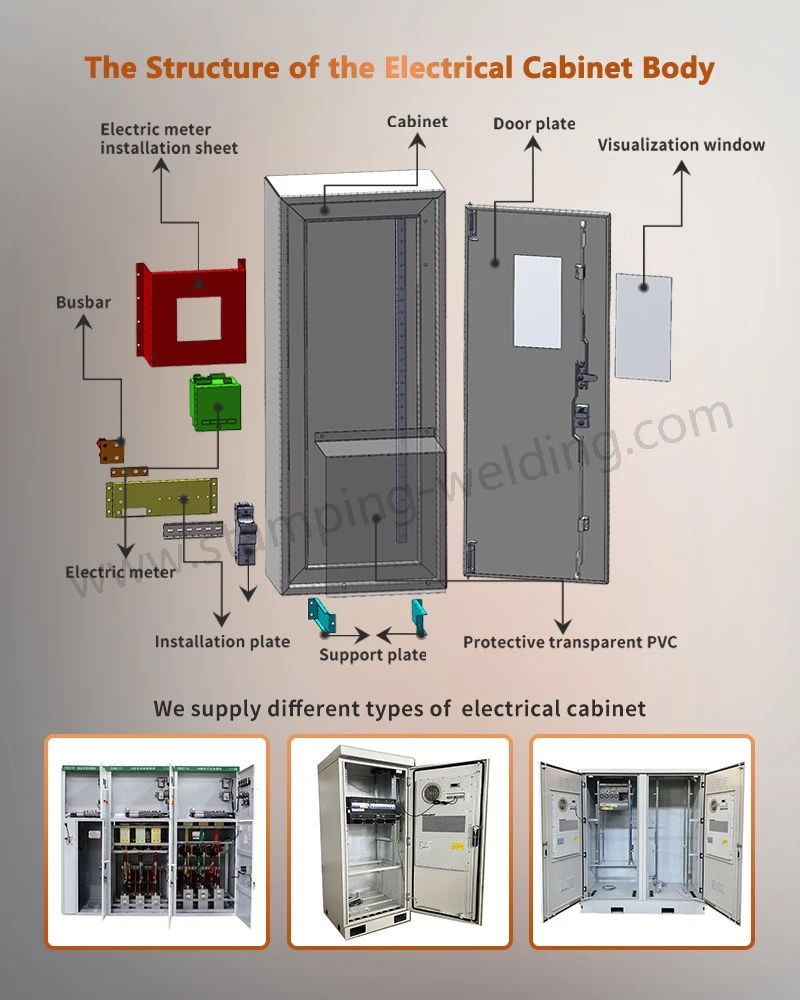
In products such as Eaton 9390 battery cabinet, Eaton 9395 battery cabinet and Eaton 93pm battery cabinet, the above technical concepts are fully reflected - Eaton's battery cabinets and supporting DC power systems adopt a unified thermal management strategy, and realize linkage adjustment of charging parameters and battery ambient temperature through shared temperature sampling points to avoid the expansion of performance differences between single cells due to temperature gradients within the cabinet. The electrical socket inside cabinet is an easily overlooked but actually very important detail in the DC delta rectifier cabinet - an AC socket for maintenance should be reserved in the cabinet (usually set inside the cabinet door or on the side wall) to facilitate on-site debugging by operation and maintenance personnel using laptops or test instruments. The power supply of this socket should be independent of the monitored DC system and have separate leakage protection.
Key points for selection
When selecting, focus on the following parameters: battery capacity (calculated based on the power of the downstream load and required backup time), output voltage level (matching the load equipment), number of charging modules (N+1 configuration is the minimum requirement), and communication interface type (whether it supports access to the existing monitoring system). For PC case power supplies such as cooler master cabinet with 450w smps or cooler master cabinet with 650w smps, although the name also contains "power supply", its application scenario is completely different from that of a DC delta rectifier cabinet - the former is a standard switching power supply enclosed inside the computer case. It only supplies power to the personal computer motherboard and peripheral devices. It does not have battery interfaces, insulation monitoring or four remote functions, and cannot be used for use. The composition of the electrical cabinet price varies greatly with different technical specifications - the price of an 110V DC power cabinet equipped with a 100Ah lead-acid battery and a 220V DC power cabinet equipped with a 500Ah lithium iron phosphate battery may differ by more than five times, so a detailed configuration list should be attached when inquiring.
contact us
If you need power supply cabinet configuration suggestions for your current substation or communication base station project, please submit the load list and backup time requirements, and our technical team will issue a detailed configuration plan and technical instructions within 24 hours.