Laminated Bus Bar for Telecom Power Distribution: a key connectivity technology in high-density power supply architectures
Apr 26, 2026
The expansion of nationwide communication computing networks is accelerating, with upgrades being implemented across the entire network for telecom base stations, large data centers, and network core computer rooms. This necessitates a comprehensive iteration cycle for high-density power distribution systems at the terminal, focusing on standardization, low loss, and compactness. Traditional cable and bulky copper busbar power distribution architectures are no longer adequate for the demanding telecom operating conditions of high-frequency, high-current, confined cabinet spaces, and uninterrupted, stable power supply throughout the year. The industry is focusing on optimizing and upgrading core components for efficient interconnected power distribution. Laminated Bus Bar for Telecom Power Distribution, with their integrated and composite molding advantages, precisely meet the urgent need for improved power distribution across the entire telecom network. They are gradually replacing traditional power distribution connection methods and have become a core standard component in the current refined infrastructure of communication power transmission networks, ensuring the long-term safe and stable operation and maintenance of communication equipment nationwide.
Composite Structure Analysis
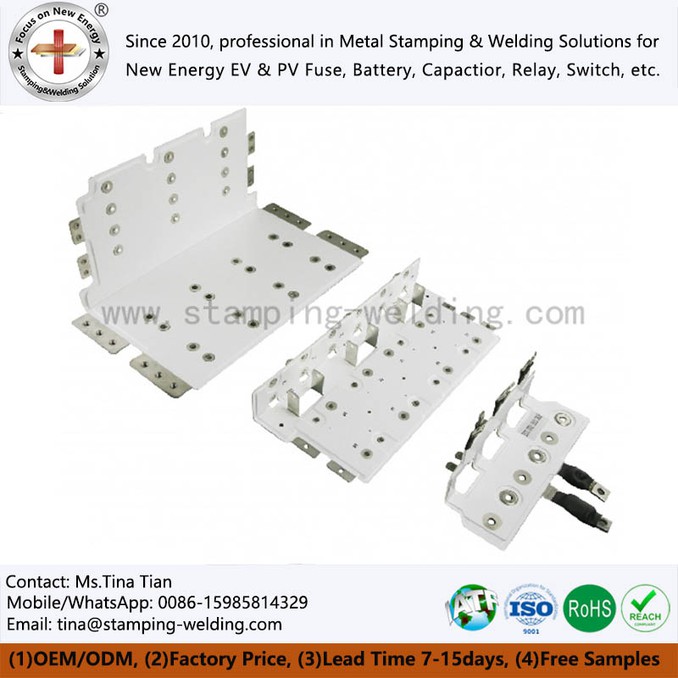
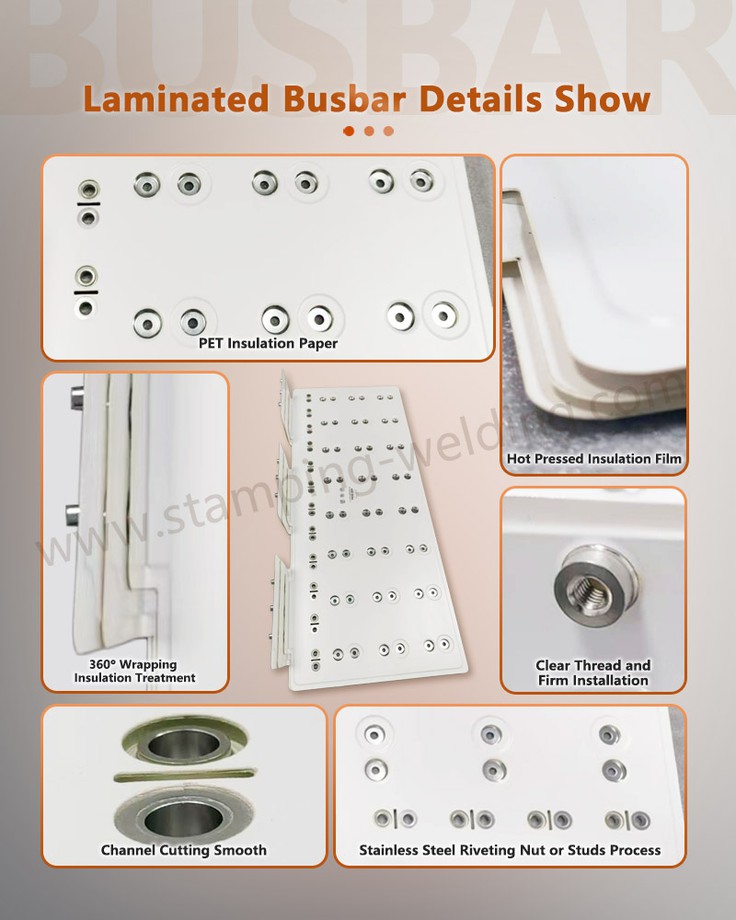
Telecom power distribution laminated busbars depart from traditional copper busbars and messy cable routing, employing an ultra-thin, wide-width conductive metal interlaced and integrally molded structure, suitable for compact and efficient cabinet layouts. The main body is made of high-quality conductive copper, with copper-laminated bus bars ensuring stable high-current transmission. In some scenarios, laminated bus bar copper without tin plates can be selected to control retrofit costs. The interlayer uses high-strength insulation material with PET insulating paper, high-temperature pressed to effectively reduce the distance between electrodes, preventing creepage and short-circuit hazards in confined cabinets. The overall design possesses excellent flexibility, allowing for customized bending to fit irregular shapes in telecom power distribution cabinets and base station power equipment, precisely matching equipment interfaces and adapting to non-standard on-site installation conditions in both new and old equipment rooms.
Core operational advantages
- Suitable for Long-Term Operation and Maintenance: Designed for the demanding, continuous operation of telecommunications data centers year-round, the laminated bus bar offers outstanding comprehensive adaptability, effectively solving maintenance challenges in high-density power distribution scenarios and ensuring long-term stable and reliable power supply to the power system.
- Low Impedance and Enhanced Voltage Stability: Utilizing a tightly laminated integrated structure, it effectively reduces circuit impedance and overall inductance, making it suitable for UPS high-frequency switching and high-current instantaneous surge power supply environments. It effectively suppresses common power distribution hazards such as line overheating and voltage fluctuations under high-frequency operation for Laminated Bus Bar for Alternate Fuel Cells and Hybrid Electric Vehicles Systems.
- Excellent Heat Dissipation Efficiency: The flat, laminated conductors have a larger contact area, resulting in significantly better natural convection heat dissipation than traditional cables. No derating is required under high load current conditions, meeting the continuous full-load operation requirements of data centers around the clock.
- Saves cabinet space: The neat and concise overall layout replaces the traditional messy wiring method, effectively improving the utilization rate of the cabinet's internal space and adapting to the high-density equipment stacking layout of telecommunications data centers for Laminated Bus Bar for Electric Vehicle Power Distribution.
- Safe and reliable operation and maintenance: Simplifies on-site cabling construction processes, reduces installation risks such as manual wiring errors and loose lines, significantly reduces the later power distribution fault repair rate, and comprehensively improves the overall safety and stability of the telecommunications power distribution system.
Communication scenario adaptation
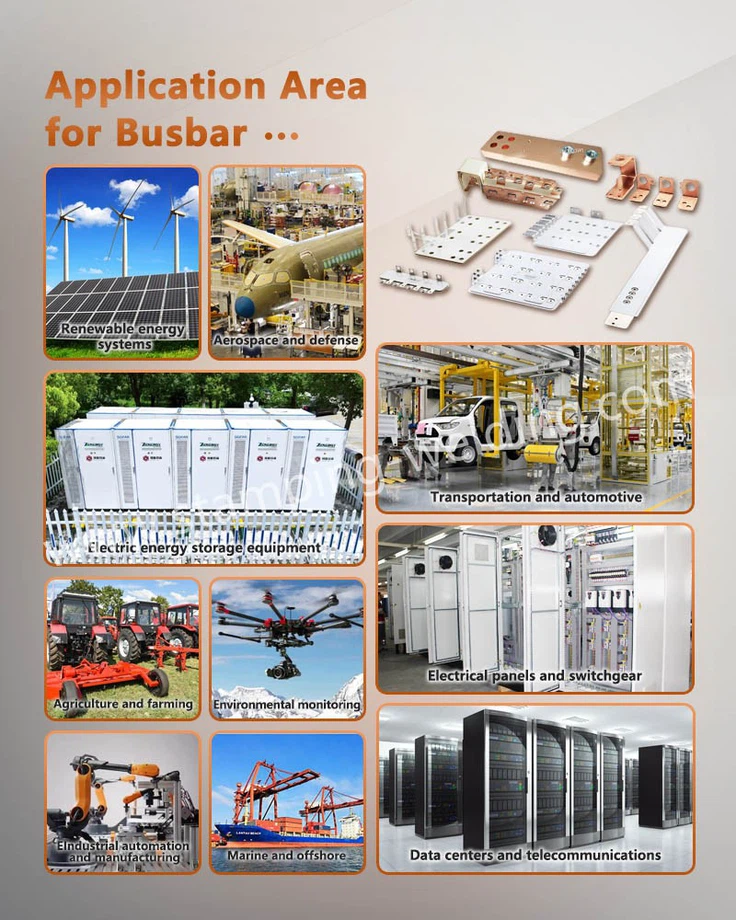
- Outdoor Base Station Adaptation: Designed for outdoor communication base station power distribution scenarios, the Laminated Bus Bar for Cellular Base Station Power Distribution can withstand complex outdoor environments with alternating high and low temperatures, dust, and moisture, stably achieving balanced power distribution among all units within the base station and ensuring 24/7 online operation.
- Indoor Network Equipment Adaptation: For core network link equipment in data centers, the Laminated Bus Bar for Router Backplane Distribution and Laminated Bus Bar for Internet Router Backplane can precisely connect to the router's backplane power distribution points, simultaneously ensuring stable power supply and efficient network signal transmission, achieving closed-loop operation of communication and power distribution.
- Data Center Rack Adaptation: In large-scale computing data center rack-end power distribution scenarios, the Laminated Bus Bar for Rack Mount Power Distribution adapts to rack-mount integrated installations, working in conjunction with the Power Distribution Unit BusBar and (Uninterruptible Power Supply) System BusBar for coordinated voltage stabilization and energy storage to meet the continuous high-load power distribution needs of servers and computing hosts throughout the year, ensuring the stable operation of core computing equipment such as the Web Server BusBar and Mainframe BusBar.
Industry Outlook
Industry research and analysis indicate that with the continuous densification of 5G base stations and the large-scale construction and implementation of AI computing centers, the demand for high-density, high-power, and uninterrupted power distribution in telecommunications data centers will continue to rise. Laminated Bus Bar for Telecom Power Distribution, with their four core advantages of low inductance, strong heat dissipation, space saving, and high reliability, will significantly replace traditional power distribution connectors and continue to deeply penetrate the core telecommunications power distribution sector. Going forward, the industry will focus on three key areas: improving the quality of insulation substrates, optimizing low-impedance molding processes, and lightweight integrated molding, continuously enhancing the adaptability of components across all operating conditions and solidifying the foundation for efficient, secure, and intensive power distribution in telecommunications computing networks.
Contact Us
If you have any needs regarding the selection of Laminated Bus Bar for Telecom Power Distribution, adaptation to operating conditions, and project support, you can contact our team at any time to obtain professional technical solutions and compliance support.