Multilayer Copper Foils Flexible BusBars: In-depth Analysis of Technology and Application
Apr 08, 2025
Definition and Structure
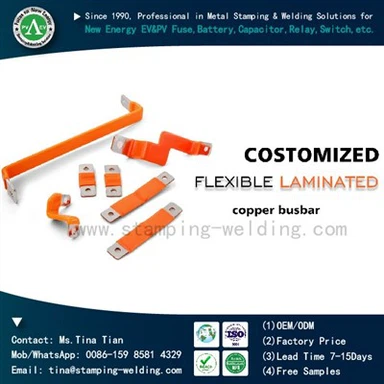
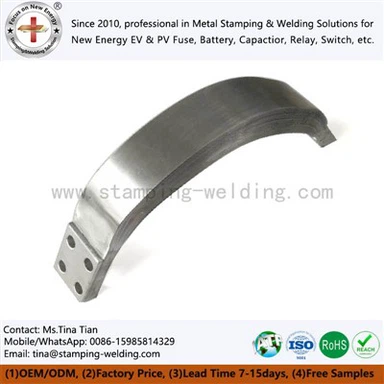
Multilayer copper foils flexible busbars is a flexible conductive component made of multiple layers of copper foil superimposed and connected by diffusion welding technology. Its basic structure includes multiple layers of T2 copper foil with a copper content of ≥99.95%. The thickness of a single piece is usually between 0.03mm and 0.50mm, and the conventional thickness is 0.10mm. These copper foils are welded at both ends or on the entire surface by polymer diffusion welding technology to form an integral flexible conductor. This structure not only provides excellent conductivity, but also has excellent flexibility and toughness, and can adapt to various complex installation environments and mechanical stresses.
In terms of structural design, multilayer bus bar can be customized according to specific application requirements. For example, holes can be drilled in the welding area according to customer requirements to meet different installation and connection requirements. In addition, its cross-sectional area ranges from 10mm² to 5000mm², which can adapt to various application scenarios from low current to high current.

Technical Features
1. Polymer diffusion welding technology
Diffusion welding is an advanced welding technology that forms a strong connection between materials through molecular diffusion under high temperature and high pressure conditions. In the production of Copper Flexible BusBar, welding is usually carried out under precise temperature control of 380-450℃ and pressure of 15-30MPa. This technology does not require solder, and copper atoms are directly fused through cross-interface diffusion to form a high-strength connection with a conductivity of up to 102%IACS (8% higher than the national standard).
2. Multi-layer copper foil stacking
By stacking multiple layers of copper foil, the skin effect of the copper conductor can be effectively weakened, thereby improving the transmission efficiency of current. This structure can not only carry large currents, but also maintain good performance in high-frequency applications of Copper Laminated Foil Busbar.
3. Diversified surface treatment
In order to meet different application requirements, Multilayer Copper Foils Flexible BusBars can be subjected to a variety of surface treatments, such as bare copper, tin plating, nickel plating, silver plating, nickel foil, silver foil, etc. These surface treatments can not only improve the corrosion resistance of the busbar, but also select the most suitable surface treatment method according to the specific application environment.
4. Customized production
According to the specific needs of customers, Multi Layers Copper Foil Flexible BusBar can be customized. Customers can specify parameters such as length, width, thickness, product shape and hole type according to actual application requirements to meet different installation and connection requirements.

Performance advantages
1. High conductivity
Due to the use of polymer diffusion welding technology, the connection strength between copper foils is high and the resistance is low, with a conductivity of up to 102% IACS, far exceeding the national standard. This high conductivity enables the Flexible Copper BusBar to maintain low energy consumption and heat generation when transmitting large currents.
2. High mechanical strength
The Flexible Braided BusBar formed by diffusion welding technology has high connection strength and a tensile strength of up to 220MPa, which is close to the strength of the copper material itself. This high-strength connection can effectively reduce the stress effects caused by displacement, thermal expansion and vibration, reduce fatigue and structural damage under high temperature or heavy load conditions, and thus extend the service life of the busbar.
3. Flexibility and toughness
Automotive Copper Busbar has excellent flexibility and toughness, and can be flexibly wired and connected in complex installation environments. This flexible feature not only improves the convenience of installation, but also absorbs vibration and shock during equipment operation to protect the stability of the connection.
4. Corrosion resistance
Through a variety of surface treatments, such as tin plating, nickel plating, silver plating, etc., Flexible BusBar Copper can effectively resist corrosion and adapt to various harsh working environments. This corrosion resistance not only extends the service life of the busbar, but also ensures the long-term stable operation of the power system.

Conclusion
Multilayer Copper Foils Flexible BusBars has been widely used in many fields such as new energy vehicles, wind power generation, photovoltaic energy storage, electric locomotives, and complete power transmission and distribution due to its unique structural design, advanced welding technology, and excellent performance advantages. With the continuous advancement of technology and the increase in market demand, its application scope will be further expanded to provide more reliable solutions for the development of modern power systems.
Contact Us