Technical Comparison and Application Selection Guide between High Precision Progressive Stamping Copper Parts and Ordinary Stamped Parts
May 16, 2026
In the metal stamped industry, precision stamped and conventional stamped are two core processing methods. The differences in their technological characteristics and application scenarios directly affect the product quality and upgrading direction of downstream industries. Among them, High Precision Progressive Stamping Copper Parts, as a typical representative of the precision stamped field, presents a stark contrast in processing accuracy and product performance compared to conventional stamped parts, reflecting the industry's demand for high-precision, high-quality stamped products.
Conventional stamping: process characteristics and basic application scenarios
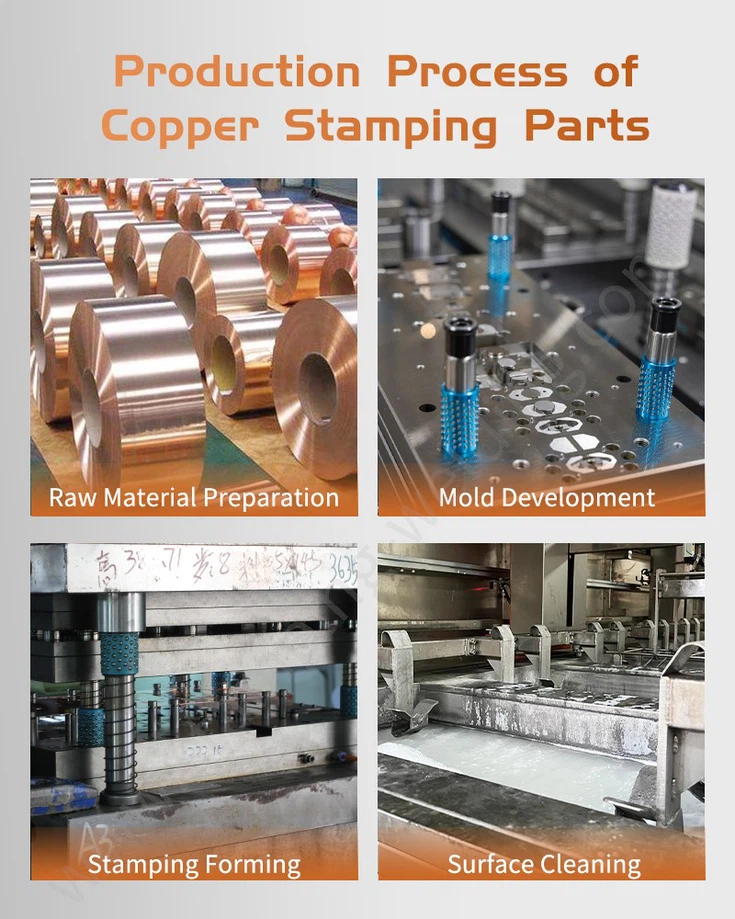
Conventional stamping operates on the core principles of shearing and material tearing separation. After the die edge penetrates the material, separation is achieved through micro-cracks that tear the material. This processing method is adaptable to a wide range of materials, including both soft and hard materials, and various thicknesses of plates. However, its cross-sectional quality is relatively poor, exhibiting noticeable corner collapses, bright bands, shear fracture bands, and burrs. Dimensional accuracy is also low, typically between ±0.1mm and ±0.2mm. Due to limited processing precision, conventional stamped parts often require secondary processing such as deburring, precision milling, and grinding. Furthermore, the die life is relatively short, necessitating frequent sharpening and maintenance. Nevertheless, its advantages of low die cost and short development cycle make it widely used in hardware accessories, structural components, automotive beams, architectural hardware, and appliance housings where high precision and appearance requirements are not critical. In the China Metal Stamping Parts industry, conventional stamped parts still hold a significant share of the basic application market.
Precision stamping: technological advantages and core requirements
Unlike conventional stamping, precision stamped is a non-cutting plastic forming process. Its core advantage lies in applying triaxial pressure using a special die structure (such as one with a V-shaped ring pressure edge), allowing the material to undergo plastic shear separation without fracture. This process enables precision stamped parts to achieve dimensional tolerances at the micrometer level, i.e., ±0.01mm to ±0.02mm, with 100% bright cross-sections, no tear marks, extremely high perpendicularity, and one-time forming, eliminating the need for subsequent machining, resulting in excellent product consistency. Furthermore, precision stamping dies have extremely long lifespans, with a single die lasting tens of millions of cycles. However, its development cycle is long, the cost of dies and equipment is relatively high, and it has stringent requirements for the plasticity, elongation, and microstructure uniformity of raw materials, typically requiring the selection of high-quality ductile metals with lower tensile strength.
Precision stamping: segmented application areas and upgraded demands
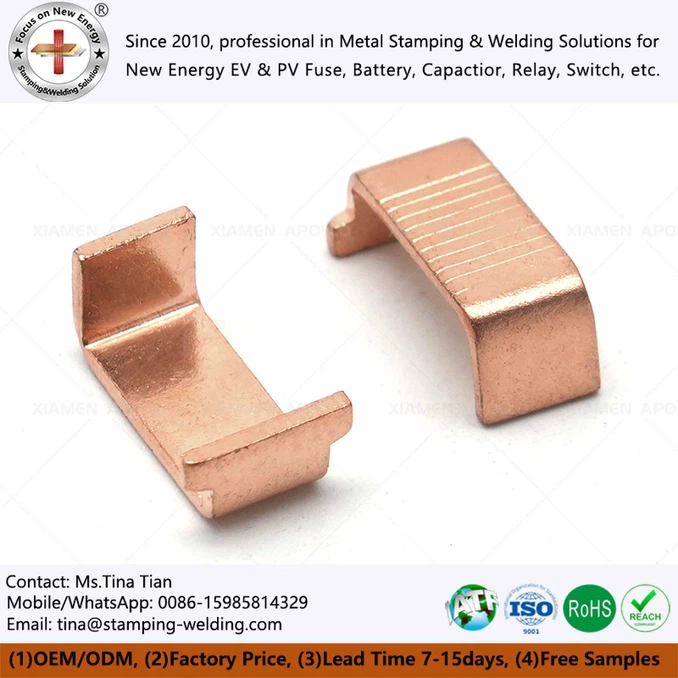
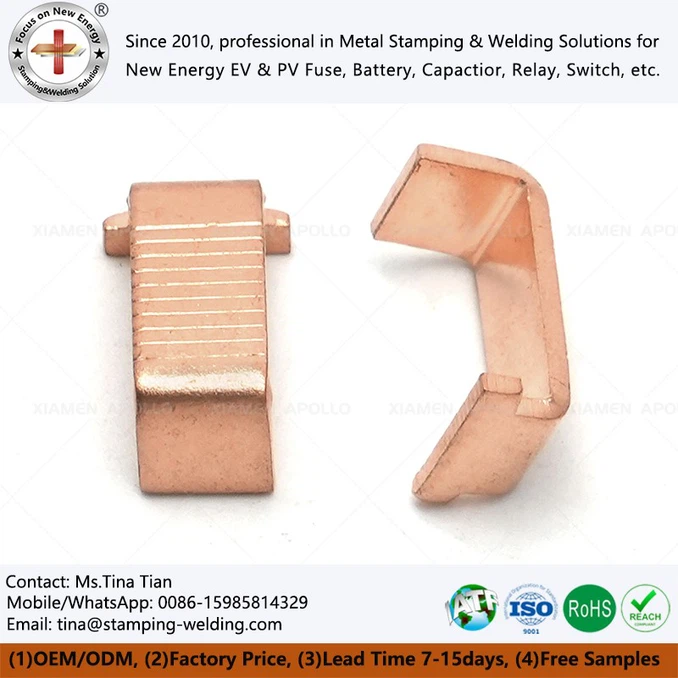
From an application perspective, the high precision of precision stamped parts makes them suitable for the production of high-precision transmission components. Products such as Switch Socket Precision Custom Metal Parts and Copper Stamping Contact for Electrical Switches are widely used in electrical switches and sockets. High-end sectors such as automotive automatic transmission gears, braking system components, hard disk drive parts, medical devices, and high-end watch movements also have significant demand for precision stamped parts. Furthermore, niche sectors like OEM Precision Copper Sheet Metal and Copper Alloys Metal Stamping are increasingly reliant on precision stamped processes as downstream industries upgrade.
Industry Outlook: Two Complementary and Symbiotic Processes
As the manufacturing industry shifts towards high-end and refined products, the market demand for High Precision Progressive Stamping Copper Parts will continue to grow. Technological upgrades and cost optimization of precision stamped processes will become the core direction for industry development. Meanwhile, ordinary stamped parts, with their cost advantages, will continue to play an important role in the basic hardware sector. The two will form a complementary and symbiotic industry structure, jointly promoting the sustainable development of the metal stamping industry.
Contact Us
If you have needs for various stamping products such as High Precision Progressive Stamping Copper Parts, or if you would like to learn about customized adaptation solutions for precision stamped and general stamped, please feel free to contact us for professional support.