The core components, working principles, and application scenarios of Application cabinet
Mar 31, 2026
Basic concepts and core hardware architecture
The Application cabinet is a complete set of control equipment with programmable logic controller (PLC) as the core, which is equivalent to the "brain" of industrial systems. It outputs control instructions by receiving on-site signals and executing preset programs to achieve automation of industrial processes.
Its hardware architecture is a highly collaborative organic whole, mainly divided into five categories: the first is the control core (PLC host), which includes the CPU responsible for computation, memory for storing system programs and user programs, as well as communication and programming interfaces.
The second is the power system, which is responsible for converting AC power into stable DC power (such as DC 24V) to supply power to the entire cabinet. In important occasions, a backup power supply will be configured.
The third is the input/output (I/O) module, which serves as a signal exchange bridge to achieve the conversion and isolation of digital and analog signals.
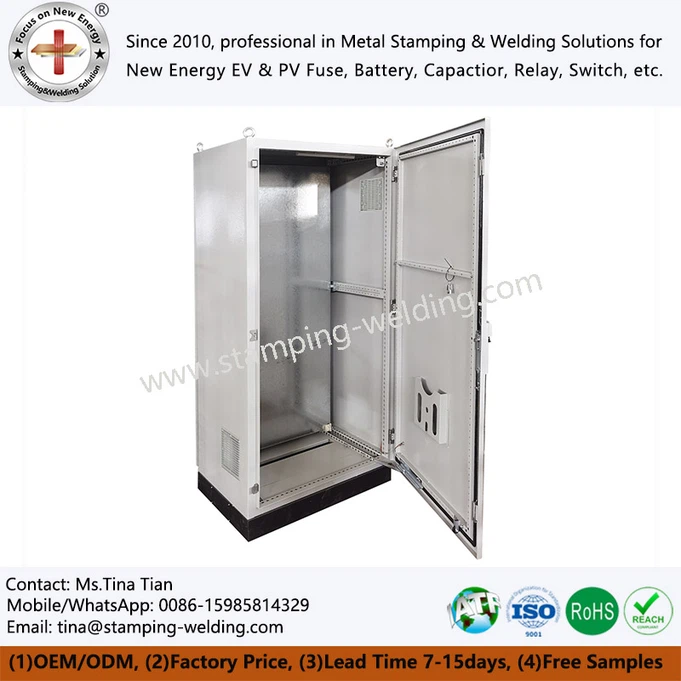
The fourth is the auxiliary electrical components of PLC cabinet components, including relays, contactors, circuit breakers, terminal blocks, and surge protectors, used for power amplification, line protection, and standardized wiring; The fifth is the cabinet structure, which has corresponding protection levels and electromagnetic shielding functions. It follows the principle of separating strong and weak electricity internally to ensure that components operate in a suitable environment.
Principle and key characteristics of cyclic scanning
The essence of the work of an Application cabinet is a "input-output" cyclic scanning logic loop, with the entire cycle taking only a few tens of milliseconds. Firstly, during the input sampling phase, the on-site signal status is read and stored in the input image register.
Secondly, during the program execution phase, the CPU performs logical operations on the register data in sequence and stores the results in the output image register.
Finally, during the output refresh phase, the results are outputted to the actuator to drive the device action in one go.
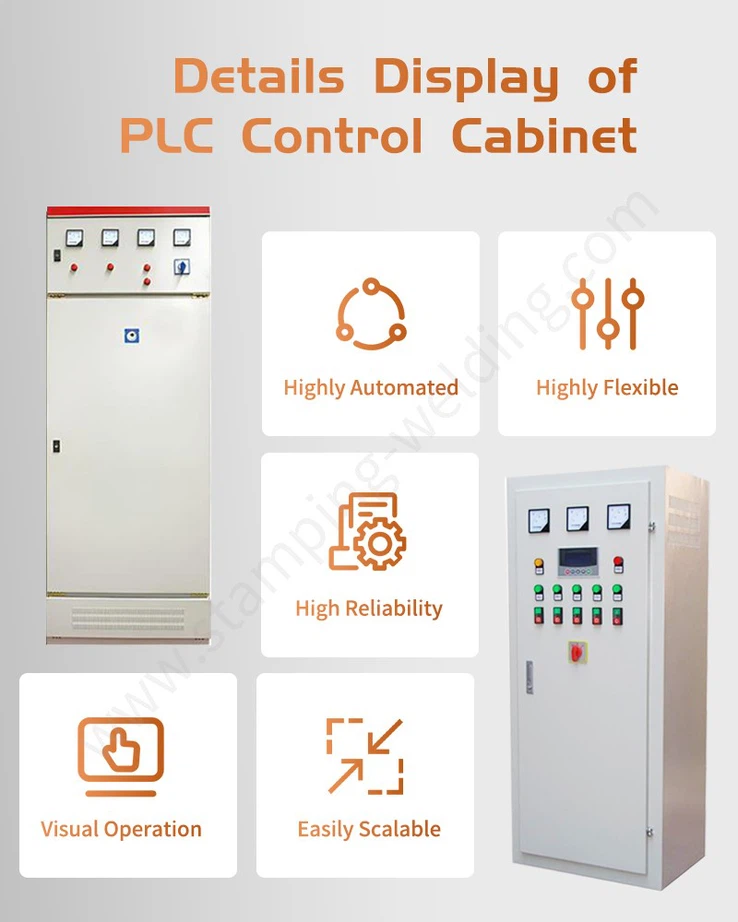
Based on this mechanism, Standard PLC cabinet exhibits key characteristics that are suitable for industrial environments: firstly, high reliability, maintaining stable operation for tens of thousands of hours in harsh environments through hardware isolation and software self diagnostic technology.
Secondly, the programming is flexible and easy to expand, using graphical languages such as ladder diagrams. Modifying the program does not require hardware changes, and it supports modular function expansion.
The third is good human-computer interaction and remote monitoring ability, which can be combined with touch screen and upper computer to achieve data collection and remote operation.
The fourth is the comprehensive safety protection function, combined with software and hardware logic to achieve emergency chain shutdown for abnormal situations such as overload and exceeding limits.
Typical Industry Application Scenarios
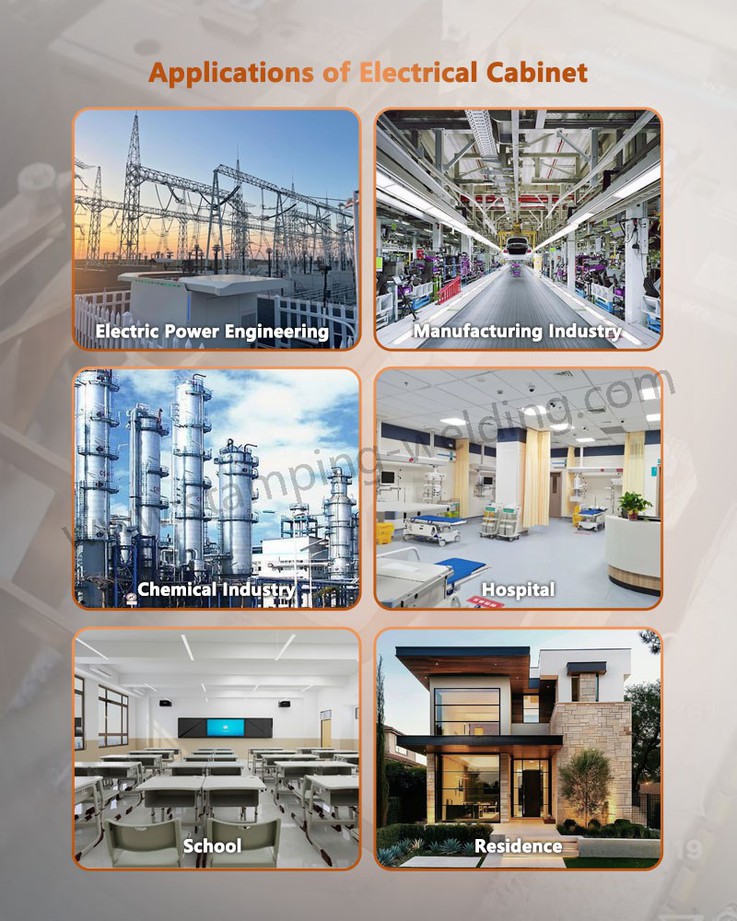
With its powerful control capabilities, PLC system cabinet for sewage has penetrated into various automation scenarios. In the manufacturing industry, it serves as the core of production line automation, controlling robots, conveyor belts, and CNC machine tools to work together, improving production efficiency and pass rates.
In the field of energy, fault detection and automatic tripping are used for boiler combustion, turbine regulation, and transmission and distribution of power generation equipment to ensure stable power output.
In municipal engineering, it is responsible for the automatic start stop of water pumps in the water supply and drainage system, the linkage of process equipment in sewage treatment plants, and the control of street lights and traffic signals.
In process industries such as chemical and metallurgical industries, PLC panel cabinets ensure the safe operation of high-risk equipment such as reaction vessels and metallurgical furnaces through precise PID regulation and strict interlock control logic.
In the field of food and medicine, it is used to control sterilization and filling equipment, ensure the cleanliness of the production process, and achieve compliance traceability of key process parameters.
Key points for daily maintenance and troubleshooting
Scientific maintenance and troubleshooting are crucial to ensure the long-term stable operation of Automation control cabinet. Daily maintenance requires regular power-off to clean the dust inside the cabinet to prevent short circuits or poor heat dissipation; Regularly check the stability of the main power supply and switch power supply voltage, tighten or replace loose or oxidized wiring terminals; Ensure that the cooling fan is functioning properly and that the ambient temperature and humidity meet the standards; At the same time, it is necessary to regularly backup user programs and promptly replace internal backup batteries that have reached the end of their lifespan.
When a malfunction occurs, the principle of "external before internal, hardware before software" should be followed: first check whether the external power supply has tripped, whether the on-site sensors or motors are damaged, and whether the emergency stop button has been triggered incorrectly; If the external of the Modular PLC cabinet is normal, observe the status of the PLC module indicator lights and use software to read fault codes to locate hardware module issues; Finally, monitor the status of the image register online through software and gradually troubleshoot program logic errors.
Contact us
In the specific implementation process of automation projects, professional and reliable Application cabinet customization and integration services are equally crucial. If you have any equipment selection or system modification needs, please feel free to contact our technical team at any time for exclusive solutions.