The Dual Game of Lightweighting and Cost: Technological Evolution and Industry Outlook for Aluminium BusBars for Cell Connection
Mar 29, 2026
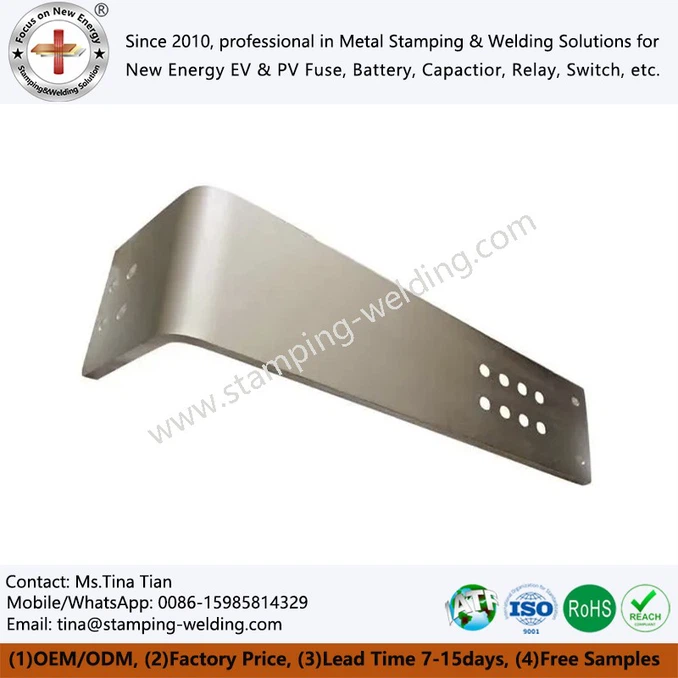
Against the backdrop of the rapid development of the new energy vehicle and energy storage industries, battery connection technology is becoming a key element in improving system performance. Aluminium BusBars for Cell Connection, a rigid conductive strip made of high-purity aluminum or aluminum alloy, are gradually replacing traditional connection methods in battery systems, becoming the core component for power transmission between cells and modules.
Product Functions and System Positioning
The application of aluminum busbars in battery systems primarily revolves around three core functions. In terms of power transmission, as the main path for current movement within the battery module, it ensures efficient energy transfer and minimizes power loss. At the structural integration level, this product provides robust mechanical connections, effectively simplifying the wiring complexity of the battery pack and improving system integration and space utilization. Regarding thermal management, utilizing the excellent thermal conductivity of aluminum, the aluminum busbar assists in heat dissipation from the battery system, helping to balance the resistance and temperature rise between components and positively impacting the consistency of the battery pack.
Technical considerations for material selection
Despite copper's superior conductivity, aluminum busbars continue to see significant growth in battery connectivity, primarily due to four factors. First, in terms of weight reduction, aluminum weighs about one-third of copper, directly contributing to increased driving range in electric vehicles. Second, in terms of cost, aluminum is significantly cheaper than copper, effectively reducing material costs for large-scale battery packs. Third, regarding homogeneous material connections, since most lithium-ion battery terminals are already made of aluminum, using aluminum busbars avoids the electrochemical corrosion problems that can occur with dissimilar metal connections like copper and aluminum. Fourth, in terms of processability, aluminum's excellent ductility allows it to be easily formed into complex shapes through stamping, bending, and other processes, meeting the diverse wiring requirements within battery packs.

Application Challenges and Technological Responses
Aluminium BusBars for Cell Connection face several technical challenges in practical applications, and the industry has developed corresponding solutions. To address the issue of non-conductive oxide layers easily forming on aluminum surfaces, plating treatments (such as nickel or tin plating) or special surface cleaning processes are typically used to ensure stable contact resistance. Regarding connection processes, battery busbars often employ laser welding or ultrasonic welding to achieve low-impedance, highly reliable, and permanent connections. Because aluminum has a high coefficient of thermal expansion, U-shaped bends or compensating structures are usually incorporated into the design to absorb the mechanical stress generated by temperature changes during battery charging and discharging, preventing fatigue failure at the connection points.

Industry Development Trends and Outlook
As power batteries continue to evolve towards higher energy density and longer lifespan, the advantages of aluminum busbars in terms of lightweighting, cost control, and homogeneous material connection will become increasingly prominent. The industry is becoming more refined in its selection of aluminum alloy materials, with different grades and heat treatment states being adapted to diverse application scenarios. At the same time, surface treatment technology, welding process optimization, and thermal stress compensation design of aluminum bars are also continuously improving. It is foreseeable that in electric vehicles, energy storage power stations, and various battery applications, aluminum busbars will serve as key connection components, playing a more important role in improving system integration and reliability.
contact us
For further information on the technical solutions and application details of Aluminium BusBars for Cell Connection, please feel free to contact us.