What is a Copper Foil Multi-Layer Welding Busbar? An Analysis of Structure, Advantages, and Applications
Sep 21, 2026
As new energy vehicles, energy storage systems, and high-power power electronics evolve toward higher currents, miniaturization, and greater reliability, the spatial adaptability and mechanical cushioning capabilities of traditional rigid copper busbars are increasingly constrained in certain applications. The copper foil multi-layer welding busbar utilizes a laminated structure of multiple thin copper foils, joined via welding or other reliable connection processes to form an integrated conductive component. While facilitating current transmission, it also provides a degree of flexibility, vibration damping, and thermal expansion compensation.
Publicly available technical data indicates that multi-layer copper foil structures are already employed to connect battery cell tabs to busbars in new energy vehicle battery packs, serving as a critical component for reliable internal electrical connections. This is particularly true for pouch cells, where multiple cell tabs must establish stable electrical connections with the busbar, and the welding of multi-layer thin foils places high demands on process control.
What is Copper Foil Laminated Busbar Welding?
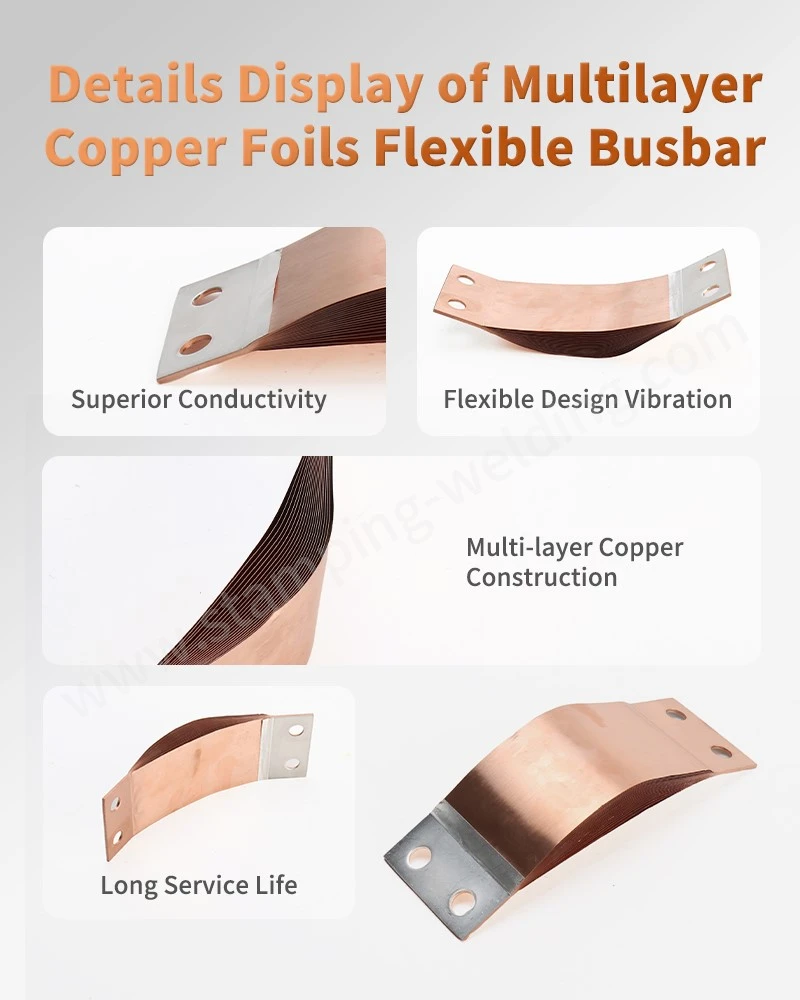
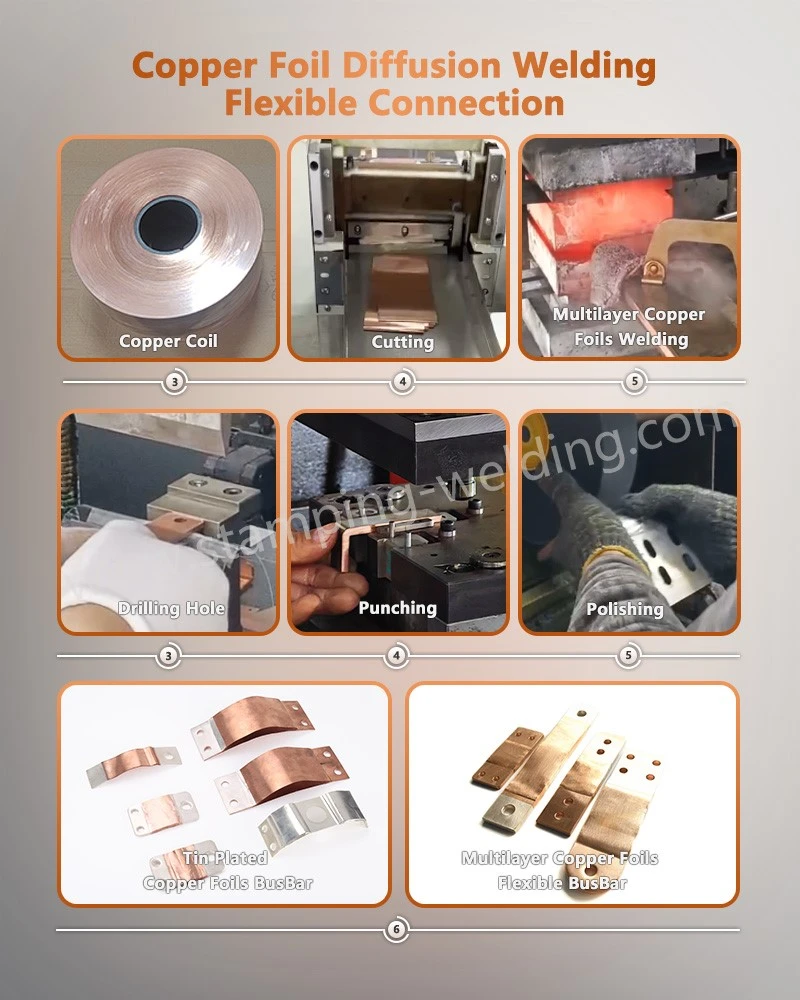
A copper flexible busbar can be defined as a flexible or semi-flexible conductive busbar composed of multiple layers of copper foil, joined via welding, diffusion bonding, or other suitable solid-state joining processes. Unlike traditional thick copper busbars-which simply utilize a single thick copper plate as the conductor-this type of busbar is constructed by stacking multiple layers of thinner copper foil to a specified thickness and then welding or joining them in designated areas.
This structural design allows for the customization of the number of foil layers, individual layer thickness, total cross-sectional area, weld zone length, terminal configuration, and mounting method. Consequently, the multilayer busbar combines the excellent electrical conductivity of copper with the superior flexibility and spatial adaptability afforded by the stacked thin-layer structure.
Basic Structure of Press-Welded Connectors
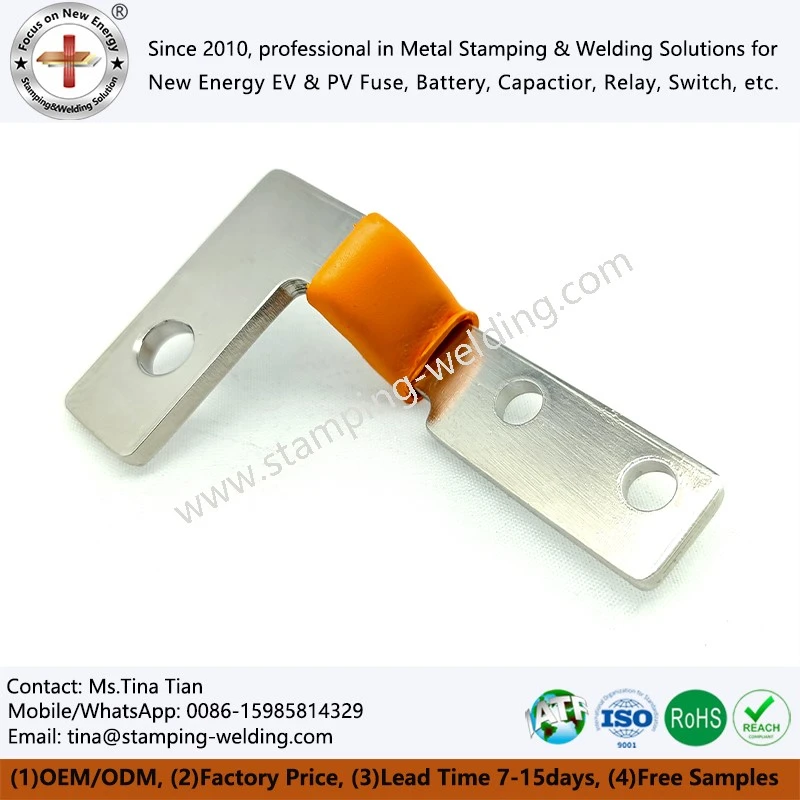
A typical multi-layer welded copper foil busbar consists of the following components: copper foil layers, welding zones, connection terminals, and necessary insulation or surface treatment structures. The copper foil layers serve as the primary conductive element.
In new energy vehicle and energy storage applications, the thickness and number of copper foil layers are typically determined based on rated current, permissible temperature rise, and available installation space. The welding zones serve to secure the multiple layers of copper foil and establish a low-resistance electrical connection. Connection terminals can be designed as flat terminals, terminals with mounting holes, busbar connectors, or other configurations suited to the system's installation requirements. For some products, the terminals may undergo surface treatments-such as tin, nickel, or silver plating-to meet specific environmental and connection needs.
Why use a Laminated Foils Flexible Copper Busbar?
Traditional rigid busbars typically utilize thick copper plates or bars. While this structure offers excellent mechanical strength and current-carrying capacity, connectors in battery packs, power modules, and compact electrical systems must also accommodate assembly tolerances, vibration, and thermal expansion.
A copper laminated foil connector creates flexible zones between the thin copper layers, allowing the busbar to absorb mechanical displacement to a certain extent.
Publicly available information characterizes copper foil flexible busbars by their high conductivity, flexible connectivity, vibration damping, and thermal compensation capabilities, noting their suitability for applications such as new energy vehicle battery packs and energy storage systems.
How do copper foil busbars differ from traditional rigid copper busbars?
Traditional rigid copper busbars are typically fabricated from thick copper plates or bars. Their primary characteristics include high structural rigidity and mature manufacturing processes, making them suitable for fixed-position current transmission.
In contrast, multi-layer welded copper foil busbars utilize a structure composed of multiple layers of thin copper foil. Their key attributes include flexibility, spatial adaptability, vibration damping, and thermal expansion compensation. Consequently, the relationship between these two products is not simply one of direct substitution.
If an electrical system requires a fixed, rigid current connection, a traditional copper busbar may be the more straightforward choice; however, if the connection point is subject to vibration, displacement, assembly tolerances, or thermal cycling, a multi-layer copper foil busbar offers a distinct structural solution.
Why are multi-layer welded copper foil busbars suitable for new energy vehicles?
New energy vehicle battery packs require the interconnection of numerous battery cells. These cells experience temperature fluctuations during charging and discharging, while the vehicle itself is subjected to continuous vibration and mechanical shock during operation. Consequently, the internal conductive connectors must not only facilitate current transmission but also possess a degree of mechanical adaptability.
This is particularly relevant for pouch cells, where the tabs of stacked cells must connect to a busbar. Research indicates that the connection between battery tabs and busbars involves multiple layers of thin metal foil; given the high electrical and thermal conductivity of materials like copper and aluminum, traditional fusion welding methods are not always the optimal choice. Multi-layer welded copper foil busbars achieve a balance between electrical connectivity and mechanical compensation through the strategic design of foil layers, welding zones, and flexible sections.
What are the key advantages of multi-layer copper foil welded busbars?
Excellent electrical conductivity
Copper possesses high electrical conductivity; thus, a laminated copper foil structure creates a large effective cross-sectional area for current flow. For high-current applications, current-carrying capacity can be adjusted by increasing the number of copper foil layers or optimizing their dimensions.
Superior flexibility
Compared to solid, thick copper bars, multi-layer thin copper foils offer better bending capabilities. This is crucial for battery packs and power electronics where space is limited, and routing is complex.
Effective mechanical stress absorption
Vibrations during vehicle operation, thermal cycling, and assembly tolerances can induce mechanical stress at connection points. The multi-layer copper foil structure provides a degree of flexible cushioning.
Adaptability to thermal expansion
Different materials expand at varying rates during temperature fluctuations. The flexible copper foil structure can accommodate slight displacements at the connection point.
Customizable design
Parameters such as the number of copper foil layers, thickness, length, width, welding zones, and terminal configurations can be tailored to specific product requirements.
Consequently, multi-layer copper foil welded busbars are highly suitable for OEM and custom projects.
What welding processes are used for multi-layer copper foil welded busbars?
Different welding techniques can be employed depending on factors such as product structure, copper foil thickness, and the components being joined. Ultrasonic metal welding is a particularly important process for joining multilayer copper foils. This method utilizes high-frequency mechanical vibration and pressure to induce plastic deformation at the metal interface and disrupt surface oxide layers, thereby establishing intimate contact and a solid-state bond between the metal surfaces. Since the bonding process occurs primarily below the material's melting point, it typically involves lower heat input compared to traditional fusion welding.
Relevant research indicates that ultrasonic welding has been applied to join multilayer copper foils to busbars, with a particular focus on investigating the effects of welding time, pressure, amplitude, and energy on weld quality.
In addition, depending on the design, multilayer copper foil busbars may also be fabricated using processes such as diffusion welding, pressure welding, or brazing. The specific process selected should be determined based on the copper foil thickness, number of layers, welding area, and the intended end-use environment.
What are the applications of Copper Foil Busbar?
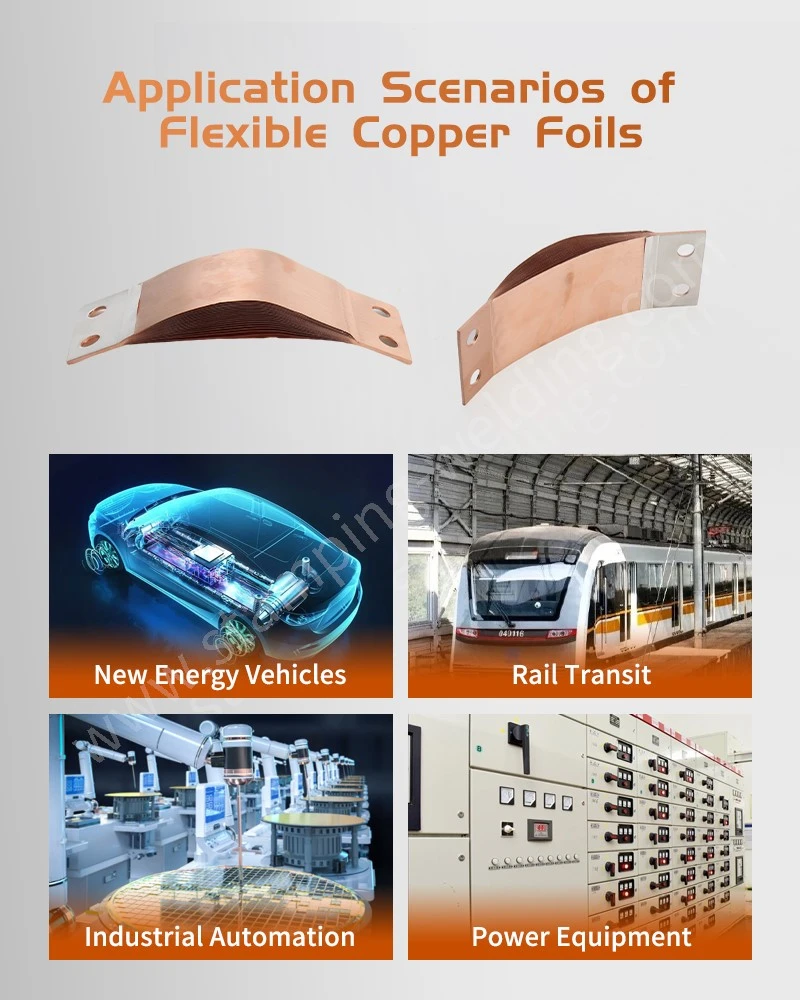
New Energy Vehicle Battery Packs
This is currently a critical application area. Key uses include: cell tab connections, battery module interconnections, high-current connections within the battery pack, and flexible connections between the battery pack and other high-voltage components.
Energy Storage Battery Systems
Energy storage systems also require extensive series and parallel connections between cells. Multi-layer copper foil busbars can be used for conductive connections between cells, between modules, and between modules and busbar assemblies.
Power Electronics Equipment
Flexible copper foil connection structures are also suitable for use in inverters, converters, power modules, and high-power control equipment.
Industrial Electrical Equipment
Copper flexible busbars for lithium batteries are also valuable for high-current connections subject to mechanical vibration or thermal cycling.
How do you determine if a welded multi-layer copper foil busbar is suitable for your project?
During the design phase, key factors to consider include: Rated current, operating voltage, permissible temperature rise, copper foil thickness and layer count, weld length, terminal dimensions, bending radius, mechanical vibration, thermal cycling, and installation space. Product structure should not be determined solely based on the requirement for high current.
For new energy vehicle and energy storage projects, additional considerations include resistance changes after long-term cycling, welding reliability, and mechanical fatigue in the connection zone.
The copper foil multi-layer welding busbar is more than just a flexible copper connector; it is an electrical connection structure that integrates electrical conduction, flexible compensation, mechanical cushioning, and spatial adaptability.
As new energy vehicle batteries, energy storage systems, and high-power power electronics continue to evolve, the value of flexible insulated copper busbar soft connections in applications involving high currents, limited space, and high-vibration environments is garnering increasing attention.
Contact Us