A Foresight Look At The Tin-Plated BusBar Industry: New Energy Driven By Technological Innovation To Lead Future Development
May 02, 2026
Tin-Plated BusBar, as core components of power transmission systems, are experiencing a new round of technological innovation and market expansion due to their superior oxidation resistance and electrical stability. Based on industry dynamics and technological trend analysis, the future development of tin-plated bars will focus on four major directions: new energy integration, technological breakthroughs, green transformation, and industrial upgrading.

The demand for new energy sources is surging, and the market is expanding rapidly.
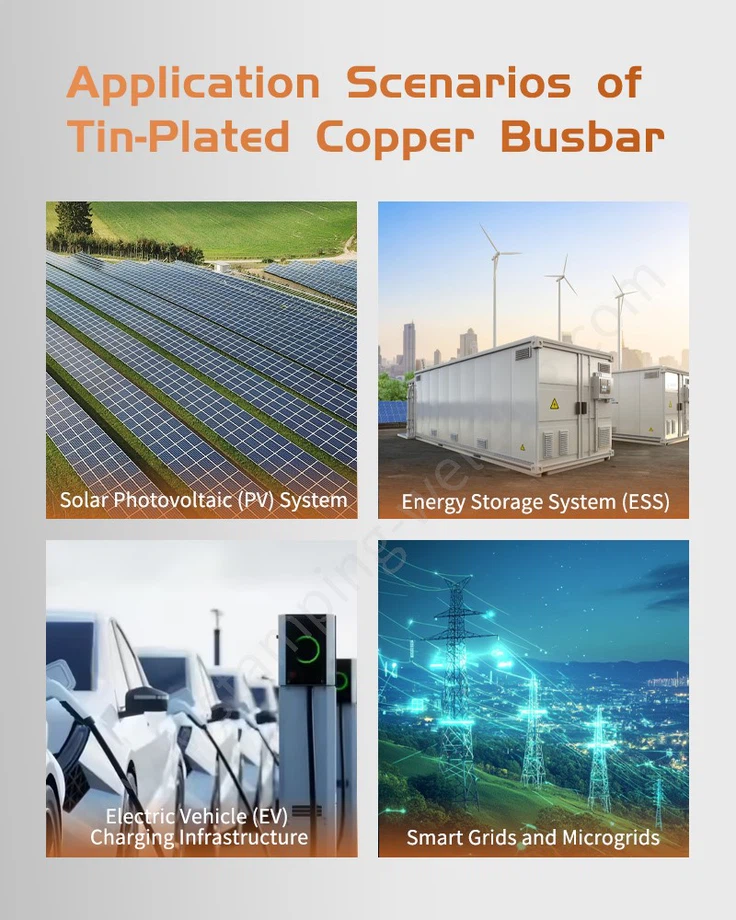
With the accelerated global energy transition, the new energy sector has become the core growth driver for tin-plated busbars. The demand for lightweight, low-cost solutions in the new energy vehicle and charging pile sectors is surging, and tin-plated aluminum bars are gradually replacing traditional copper bars due to their superior cost-effectiveness, with their penetration rate in high-voltage wiring harness systems continuing to increase. Meanwhile, photovoltaic inverters, energy storage systems (ESS), and integrated wind-solar-storage-charging facilities have stringent requirements for conductivity stability, and tin plating, by inhibiting contact oxidation and improving heat dissipation efficiency, has become a key material for CCS (integrated busbar) technology. It is predicted that by 2030, the compound annual growth rate of demand for bars in the new energy sector will exceed 15%.
Technological innovation deepens, and product performance achieves breakthroughs in multiple dimensions
- Material Upgrades and Structural Design: Low resistance and high thermal stability have become key R&D priorities. Iterative advancements in tin plating thickness control and interlayer insulation technology are driving improvements in the product's ability to withstand high-voltage, high-current scenarios.
- Integration and Miniaturization: Emerging fields such as AI hardware and robotics are driving the development of laminated busbars towards more compact structures. Flexible insulated busbars, with their wiring flexibility, are seeing increased application in high-density power transmission.
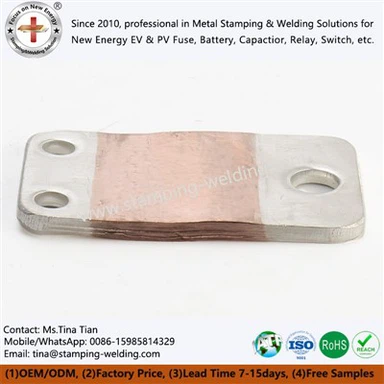
- Surface Treatment Innovation: Tin-coated copper busbars utilize nano-coating technology to enhance corrosion resistance while reducing contact resistance, adapting to the demands of harsh industrial environments.
Green manufacturing and cost reduction and efficiency improvement go hand in hand
- Popularization of Environmentally Friendly Processes: Lead-free tin plating and low-energy production lines are gradually replacing traditional processes, reducing carbon emissions from production.
- Deepening Trend of Aluminum Replacing Copper: In performance-matching scenarios, tin-plated aluminum busbars are accelerating their penetration due to their advantages of 30% weight reduction and 20% cost reduction, but copper busbars still dominate high-current-carrying scenarios.
- Precise Resource Management: The scarcity of tin resources is driving the industry to optimize plating utilization, reducing material waste through precision processes such as laser tin plating.

Industry Reshaping
Facing pressure from both resource supply and market structure, the industry is accelerating its shift towards refined management and intensive, centralized development. Tin, a scarce strategic non-ferrous metal, is experiencing a tightening of overall supply and persistently high price fluctuations, forcing the entire industry chain to optimize production layout, precisely control plating materials, eliminate ineffective raw material waste, and improve the comprehensive utilization rate of tin materials. Industry entry barriers are also steadily rising, with purely basic processing capacity gradually being eliminated by the market. Leading players with independent process R&D capabilities and the ability to provide full-scenario power distribution solutions are continuously integrating high-quality upstream and downstream resources, steadily increasing their overall market share, and driving the entire tin-plated busbar industry chain towards high-end precision and complete service offerings.
Conclusion
The tin-plated busbar industry is entering a phase driven by both explosive demand and technological innovation. Under the wave of the new energy revolution and intelligent manufacturing, tinned copper busbars will continue to push material boundaries, supporting the iteration of power electronic systems with high-performance, low-carbon products, becoming a key foundational component for energy transformation and industrial upgrading. In the next five years, the industry's scale is expected to exceed 100 billion yuan, with technological innovation and green manufacturing becoming core competitive factors for enterprises.
Contact Us
The tin plating process and busbar specifications vary greatly depending on the operating conditions. If you want to match the long-term and stable power needs of your project, you can consult us at any time for professional engineering matching and selection support.