Analysis Of Causes For Excessive Temperature Rise in Copper Laminated Bus Bars And A Comprehensive Optimization Solution
Jul 26, 2026
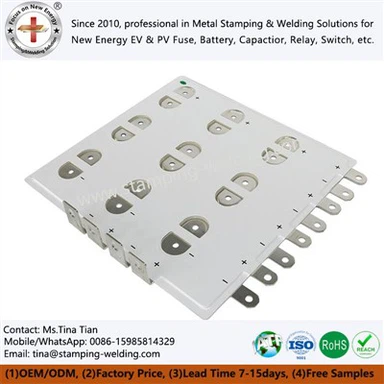
As a core conductive component in electrical equipment, laminated busbars are widely used in various power transmission and electronic control systems. Excessive temperature rise during long-term operation is a common issue that directly impacts equipment stability and service life. In high-frequency operating environments-such as those involving variable frequency drives-Copper Laminated Bus Bars are particularly prone to abnormal heating; this can lead to consequences ranging from forced load reduction and performance degradation to severe safety incidents like insulation aging, short circuits, and fires. Root-cause analyses of equipment failures reveal that excessive temperature rise in laminated busbars typically stems from four key factors: improper load matching, non-standard installation practices, inadequate heat dissipation, and structural design flaws. Addressing these issues is a critical challenge in both industrial electrical maintenance and product design.

Analysis of the Root Causes of Excessive Temperature Rise in Laminated Busbars
Excessive temperature rise in laminated busbars results from a combination of operating conditions, design, installation, and manufacturing defects, with manufacturing flaws serving as the primary underlying cause of long-term heating. Regarding operating conditions, current overload and the high-frequency skin effect increase heat loss; if the busbar selection lacks sufficient margin for the application, high-frequency operation easily leads to excessive temperature rise and performance degradation.
Contact overheating stems from improper on-site installation and inherent manufacturing defects. Incorrect tightening torque during maintenance, as well as contaminated contact surfaces or a lack of conductive grease, increase contact resistance. Meanwhile, poor busbar processing-such as defects in grinding, plating, or stamping; uneven coating thickness or incomplete insulation coverage; and insufficient cleanliness during the production of unplated copper busbars-can lead to permanent process defects like susceptibility to oxidation and localized hot spots.
Poor heat dissipation arises not only from dust accumulation and blocked airflow channels during operation but also from structural flaws in manufacturing. Issues such as rough insulation coverage, excessive insulation thickness, and large gaps between layers-compounded by a lack of designed heat dissipation channels and poor precision in bending and cutting-continuously impede heat conduction, accelerate insulation aging, and cause long-term heat accumulation.
Issues regarding current distribution and inductance-related heating stem from both design and manufacturing. Asymmetrical layouts and unreasonable circuit configurations trigger circulating current losses, while manufacturing inaccuracies-such as misalignment during lamination, deviations in stamping or welding, and dimensional errors-further exacerbate current concentration. High-precision busbars demand exacting tolerances, meaning even minute process errors can result in persistent localized overheating.

Targeted Temperature Rise Optimization and Implementation Solutions
To address temperature rise caused by overloads and high-frequency skin effects, a dual strategy combining operational control with manufacturing optimization is employed. Operations teams strictly monitor load currents and verify high-frequency resistance parameters; meanwhile, manufacturing processes for low-inductance inverter busbars utilize thin-layer structures and optimized cross-sectional areas-incorporating a 1.2–1.5x current margin-to minimize high-frequency heat loss at the source.
To resolve issues with excessive contact resistance, on-site installation protocols mandate specific torque settings, contact surface cleaning, and the application of conductive grease. Production standards for non-tinned copper busbars enforce uniform grinding, plating, and cleaning procedures, strictly controlling surface quality and mating surface precision to eliminate risks of poor contact, oxidation, and overheating caused by manufacturing defects.
To tackle poor heat dissipation, operations teams perform regular dust removal, optimize airflow paths, and install additional cooling equipment. Manufacturing processes upgrade the PET insulation wrapping technique, precisely controlling thickness and adhesion to prevent voids or misalignment, thereby optimizing heat dissipation structures and thermal conduction paths for rack-mount power distribution busbars.
To address current imbalance and stray inductance, electromagnetic simulation is used to optimize busbar layout, ensuring impedance symmetry and orderly circuit paths. Production precision is strictly controlled through processes such as precision stamping, CNC machining, and calibrated lamination to eliminate manufacturing deviations; this reduces circulating currents and inductance losses, effectively enhancing the operational stability of telecom power distribution busbars and comprehensively resolving busbar temperature rise issues.
Professional manufacturing capabilities ensure the quality of laminated busbars
High-performance Copper Laminated Bus Bars rely not only on design optimization but also on stable manufacturing processes. Production integrates various techniques-such as precision stamping, laser welding, resistance welding, vacuum welding, diffusion bonding, electroplating, and CNC machining-to ensure dimensional accuracy, connection reliability, and superior surface quality.
For high-reliability products-including busbars for locomotives and trams, composite busbars for train power supply (four-quadrant power modules), and customized copper laminated busbars for inverters-the company possesses comprehensive manufacturing capabilities across the entire value chain, covering mold development, metal processing, automated assembly, and electrical performance testing.
With extensive manufacturing experience in the new energy and low-voltage electrical sectors, the company operates with group-level capabilities and a robust quality management system. Certified to ISO9001:2015, IATF16949, RoHS, and REACH standards, we deliver stable, reliable products to our customers. Furthermore, we have mastered core metal processing technologies, enabling us to provide one-stop solutions tailored to customer needs-ranging from prototype development and small-batch production to full-scale manufacturing.

Contact Us
If you are seeking highly reliable Copper Laminated Bus Bars solutions-or facing technical challenges related to temperature rise, current-carrying capacity, insulation design, or structural optimization-please contact us. Our engineering team offers professional design support, sample validation, and custom manufacturing services tailored to your specific applications, helping to enhance overall system efficiency and reliability.