Analysis Of Development Trends in The Laminated Busbar Industry: New Energy And High-Power Power Electronics Drive Continued Market Growth
Jul 21, 2026
With the rapid development of sectors such as new energy vehicles, energy storage systems, photovoltaic inverters, and power electronics, the demand for increased power density and highly reliable connections is rising. Consequently, laminated busbars have emerged as critical interconnect components in high-power electrical systems. Compared to traditional cabling or standard copper busbar connections, laminated busbars utilize a composite design of multiple conductors and insulation layers to achieve low parasitic inductance, high current-carrying capacity, and superior thermal management, playing an increasingly vital role in modern power conversion systems.
Industry market research indicates that the global laminated busbar market is maintaining steady growth. It is poised to benefit from the continued expansion of sectors such as electric drive systems for new energy vehicles, energy storage converters, photovoltaic inverters, and industrial power supply equipment. As applications involving high voltage, high frequency, and high power density proliferate, laminated busbar technology is evolving from a mere interconnect component into a comprehensive, system-level electrical solution.

Technical Characteristics: A Low-Inductance Interconnect Solution for High-Power Systems
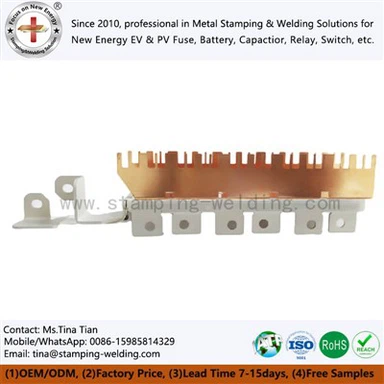
A laminated busbar is a composite electrical interconnect structure formed by using highly conductive materials-such as copper or aluminum-as conductors, separating them with insulating media (e.g., polyimide film or epoxy resin), and bonding the layers together through precision lamination. Its core advantage lies in shortening the current loop distance and tightly coupling the positive and negative current paths, thereby minimizing magnetic field interference and stray inductance.
In traditional power systems, wiring harnesses often introduce significant parasitic parameters. When the system operates at high switching speeds, parasitic inductance can lead to voltage spikes, electromagnetic interference (EMI), and reduced component reliability. In contrast, laminated busbars-designed with a low-inductance structure-effectively optimize commutation loop performance and enhance the operational stability of power semiconductor devices.
For instance, in high-power converters, the compact design of laminated busbars reduces the connection distance between power modules and DC capacitors, enabling faster system response and superior dynamic performance.
Technology Upgrades: Trends Toward Integration, Lightweighting, and Intelligence
As power electronics equipment trends toward miniaturization and higher efficiency, laminated busbar technology is undergoing continuous upgrades.
First, system integration has become a key trend. While traditional busbars primarily served the function of current transmission, new structural designs are increasingly integrating capacitor connections, signal acquisition, and thermal management capabilities, thereby achieving a high level of integration within power units. For instance, laminated busbar solutions in certain applications have evolved beyond simple conductive components; they are now optimized through designs that encompass the entire power module.
Secondly, the demand for lightweighting is driving the development of aluminum-based materials and composite structures. In the sectors of new energy vehicles (NEVs) and rail transit, reducing system weight directly enhances energy efficiency. Consequently, the adoption of lightweight conductor materials and multi-layer composite structural designs represents a key development trend for future high-performance busbars.
Furthermore, intelligent monitoring technologies are being applied to laminated busbar systems. By integrating sensors for parameters such as temperature and voltage, these systems enable real-time monitoring of operational status, thereby improving equipment maintenance efficiency and safety.

NEVs and Energy Storage Drive Market Demand
The rapid growth of the new energy vehicle industry is a primary driver of the laminated busbar market. Electric drive systems, traction battery systems, and on-board power modules in electric vehicles all require highly reliable and efficient electrical connection structures.
In the NEV sector, laminated busbars are increasingly replacing traditional wiring harness solutions; by reducing connection impedance and saving space, they boost the power density of electric drive systems. Additionally, two-layer laminated busbars-specifically designed for the high-frequency switching environments found in hybrid vehicles-have become essential components of their electronic control systems.
The energy storage sector also generates significant demand. As large-scale energy storage power stations and commercial/industrial energy storage systems expand, Power Conversion Systems (PCS) must support higher power and voltage levels. Thanks to their low inductance and high reliability, laminated busbars are widely used in DC-side connections, power modules, and high-power conversion equipment.
In the field of photovoltaic (PV) inverters, multi-layer laminated busbar solutions meet the rigorous demands of high voltage, high current, and long-term outdoor operation, thereby enhancing the reliability of inverter equipment.
Manufacturing Process Upgrades Enhance Product Performance
The manufacturing of laminated busbars involves several critical stages-including conductor processing, insulation treatment, lamination, and precision machining-placing high demands on manufacturing processes and quality control. During conductor processing, dimensional precision for copper or aluminum busbars must be ensured to minimize assembly errors and optimize current distribution.
Insulation processing requires balancing dielectric strength, thermal resistance, and long-term reliability.
As high-voltage applications proliferate, high-voltage insulation design has become a key focus for the industry. For instance, high-voltage explosion-proof inverter busbars demand superior insulation reliability, mechanical strength, and environmental resilience, making them particularly suitable for high-voltage inverters and complex industrial environments.
Simultaneously, advancements in automated production technology have boosted the manufacturing efficiency of laminated busbars. The adoption of processes such as precision stamping, laser processing, and automated lamination has further enhanced product consistency and mass-delivery capabilities.

Expanding Application Fields and Diversifying Market Demand
Laminated busbars are currently widely used in sectors such as new energy vehicles, power electronics, rail transit, photovoltaic energy storage, and industrial automation.
In industrial variable-frequency drive (VFD) equipment, laminated busbars designed for high-frequency inverters meet the need for low-loss connections in high-frequency switching environments, thereby improving system efficiency.
In the rail transit sector, laminated busbars are utilized in traction inverter systems, providing stable and reliable power transmission paths for trains.
For complex electrical systems, laminated busbars can be custom-designed based on equipment space, current ratings, and insulation requirements to suit diverse application scenarios.
Furthermore, the evolution of power semiconductor technology-specifically the rise of IGBTs and next-generation wide-bandgap devices-has created a demand for low-inductance connections. Consequently, customized laminated busbars for IGBTs have become essential components in industrial inverters, motor control systems, and new energy equipment.
Industry Competition: Shifting from Manufacturing to System Design Capabilities
Future competition in the laminated busbar industry will extend beyond the manufacturing of individual products to focus increasingly on comprehensive system design capabilities.
Enterprises must possess integrated expertise spanning material selection, electromagnetic simulation, structural design, manufacturing processes, and reliability validation. Relying solely on traditional manufacturing capabilities is insufficient to meet market demands, particularly in high-voltage, high-frequency, and high-temperature environments.
Driven by the growth of new energy vehicles, energy storage, and smart grids, the market demand for customized busbar solutions continues to rise. Given the significant variations in current capacity, spatial configuration, insulation class, and mounting methods across different types of equipment, laminated busbar products are increasingly moving toward high levels of customization.
At the same time, specialized structural designs-such as two-layer, four-conductor laminated busbars developed for hybrid transit inverters-are driving the technology toward greater specialization.

Future Trends: High-Performance Materials and System Integration Driving Industry Upgrades
In the coming years, the laminated busbar industry will continue to evolve with a focus on high-voltage capabilities, high-frequency operation, lightweight design, and intelligent functionality.
As 800V high-voltage platforms for new energy vehicles, next-generation energy storage systems, and high-power industrial equipment see rapid adoption, market demand for low-inductance laminated busbars is set to rise further.
Meanwhile, as advanced insulation materials and composite conductor technologies mature, laminated busbars will be deployed in higher-voltage and more complex operating environments. High-end applications-such as those involving Mersen-underscore the industry's ongoing need for highly reliable interconnection technologies.
Overall, laminated busbars have evolved from simple electrical connection components into critical foundational elements that significantly influence the performance of power electronic systems. Looking ahead, as the new energy sector, power electronics, and intelligent manufacturing continue to converge, laminated busbars will play an increasingly pivotal role in global energy conversion and high-efficiency electrical systems.
contact us