Analysis Of The Application And Development Trends Of Insulated Busbars in Modern Power Systems
Jun 21, 2026
Insulated busbars, as key conductive components in power transmission and distribution systems, play a crucial role in power generation, substation, and industrial and building power distribution. With the development of electrical systems towards higher density and higher reliability, insulated busbars have gradually become one of the core basic components for improving system safety and stability. Meanwhile, the application of PVC-insulated copper busbars in medium and low voltage power distribution continues to expand.

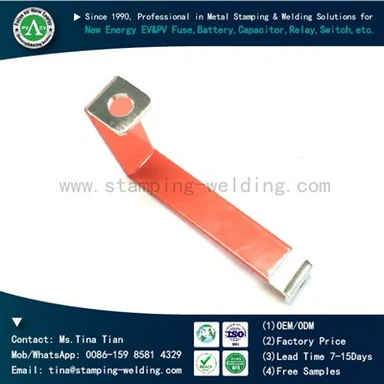
Structurally and materially, insulated busbars typically use copper or aluminum as the conductor substrate, combined with different insulation processes to achieve electrical isolation and protection functions. Pure copper insulated busbars, due to their excellent conductivity and stability, are widely used in high-load power distribution scenarios. In applications with higher protection requirements, PVC-dipping cover copper busbars improve environmental resistance through their outer covering structure, while PVC-insulated copper busbars for electrical connections emphasize safety and adaptability in complex electrical connection systems.
In terms of product types and structural evolution, insulated busbars have developed diverse technological approaches. For example, battery bus bars are primarily used in energy storage and power battery systems to achieve efficient current convergence; insulated flat copper bus bars improve space utilization and heat dissipation efficiency with their flat structure.
In new energy vehicles and energy storage systems, PVC-dipped laminated flexible copper enhances flexibility and conductivity stability through a multi-layered composite structure, while tin-coated insulated flat copper bus bars for batteries improve oxidation resistance and contact reliability through tin plating. Furthermore, for high-end electric vehicle applications, PVC-dipping nickel-plated copper bus bars for EV batteries further optimize corrosion resistance and conductivity, while PVC-dipping insulated battery busbar connectors provide higher assembly efficiency in modular battery connections.
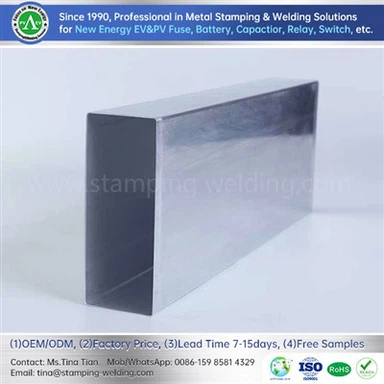
At the engineering application level, insulated busbars are widely used in distribution cabinets, energy storage systems, and industrial power distribution systems. Custom solid power bus bars with insulated dipping tubes are commonly used in high-power-density equipment to improve structural strength and insulation safety levels. Meanwhile, plated PVC-dipping insulated copper busbars exhibit more stable long-term operation in complex electrical environments, meeting the stringent reliability requirements of industrial-grade power systems.

With the development of power electronics technology and the new energy industry, the product system of insulated busbars is constantly evolving towards high performance, modularity, and customization. In the future, various structural forms, including Insulated Flat Copper Busbar, will continue to expand their application boundaries in smart grids, energy storage systems, and new energy vehicles, driving further upgrades in power connection technology.
contact us