Upgraded Safety Insulation Connection Technology: Analysis Of Application Trends Of Laminated Busbars in High-Reliability Power Systems
Jun 20, 2026
As power electronic systems continue to evolve towards higher voltage, higher power density, and higher integration, the importance of safe insulation connection technology is constantly increasing. Laminated busbars (SIC applications), as a novel composite conductive structure solution, are gradually replacing traditional bare busbars and distributed cable connections, becoming a key technological path to improve system safety and space utilization efficiency.

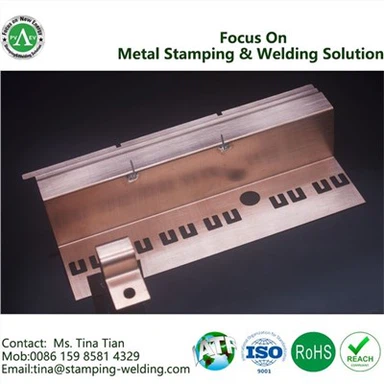
From a structural design perspective, laminated busbars are typically composed of alternating layers of conductive copper and high-performance insulating materials. The conductive layers can utilize laminated busbar copper without tin plating to reduce contact resistance and improve current transmission efficiency; simultaneously, stable electrical isolation is achieved through busbars with PET insulating paper, ensuring reliable insulation performance even under high-frequency vibration and complex electromagnetic environments. This integrated laminated structure significantly reduces reliance on air gaps in traditional connections, fundamentally improving system safety levels.
In terms of performance advantages, this type of busbar not only possesses low impedance and high current-carrying capacity but also excels in thermal management and mechanical stability. The flat structure facilitates uniform heat dissipation, reduces the risk of localized temperature rise, and maintains structural integrity under high-frequency impact conditions. For example, in applications using laminated bus bars for variable frequency drives, they effectively mitigate transient voltage surges from inverter switches, improving system stability.
Furthermore, in high-power modules such as Power Distribution Unit BusBars and Motor Controller BusBars, their low parasitic inductance helps suppress electromagnetic interference and improve overall power quality.
At the application level, laminated bus bars have been widely adopted in various high-end power and information system fields. In data centers and high-performance computing, laminated bus bars for supercomputer circuit boards or backplanes and for distributing power backplanes are used in high-density power supply architectures to meet the stringent requirements of computing equipment for stable power distribution.

In the communication infrastructure, laminated bus bars for cellular base station power distribution and for telecom power distribution ensure a continuous power supply to base stations and core communication equipment. Meanwhile, in network equipment, laminated bus bars for router backplane distribution and for internet router backplanes optimize internal power path layout and reduce energy loss.
In the industrial and transportation sectors, application scenarios continue to expand. For example, in rail transit systems, composite busbars for train power supply four-quadrant power modules are used in traction power supply and energy feedback systems to improve energy efficiency conversion levels; in energy storage and uninterruptible power supply (UPS) systems, system busbars enhance the system's transient response capability under power outage conditions; in industrial automation equipment, laminated busbars for rack-mount power distribution are used for rack-level power integration, improving cabling efficiency and maintenance convenience.
Furthermore, in the medical and professional equipment fields, laminated busbars for medical imaging testing devices improve the operational stability and anti-interference capability of imaging equipment by optimizing power distribution paths; in special display and stage systems, laminated busbars for PDA assembly and hit-in-stage lighting systems are increasingly being used in high-frequency dynamic load control scenarios to achieve more stable power output performance.
From a technical specification perspective, these products typically need to meet requirements such as high flame retardancy ratings, heat aging resistance, and high insulation breakdown strength to adapt to different voltage levels and environmental conditions. Meanwhile, creepage distance, electromagnetic compatibility, and thermal expansion coefficient matching must be comprehensively considered during the design phase to ensure long-term operational reliability.

Overall, laminated busbar technology is driving the evolution of power connection methods from "distributed wiring" to "integrated conductive systems." With the continued development of industries such as new energy, electric transportation, and high-performance computing, its role in high-reliability power distribution systems will be further enhanced, becoming a key fundamental component in future power electronic architectures.
contact us