How to Control Dimensional Tolerance in Precision Metal Stamping Production?
Jul 23, 2026
In metal stamping manufacturing, dimensional consistency is a critical factor influencing product assembly performance, electrical reliability, and the stability of batch deliveries. Particularly in sectors such as new energy vehicles, power equipment, connectors, and switching components, precision metal stamping often must meet stringent dimensional tolerances; any dimensional drift across a batch can lead to assembly difficulties, contact irregularities, or degraded product performance.
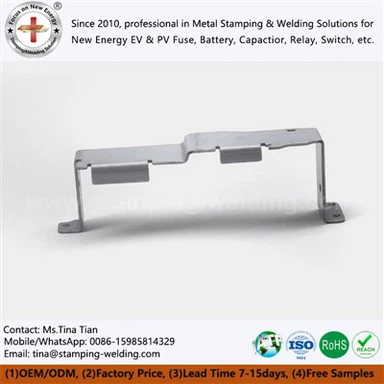
Dimensional deviations in batch stamping are not caused by a single factor but result from the combined influence of various elements, including die condition, material variability, equipment stability, process parameters, and inspection management. For instance, the continuous production of precision conductive copper stamped parts requires the simultaneous control of key parameters such as hole positions, bend heights, profile dimensions, and flatness.
Therefore, achieving stable dimensional control in stamping necessitates the establishment of a comprehensive management system that spans the entire process-from product design and die development to the production phase and quality inspection.

Analysis of the Root Causes of Dimensional Deviations
Dimensional deviations in stamped parts typically result from a combination of factors, which can be systematically categorized into four primary causes: material, tooling, equipment, and process. Variations in batch thickness, hardness, and yield strength-common in metal sheets such as copper-directly alter the amount of springback during forming, serving as a fundamental cause of dimensional instability. Springback is particularly pronounced when stamping high-strength materials; relying solely on die dimensions cannot compensate for the deformation, making it highly likely that finished parts will fall outside tolerance limits.
Wear on tooling and equipment is a primary driver of dimensional drift during mass production. Prolonged use of progressive stamping dies leads to cutting-edge wear and increased clearances in guiding components; when compounded by issues such as locating pin wear and blank misalignment, these factors cause positioning errors and continuous shifts in the reference datum. Simultaneously, continuous operation generates heat, causing thermal expansion in both the press frame and the die; this results in deviations in the slide stroke, further amplifying dimensional errors. Furthermore, arbitrary adjustments to process parameters on the shop floor and the absence of standardized operating procedures exacerbate dimensional variations between production batches.
Solutions and Manufacturing Process Control
To fundamentally resolve dimensional deviations in mass production, a comprehensive control system covering source-based prevention, process standardization, and closed-loop anomaly management must be implemented. During the design phase, CAE simulation is used to predict springback and guide negative deviation compensation, punch modification, and clearance optimization; positioning structures strictly adhere to the "3-2-1" datum principle to eliminate datum ambiguity, while critical tooling dimensions are controlled according to product tolerance requirements. Prior to mass production, sheet metal thickness tolerances and mechanical properties are rigorously verified, and core parameters-such as blank holder force, stamping speed, and die clearance-are standardized; standard process specifications are replicated during changeovers, and unauthorized parameter adjustments are strictly prohibited.
Simultaneously, a full-lifecycle maintenance mechanism is established, mandating inspections, polishing, and the replacement of worn components based on production cycles to mitigate dimensional drift caused by tool degradation. In the event of a deviation, production is immediately halted and affected products quarantined; root causes are investigated across the "5M1E" dimensions (Man, Machine, Material, Method, Environment, and Measurement). Following corrective actions, full-dimensional verification is conducted via a small-batch trial run (3–5 parts), and FMEA and SOP documents are updated to completely prevent the recurrence of similar issues.

Standardized Testing and Data Interception Methods
A robust inspection system serves as a critical line of defense for promptly intercepting batches of defective parts and predicting dimensional drift. The industry standard entails a routine inspection protocol combining full-dimensional inspection of the first article with hourly patrol inspections; high-precision verification of key features-such as hole locations and profile tolerances-is conducted using dedicated checking fixtures, Coordinate Measuring Machines (CMMs), and blue-light scanning equipment. Statistical Process Control (SPC) charts are integrated throughout the precision metal stamping process to monitor dimensional trends in real time; should consecutive out-of-tolerance readings or values approaching control limits occur, production is immediately halted to trace the root cause and implement corrective actions. This approach shifts the focus from reactive inspection to proactive warning, thereby ensuring dimensional stability across production batches.
Core Manufacturing Advantages of the Enterprise
Our precision stamping capabilities cover mold development, progressive stamping, CNC machining, electroplating and automated inspection. With an experienced team of engineers and integrated manufacturing processes, we help customers improve dimensional stability, reduce production risks, and achieve reliable mass production.
We have obtained ISO9001, IATF16949, RoHS and REACH certifications and are committed to providing customized stamping solutions for electrical components, connectors and new energy applications.
Contact Us
If you are seeking a precision stamping supplier that offers stable dimensional control and reliable mass production capabilities, we provide one-stop, customized solutions-ranging from tool development to manufacturing-tailored to the electrical and new energy sectors.