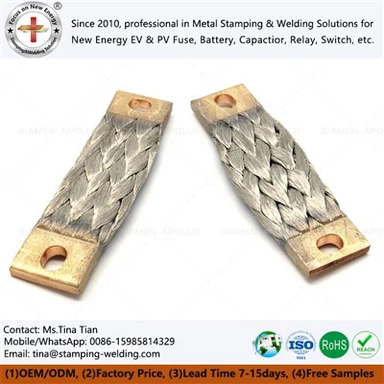
Analysis Of Causes And Optimization Methods For Excessive Contact Resistance in Brass Sheet Metal Parts Terminal
Jul 23, 2026
In low-voltage electrical and switch connection systems, Brass Sheet Metal Parts Terminal are frequently utilized as conductive terminals and contact springs. While brass offers moderate costs and excellent formability, it is more prone than pure copper or phosphor bronze to issues such as surface oxidation and a decline in contact pressure; these problems can ultimately lead to excessive contact resistance, high operating temperatures, and poor electrical contact. Consequently, systematically optimizing brass stamped terminals to address abnormal resistance is crucial for enhancing the stability of electrical connections and extending the service life of the equipment.

Analysis of the Root Causes of Excessive Contact Resistance
The causes of excessive resistance in brass terminals stem from four key areas: structure, material, manufacturing process, and operating conditions; brass sheet metal stamped parts are particularly prone to a combination of these issues during mass production and long-term use. First, mechanical structural defects-such as insufficient contact spring pressure or inadequate cantilever rigidity-prevent the terminal from effectively piercing the surface oxide layer, thereby drastically reducing the actual microscopic contact area. Second, material limitations play a role; brass has inherently lower electrical conductivity, and improper base material selection or high impurity levels directly increase the baseline contact resistance.
Inadequate surface treatment is another major contributing factor. Bare brass or poor-quality plating oxidizes rapidly upon exposure to air, forming a high-resistance oxide film, while residual manufacturing oils and excessive surface roughness further disperse contact points. Furthermore, failure to relieve residual stresses from the stamping process leads to elastic relaxation over time; as contact pressure progressively declines, the equipment exhibits rising resistance and compromised connection stability after a period of operation.
Comprehensive optimization solution
To address issues with abnormal resistance, a multi-dimensional optimization approach-covering structure, plating, surface precision, and material processing-can be employed to enhance terminal conductivity and meet the standards of various electrical connection applications. For stamped brass electrical contact assemblies, mold design upgrades can extend the effective travel of contact springs, while reinforced dual-cantilever designs increase normal contact pressure, thereby ensuring sufficient microscopic contact area from a mechanical standpoint.
Regarding surface processing, plating strategies should be selected based on specific operating conditions: silver plating or thickened gold plating (with a nickel barrier layer) is used for high-current, high-reliability applications, whereas high-purity tin plating replaces bare copper contacts for low-to-medium signal applications. During production, contact surface roughness is strictly controlled within the Ra 0.2–0.4 μm range, and ultrasonic cleaning is utilized to eliminate residual oil or contaminants. Additionally, stable brass alloys such as C26000 are selected, and stress-relief heat treatment is applied to eliminate residual stamping stresses and prevent long-term elastic degradation; friction-based designs can also be incorporated into the assembly structure to dynamically remove oxide films and stabilize contact resistance.

Standardized Production and Process Inspection
Robust production control and pre-shipment inspection processes are essential to resolving issues with excessive terminal resistance; all Brass Sheet Metal Parts Terminal undergo standardized testing. Strict controls are implemented throughout the production cycle-covering material selection, stamping, cleaning and plating, and stress relief-to eliminate process defects. Precision contact resistance measurements are obtained using the four-wire Kelvin testing method to rule out measurement errors. Additionally, the design is systematically evaluated for crimp compression ratios, structural reinforcement, and environmental corrosion protection; long-term electrical continuity stability is verified through salt spray aging and high/low-temperature cycling tests, thereby preventing resistance degradation at the source.

Corporate Manufacturing Advantages
As a manufacturer with a comprehensive metal processing system, our company covers the entire production lifecycle-from mold development, stamping, and electroplating to automated inspection.
Leveraging in-house capabilities across stamping, mold making, electroplating and cleaning, welding, and automated equipment assembly, our company delivers:
- Precision metal stamping;
- Multi-process integrated manufacturing;
- Electroplating surface treatment;
- Electrical performance testing;
- Customized production support.
The company holds certifications such as ISO9001:2015, IATF16949, RoHS, and REACH, enabling it to meet supply chain requirements for industries including automotive electronics, new energy, and electrical control.
Drawing on extensive technical experience in the electrical industry, the manufacturing team not only supplies reliable stamped brass electrical contact assemblies but also offers process optimization solutions-covering mold improvements, material selection, and production efficiency enhancements-tailored to the customer's product structure, contact performance requirements, and cost targets.
Contact Us
If your Brass Sheet Metal Parts Terminal suffer from issues such as high contact resistance, abnormal temperature rise, or insufficient reliability, we can provide support-including material optimization, mold improvements, plating solutions, and precision manufacturing-tailored to the product structure, electrical parameters, and application environment to help enhance long-term connection performance.