Copper Busbar Assemblies For Film Capacitors in New Energy Vehicles: Materials, Manufacturing Processes, And Welding Quality Control
Oct 03, 2026
As new energy vehicles (NEVs) evolve toward higher power density, efficiency, and reliability, the requirements for electrical energy transmission and voltage stability within electric drive systems are becoming increasingly stringent. Thanks to their high-voltage withstand capability, excellent high-temperature adaptability, low losses, and long service life, film capacitors are widely used in the electronic control and power conversion stages of NEVs. The associated busbar assemblies facilitate current transmission, terminal connections, and circuit continuity; factors such as material selection, structural design, welding quality, and surface treatment directly impact the electrical performance and long-term reliability of the capacitor assemblies.
In NEV power systems, capacitors typically handle DC-link functions, filtering, and transient energy regulation. High-speed switching of power devices generates rapidly changing voltages and currents; stable, low-impedance conductive connections help minimize parasitic parameters in the circuit and mitigate voltage fluctuations during system operation. Consequently, busbar design for NEVs must not only meet current-carrying capacity requirements but also integrate considerations regarding capacitor structure, installation space, connection methods, and thermal management.
From a system architecture perspective, busbars in NEV electric drive systems must interface with power modules, capacitors, and other electrical components, with their dimensions and mounting methods constrained by the vehicle's packaging space. For high-power electronic control systems, busbars must also accommodate high current densities while ensuring mechanical strength and thermal cycling stability. The "BusBar Car" structure-a specific configuration used in NEV electrical interconnection systems-is optimized to address the vehicle's spatial constraints and power transmission requirements.
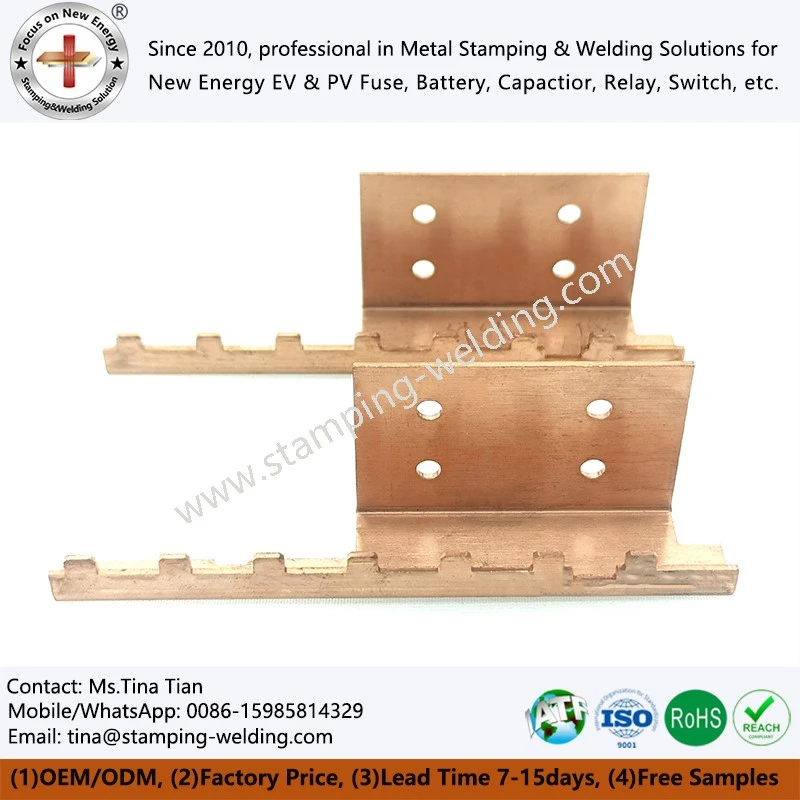
In film capacitor applications, copper busbars typically serve as the current-carrying link between the capacitor and the power circuit. The conductor material requires excellent electrical conductivity, processability, and weldability, while also meeting dimensional consistency standards for mass production. T2 copper (pure copper) is widely used in NEV power interconnection components due to its high electrical conductivity, good ductility, and excellent performance in both cold and hot working processes.
Through processes such as stamping, bending, welding, and surface treatment, T2 copper busbars can be fabricated into assemblies that precisely match the terminals of film capacitors. Based on electrical connection requirements, busbars can be designed with various structural configurations to optimize current paths; dimensions such as length, width, bending angles, and connection points can be adjusted to fit the available installation space. For power circuits requiring low connection impedance, the design of the conductor cross-section and connection zones is particularly critical.
Structurally, a busbar for film capacitors is not merely a conductive metal sheet but an interconnect component that must satisfy electrical, mechanical, and manufacturing requirements simultaneously. Design considerations include current-carrying capacity, terminal positioning, insulation clearance, mounting orientation, welding zones, and space for subsequent assembly. For mass-produced products, factors such as stamping consistency and dimensional tolerance accumulation across different manufacturing stages must also be addressed.
In new energy vehicle (NEV) applications, the quality of the connection between the busbar and the capacitor directly impacts current transmission stability. Defects in the welding zone-such as incomplete penetration, cold joints, cracks, porosity, or visible gaps-can increase local contact resistance and lead to localized overheating during sustained high-current operation. Consequently, the weld joint must maintain a continuous, robust, and stable connection, with quality verified through visual inspection and necessary reliability testing.
For NEV film capacitor busbars, the selection of conductor materials, welding processes, and surface treatments must align with actual operating conditions. NEVs operate under conditions involving temperature fluctuations, vibration, heat and humidity, and frequent start-stop cycles; busbar assemblies must withstand significant thermal cycling and mechanical stress, meaning that focusing solely on initial electrical conductivity is insufficient to ensure performance over the product's entire lifecycle.
During the material processing stage, incoming copper strip stock undergoes inspection. This typically covers material grade, thickness, width, surface condition, and relevant mechanical properties. For mass-production projects, consistent raw material specifications help minimize dimensional variations during subsequent stamping, bending, and welding operations.
Wire brushing (or surface texturing) is primarily used to refine the metal's surface texture and appearance while allowing for surface pre-treatment based on product specifications. For copper components requiring subsequent welding or plating, brushing parameters must be coordinated with downstream processes to prevent surface damage from over-processing or adverse effects on subsequent treatment quality.
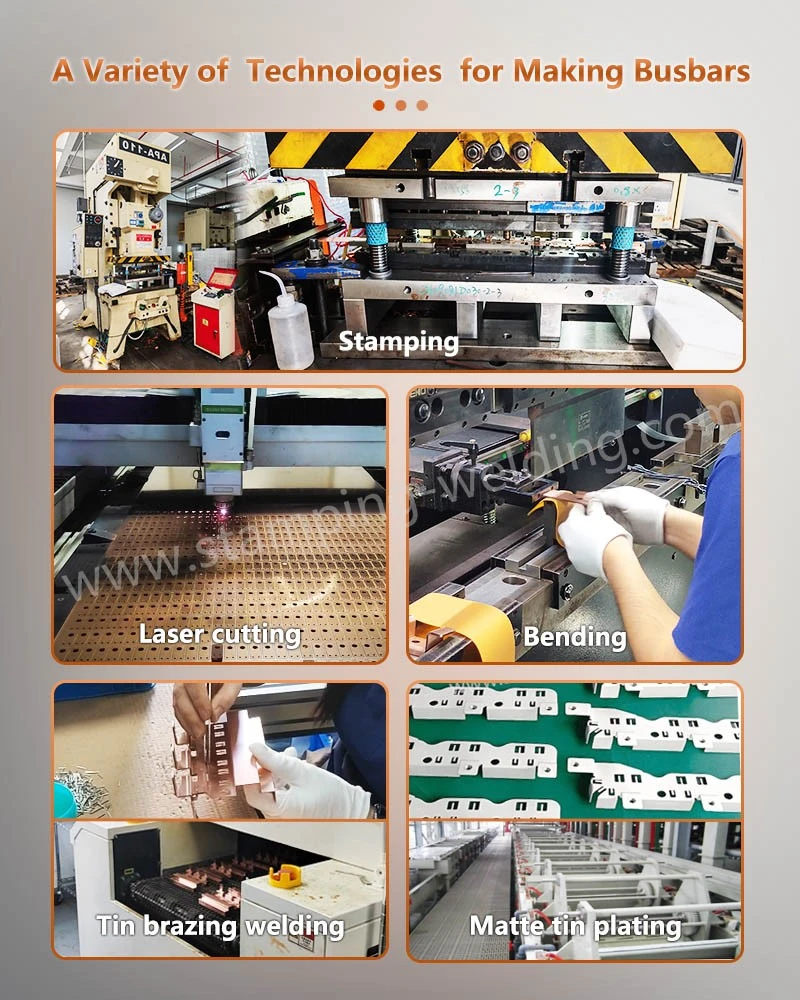
Stamping is a key forming process in the manufacture of copper busbar assemblies. The tooling (die) enables the forming of external contours, mounting holes, positioning features, and certain connection zones. For complex busbar products, factors such as tooling precision, stamping clearance, material deformation, and burr control influence the final dimensions. Consistency in hole positioning and edge dimensions requires particular attention, especially for products that must mate precisely with capacitor terminals.
Following the stamping process, some busbars require bending. The bending process transforms flat copper bars into three-dimensional structures by precisely controlling tool positioning, pressure, bend radius, and material springback. Given the typically compact electrical packaging in new energy vehicles, the busbar's 3D bent geometry must align with the capacitor, power module, and housing constraints. A well-designed bending configuration minimizes installation interference and prevents excessive localized deformation of the conductor.
In high-current applications, the structural design of automotive busbars must also prioritize the continuity of the current path. Excessively narrow conductor sections, abrupt changes in cross-sectional area, or poorly placed connections can lead to increased local current density. Therefore, conductor width, thickness, and connection zones should be comprehensively evaluated based on actual current requirements during the structural design phase.
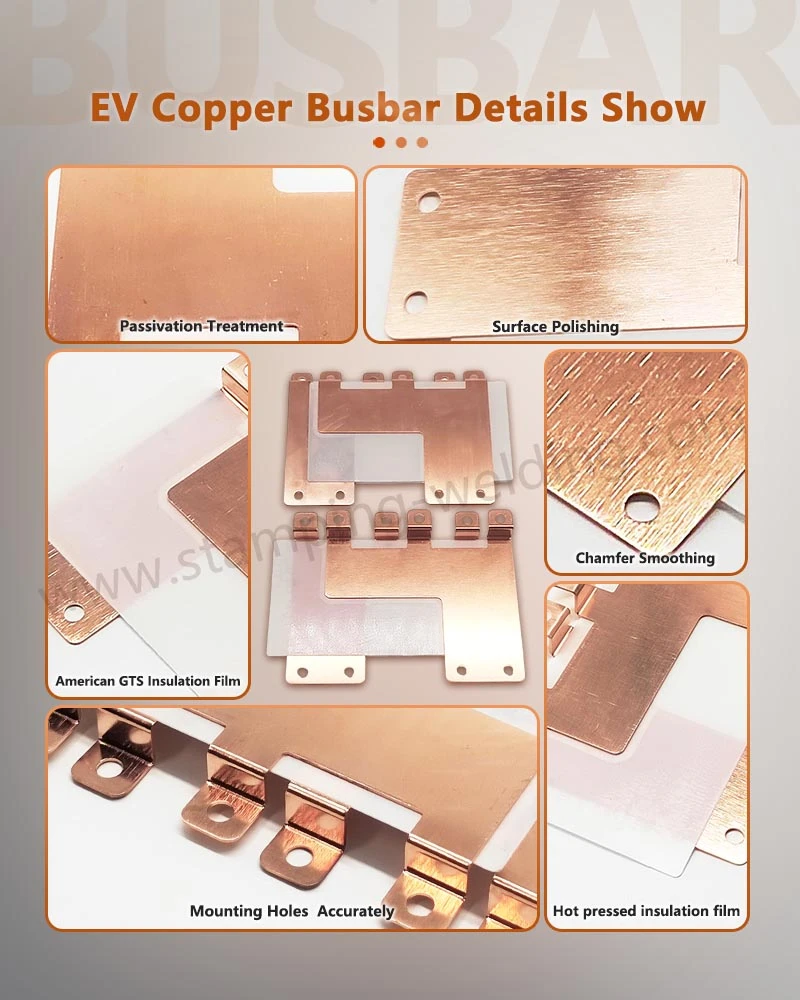
Welding is a critical step in establishing a reliable connection between the busbar assembly and the capacitor. In production, the appropriate welding method must be selected based on copper thickness, joint geometry, thermal capacity, and connection specifications, while parameters such as temperature, duration, pressure, and energy input are carefully controlled. Thermal management is particularly crucial when welding copper due to its high thermal conductivity; insufficient heat input may result in an inadequate bond, whereas excessive heat can damage surrounding insulation materials or other functional areas.
Post-welding inspections should focus on the continuity, formed shape, and surface integrity of the weld zone. For high-specification products, connection quality can be further verified through methods such as tensile testing, cross-sectional analysis, and electrical resistance measurements. Establishing a stable process window for welding parameters helps minimize variability in weld consistency during mass production.
Tin plating may be applied to enhance the busbar's surface corrosion resistance and weldability. Tin-plated copper busbars offer excellent surface solderability and mitigate oxidation issues that arise when the copper substrate is directly exposed to the environment. By precisely controlling the tin layer thickness and surface condition, stable electrical conductivity and soldering performance can be maintained at connection points.
The properties of tin-plated busbars for automotive applications are primarily enhanced by forming a tin layer on the copper substrate. During production, coating quality depends heavily on stages such as pre-treatment, activation, electroplating parameters, rinsing, and drying. Inadequate pre-treatment can compromise coating adhesion, while inconsistent control over rinsing and drying may lead to surface contamination or oxidation during subsequent storage and assembly.
A typical tin-plating process involves incoming material inspection, degreasing, pickling, rinsing, activation, copper plating, tin plating, recovery, rinsing, dewatering, drying, and final inspection. The specific process flow must be adjusted based on the copper grade, product structure, coating specifications, and subsequent welding requirements. For power connectors in new energy vehicles, the coating serves not only to protect the surface but must also be compatible with downstream welding and assembly processes.
Components require cleaning after welding and surface treatment. For capacitors and their connecting assemblies, residual oil, metal particles, flux, or other contaminants can impair subsequent assembly and long-term reliability. Consequently, the cleaning method is selected based on specific cleanliness requirements. For complex busbar assemblies, ultrasonic cleaning-suitable for precision metal parts-may be employed to ensure effective cleaning in intricate areas and crevices.
In the power systems of new energy vehicles, busbar components must also provide electrical insulation and mechanical fixation. As copper busbars are conductive elements, their design and assembly must maintain required electrical clearances from adjacent conductors and metal structures, with insulation systems configured according to the system's voltage rating.
For space-constrained products, conductive areas can be isolated using insulating films, sleeves, overmolded structures, or other insulation solutions. When a busbar and a capacitor form an integrated assembly, the mechanical mounting method must fully account for the vibration and shock experienced during vehicle operation. The busbar should not rely solely on the welded areas to withstand all mechanical stresses; instead, loads should be distributed-where necessary-via structural supports, positioning components, or insulating fasteners to mitigate the risk of long-term mechanical fatigue at solder joints.
In certain high-power systems, the short connection distance between the busbar and the film capacitor helps minimize the high-frequency current loop. An optimized connection structure helps reduce parasitic loop parameters and minimizes unwanted voltage fluctuations during high-speed switching. Consequently, the design of busbars for power capacitors typically requires simultaneous consideration of both electrical connectivity and mechanical structure.
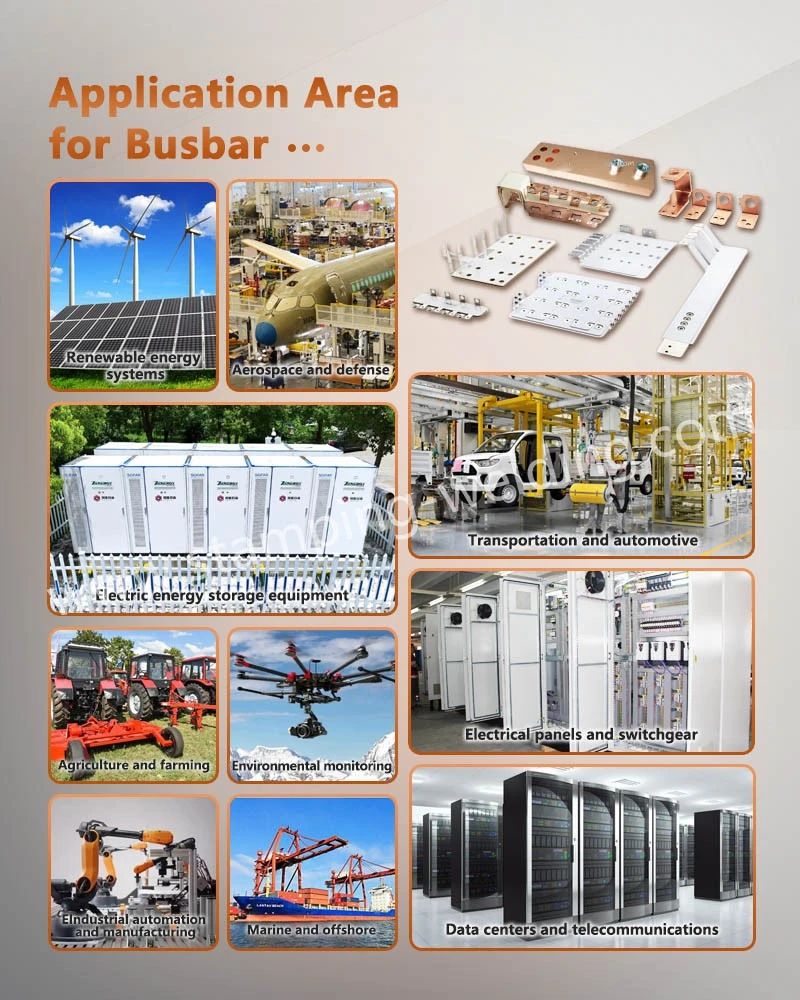
From an application perspective, film capacitor busbars are used not only in conventional new energy vehicles but increasingly in hybrid electric vehicles, fuel cell vehicles, and other high-power power electronics equipment. Since different powertrain architectures impose varying requirements regarding voltage levels, current capacity, and spatial layout, busbar assemblies often require dimensional and structural adjustments tailored to specific platforms.
Hybrid systems also entail high current transmission demands during motor driving and energy conversion. Busbars for hybrid electric vehicle film capacitors must align with capacitor terminal configurations, electronic control modules, and the vehicle's overall electrical architecture, while also meeting operational requirements for temperature and vibration resistance.
As the electrification of new energy vehicles advances, the level of integration between busbars and capacitors is also increasing. Traditional discrete wiring connections are gradually giving way to metal conductor connections that offer more compact structures and clearer current paths. For film capacitors, a well-designed busbar structure can shorten current paths and reduce the number of unnecessary connection points.
In certain power electronics systems, capacitors serve to stabilize DC-side voltage and provide transient energy support; therefore, the connecting busbar requires low connection impedance and sufficient current-carrying capacity. Designing busbars for electric vehicle film capacitors involves not only conductor dimensions but also the synergistic relationship between terminal layout, welding zones, and insulation structures.
For electrical connection products, post-production quality inspection typically encompasses dimensional checks, visual inspections, plating quality assessments, weld quality verification, and necessary electrical performance testing. While manual visual inspection can detect obvious defects such as burrs, scratches, deformation, oxidation, and surface contamination, dimensional and electrical tests serve to further confirm compliance with design specifications.
During the sorting and packaging stages, copper busbar assemblies must be protected against mechanical impact, moisture, and contaminants. Tin-plated copper components require appropriate packaging environments during storage to minimize the risk of surface oxidation and contamination. For mass-produced components entering the new energy vehicle (NEV) supply chain, a batch traceability mechanism is essential to link raw materials, processing parameters, inspection results, and packaging batches.
With the evolution of high-voltage platforms and high-power electric drive systems in NEVs, busbar assembly design is shifting from simple conductive connectors toward integrated designs that harmonize electrical, mechanical, thermal management, and insulation functions. Future connections between busbars and film capacitors will increasingly prioritize structural integration, low parasitic parameters, automated manufacturing, and long-term reliability.
In high-voltage DC systems, the structural dimensions, insulation clearances, and connection methods of DC capacitor busbars must be designed holistically, taking into account system voltage levels and actual operating environments. Customization is required to match specific vehicle models and electronic control platforms based on current ratings, spatial constraints, temperature rise limits, and mounting configurations.
Overall, the performance of copper busbar assemblies for NEV film capacitors is not determined by any single material or process step; rather, it is the result of a combination of factors, including material selection, stamping, bending precision, welding quality, surface plating, cleanliness, insulation structure, and final inspection. Establishing stable manufacturing processes and traceable quality control systems ensures that these components meet the rigorous reliability requirements of NEV power electronics.
From an engineering procurement perspective, selecting busbar assemblies for NEV film capacitors requires close collaboration with suppliers to finalize comprehensive technical specifications and validation protocols, covering factors such as current capacity, material grade, dimensional tolerances, welding methods, surface treatment, insulation requirements, and batch consistency.
contact us