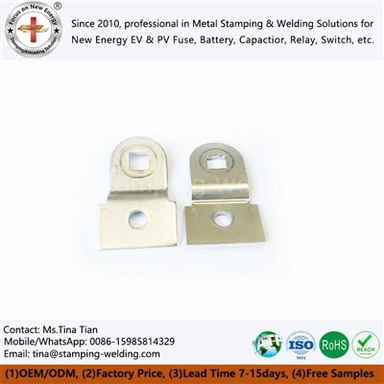
High-efficiency Stamping + Customized Forming: Carbon Steel Stamping Unlocks New Manufacturing Efficiency
Feb 02, 2026
As an important sub-segment of Metal Stamping, carbon steel galvanized deep draw metal stamping is a manufacturing process that uses punch presses and dies to cold process flat carbon steel sheets or coils to obtain parts of specific shapes and sizes. Among these processes, carbon steel sheet metal, due to its material advantages, has become one of the most widely used processes in the hardware industry. Carbon steel, especially low-carbon steel, combines good strength, suitable hardness, and cost advantages, making it compatible with various metal techniques. This has laid the foundation for mass production and promoted the diversified development of the custom metal industry.

Material selection
- The core of material selection for carbon steel metal stamping is matching the product's application and performance requirements. Based on carbon content, it can be divided into three categories: low-carbon steel, medium-carbon steel, and high-carbon steel. Low-carbon steel has a carbon content of less than 0.25%, excellent ductility, and is easy to stamp, making it suitable for manufacturing products with high formability requirements, such as automobile bodies and appliance housings. Medium-carbon steel has superior strength and is suitable for mechanical parts requiring a certain load-bearing capacity. High-carbon steel has outstanding hardness; although it is more difficult to stamp, it can be used to produce products with wear resistance requirements, such as spring sheets and cutting tools, precisely matching the product performance standards in different scenarios.
- Material selection must take into account the characteristics of the stamping process to ensure smooth product processing and stable quality. Low-carbon steel, due to its soft texture, is suitable for various metal techniques such as punching, bending, and stretching, and is a common base material for custom metal stamping parts, which can reduce deformation and cracking problems during product processing. Medium and high-carbon steels need to be optimized in combination with progressive dies or precision metal stamping processes, and can also be combined with surface treatment processes to balance product processing feasibility and service life, meeting the product quality requirements of high-end manufacturing fields.

Quality of craftsmanship
The core advantages of carbon steel metal stamping are quite distinct: extremely high production efficiency, suitability for mass production, high dimensional accuracy and good interchangeability of parts, and a more significant cost advantage compared to alloy steels such as stainless steel, which is the core reason for its widespread application. However, this process also has obvious limitations. Carbon steel is extremely prone to rust, so stamped carbon steel sheet metal stamping parts usually require surface treatment. For example, custom OEM carbon steel zinc coated metal improves corrosion resistance through galvanizing, or uses electroplating, painting, or applying anti-rust oil to extend the service life of the parts. Upgrades in die metal technology have also optimized the difficulty of stamped high-carbon steel to some extent, broadening the application boundaries of carbon steel metal.

Application areas
- Automotive Manufacturing: Automotive assembly stamping parts, such as brackets, body panels, and chassis components, extensively utilize carbon steel metal stamping processes. These products, with their high strength and low cost, meet the demands of large-scale automotive parts production, providing reliable support for the stability of the vehicle's body structure and chassis.
- Electronics and Home Appliances: Heat sinks, housings, brackets, etc., are mostly manufactured using sheet metal stamping. These products achieve precise forming, balancing lightweight design with structural stability, meeting the design requirements of thinner and lighter electronic products and more durable home appliances, and adapting to the assembly needs of various electronic and home appliances.
- Architectural Hardware: Connectors, hinges, fasteners, etc., leverage the cost and performance advantages of carbon steel stamping to achieve large-scale application. These products combine wear resistance and excellent load-bearing capacity, adapting to the complex working conditions of building scenarios, providing reliable solutions for building structural connections and hardware fittings. With the iteration of technologies such as Precision Carbon Steel Customized Bending, the adaptability of custom metal products continues to improve, further promoting the implementation of carbon steel metal in more niche scenarios and supporting the high-quality development of the manufacturing industry.

Industry Trends
The carbon steel galvanized deep draw metal stamping industry is accelerating its upgrade. Smart manufacturing is enabling the optimization of Progressive Die and Precision Metal Stamping processes. Combined with digital twins and AI quality inspection, it achieves fully automated control of the entire process, improving product processing accuracy and mass production efficiency. Advanced high-strength carbon steel is expanding product adaptability boundaries, meeting the lightweight and high-precision needs of emerging fields. Green manufacturing is becoming mainstream. Environmentally friendly surface treatment and waste recycling are building a low-carbon production model. Coupled with the upgrade of customized services, this is driving the industry towards high-end, intelligent, and green transformation, consolidating its fundamental position in the manufacturing supply chain.
contact us
In practical engineering applications, the technical principles of the aforementioned carbon steel galvanized deep draw metal stamping ultimately need to be realized through specific product design. Different combinations of structures and materials will directly affect the long-term stability of the system.