Popular Science: Copper Stranded Flexible Busbar, A Core Component For High-Current Flexible Connections
Mar 29, 2026
In the fields of modern power transmission, new energy equipment, and industrial electrical systems, the demand for high-current flexible connections continues to rise. Copper Stranded Flexible Busbar, with their unique structural and performance advantages, have become key components for conductive connections in various equipment and are a core product that many flexible bar manufacturers focus on developing and producing. Among them, the Copper Stranded Flexible Bar, as a mainstream product, is widely used in high and low voltage power distribution, new energy storage, heavy machinery, and other scenarios due to its stable conductivity and adaptability to complex operating conditions, filling the market gap where rigid busbars cannot adapt to flexible connections and vibration compensation.
Core structure: made with high-quality materials and meticulous craftsmanship
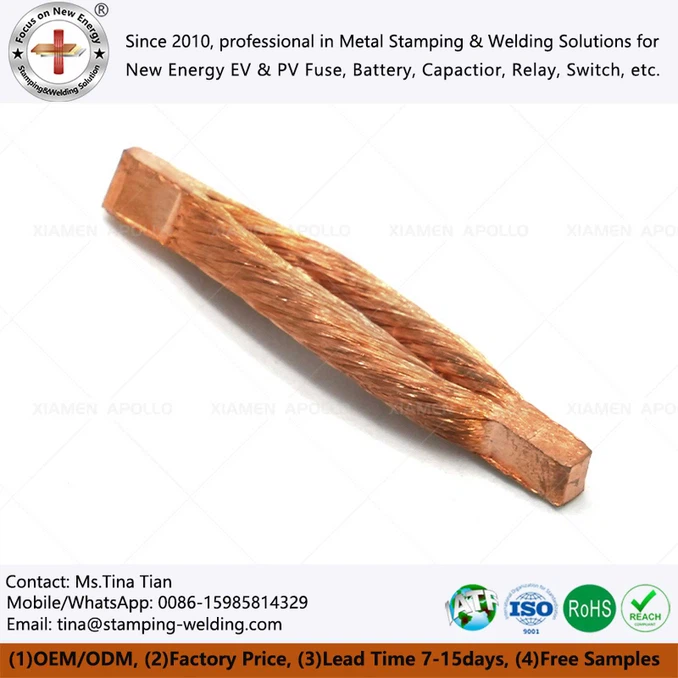
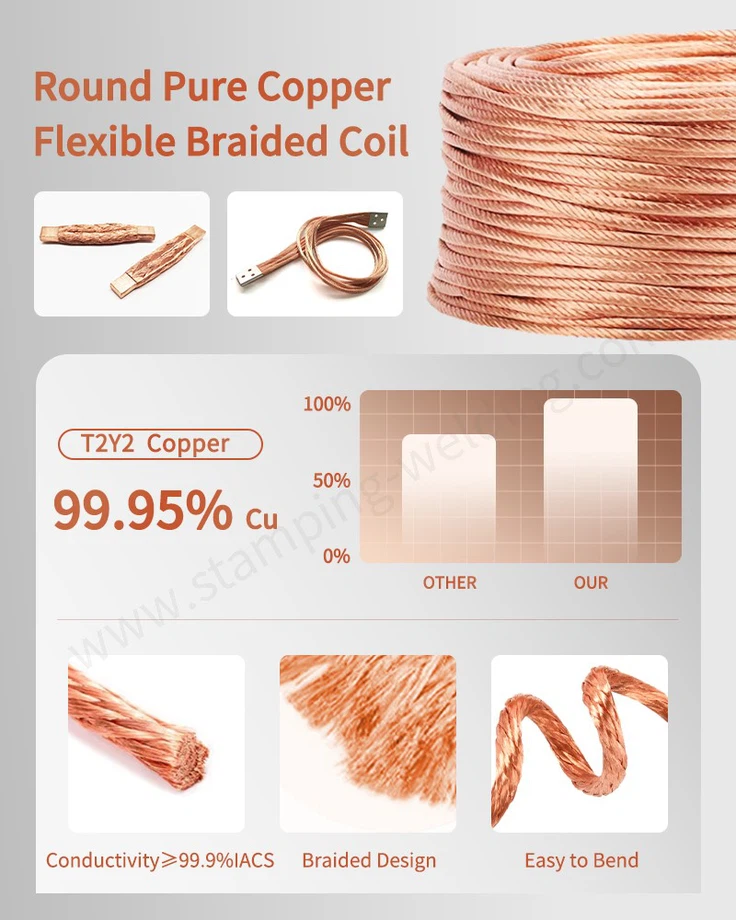
From a core structural perspective, the Copper Stranded Flexible Busbar uses high-purity oxygen-free copper as its core conductor, commonly made of T2 copper, ensuring excellent conductivity and thermal efficiency. The surface can be treated with bare copper or tin plating as needed to enhance oxidation and corrosion resistance, extending its service life. This product uses Copper Stranded Wire as its base material, formed through a standardized stranding process. Some high-end models employ a braided process to create the Copper Braided Flexible Bar, resulting in a more robust structure and superior fatigue resistance compared to conventional stranded models. Whether it's the Twisted Copper Wire version or the finely braided version, both ends of the bar undergo cold pressing or high-pressure forging and welding processes to create a dense and stable connection surface, ensuring extremely low contact resistance, accommodating bolt-fastened installation, and meeting the requirements for stable conduction under high current. For special operating conditions, an insulating outer layer can be added to create Flexible Insulated Copper Busbars, using high-quality insulation materials such as PVC and silicone rubber to improve electrical safety and adapt to complex and harsh installation environments.
Performance advantages: Adaptable to complex working conditions, durable and reliable
As a professional conductive connector, this type of flexible busbar boasts significant performance advantages. Compared to traditional rigid bars, Copper Braided Bars for Electrical offer exceptional flexibility, allowing for free bending and adaptation to confined spaces and complex wiring routes, greatly reducing installation difficulty and improving construction efficiency. During operation, the product effectively absorbs mechanical vibrations from equipment such as transformers and generators, while compensating for displacement caused by thermal expansion and contraction, preventing loosening and detachment of connections, and ensuring long-term stable operation of the power supply system. Thanks to its flat stranded or braided structure, such as the Flat Copper Braided Wire model, the product's heat dissipation efficiency is far superior to ordinary cables of the same cross-section, resulting in a higher current carrying capacity and meeting the power supply needs of high-power equipment. Some lightweight designs, with the same conductivity, weigh less than conventional rigid busbars, effectively reducing the overall load on the equipment.
Complete product range: covering diverse usage needs
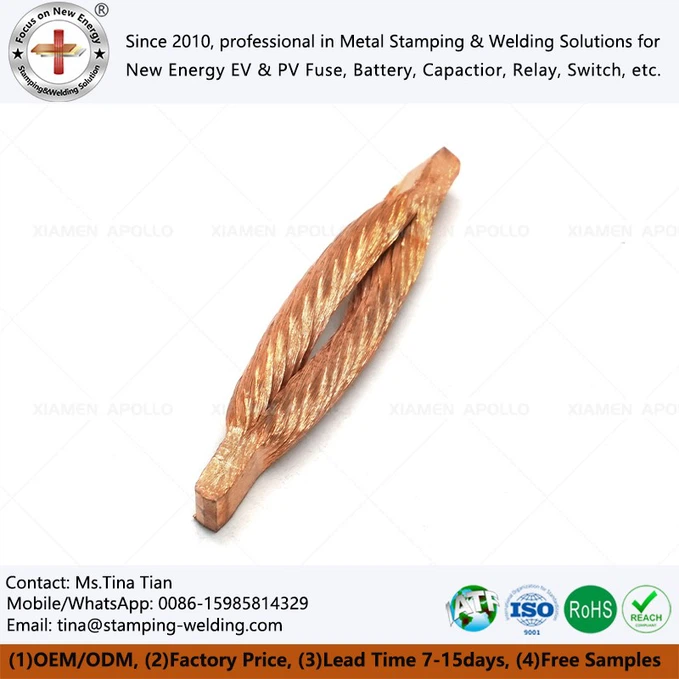
The market offers a wide variety of flexible busbars, including Braided Wire Copper Bus Bars, flex bus bars, and Flexible Braided Bus Bars, catering to diverse customization needs. Braided Copper Wire flexible bars offer superior durability; insulated flexible copper bars are suitable for applications with high safety requirements; Copper Braided Flexible Connectors and Flexible Braided Custom Connectors focus on customized connections to fit specific equipment interfaces; and Low-to-medium Voltage Flexible Connectors are designed for low- and medium-voltage applications, offering exceptional versatility.
Wide range of applications: Deeply rooted in multiple power scenarios
Leveraging their comprehensive performance advantages, products such as the Flexible Braided Copper Busbar and Braided Flexible Bar are seeing their application scenarios continuously expand. In the power distribution field, they are commonly used for internal flexible connections in high and low voltage switchgear, distribution panels, and bar trunking to ensure the stable operation of the power distribution system. In the new energy field, they are an excellent choice for Lithium-ion Batteries Connectors, widely used in electric vehicle battery modules, charging piles, wind power, and photovoltaic power generation systems, adapting to the special connection requirements of new energy equipment. In the heavy machinery field, they are suitable for welding machines, electrolytic cells, induction furnaces, and other equipment subjected to strong vibrations and high loads, ensuring the durability of conductive connections. In the infrastructure field, they are often used for flexible connections in data center UPS systems, transformers, and busbar trays, strengthening the safety defense line of power transmission and becoming an indispensable flexible conductive component in modern electrical systems.

contact us
For more Copper Stranded Flexible Busbar product details, customized solutions, or pricing information, please feel free to contact us. We are dedicated to providing you with professional service.