Stainless Steel Stamping: A High-Performance Manufacturing Process For The New Energy Industry
Jun 10, 2025
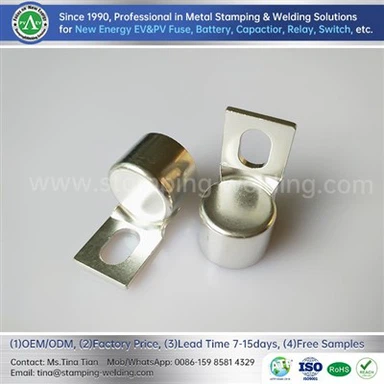
Stainless steel stamping (Stainless Steel Stamped Parts) is a widely used manufacturing process in the new energy industry, capable of efficiently producing complex-shaped and high-precision parts. This process utilizes high-precision molds and advanced stamping equipment to transform stainless steel sheets into the desired shapes and sizes. Stainless Steel Sheet Metal Stamping not only increases production efficiency but also ensures the high quality and consistency of the products. With the rapid development of the new energy industry, the technology is also continuously innovating to meet higher performance requirements and more complex application scenarios.

Material Properties
Stainless steel stamped parts typically use 304 stainless steel as the raw material, which has the following characteristics:
1, Superior Corrosion Resistance
304 stainless steel performs excellently in damp and chemically corrosive environments, maintaining stable performance over the long term.
2, High Strength and Good Ductility
304 stainless steel offers high strength and good ductility, allowing it to maintain shape stability during complex stamping processes without deformation or breakage.
3, Good Thermal and Electrical Conductivity
The thermal and electrical conductivity of 304 stainless steel meets the requirements of new energy devices for thermal management and electrical performance.
4, Environmental Performance
Stainless steel is a recyclable material that meets environmental requirements, reducing environmental impact.
Production Process
1, Raw Material Procurement and Inspection
We carefully select high-quality 304 stainless steel sheets as raw materials and conduct strict quality inspections to ensure their composition and performance meet industry standards. This is the foundation for producing high-quality Stainless Steel Stamped Parts.
2, Stamping and Forming
Using advanced stamping equipment and high-precision molds, the stainless steel sheets are processed into the desired shapes and sizes. During the stamping process, pressure and speed are precisely controlled to ensure that the stainless steel sheets do not crack or deform during forming, while maintaining good surface quality.
3, Surface Treatment
After stamping, stainless steel components undergo surface treatment processes, such as polishing, passivation, or coating, to further enhance their corrosion resistance and aesthetic appeal. These treatment processes not only extend the product's service life but also meet the special requirements of different application scenarios.
4, Quality Inspection
Each batch of stainless steel stamped parts undergoes strict quality inspections, including dimensional checks, visual inspections, mechanical performance tests, and corrosion resistance tests, to ensure the products meet design requirements.
5, Packaging and Delivery
Products that pass the stringent quality inspections are packaged with moisture-proof and shock-resistant materials to ensure they remain undamaged during transportation, safeguarding the safe delivery of Sheet Metal Stamping products.
Application Fields
Stainless steel stamping plays a vital role in multiple fields:
New Energy Vehicles
In new energy vehicles, stainless steel stamped parts are widely used in battery casings, motor supports, and high-voltage electrical connections. Their corrosion resistance and high strength ensure the reliability and safety of automotive components.
Industrial Equipment
In industrial equipment, stainless steel stamped parts are often used to manufacture high-precision mechanical parts, electrical connectors, and protective covers. Their high-temperature and corrosion resistance enable them to operate stably in harsh industrial environments over the long term.
Electronics Sector
In the electronics sector, stainless steel stamped parts are used to manufacture various electronic component casings and connectors. Their good mechanical properties and corrosion resistance ensure the efficient and stable operation of electronic devices.
Product Advantages
1, Superior Corrosion Resistance
The corrosion and oxidation resistance of 304 stainless steel ensures stable performance in damp and chemically corrosive environments, extending the service life of the products.
2, High Strength and Good Ductility
The high strength and good ductility of 304 stainless steel allow it to withstand complex stamping processes without deformation or breakage, ensuring the dimensional accuracy and surface quality of Stainless Metal Stamping products.
3, High Precision Machining
Advanced stamping equipment and high-precision mold technology ensure the dimensional accuracy and surface quality of stainless steel components, meeting the customized needs of different customers and enhancing the market competitiveness of the product.
4, Strict Quality Control
From raw material procurement to finished product delivery, every step is subject to rigorous quality inspections to ensure the stable and reliable performance of the product, providing customers with high-quality products.
5, Environmental Sustainability
Stainless steel is a recyclable material that meets environmental requirements, reducing environmental impact and aligning with sustainable development goals.

Future Industry Development
With the rapid development of the new energy industry, stainless steel stamping technology is also continuously innovating. In the future, we will focus on the following areas:
Higher Precision Stamping Processes
Adopting more advanced stamping equipment and mold technology to further improve the dimensional accuracy and surface quality of stainless steel components, meeting higher standard application requirements.
01
Intelligent Manufacturing
Introducing automated and intelligent production systems to improve production efficiency and product quality consistency while reducing production costs.
02
Application of Environmentally Friendly Materials
Developing and applying more environmentally friendly surface treatment processes to reduce environmental impact and meet sustainable development requirements.
03
Customized Services
Offering more customized products and services to meet the individual needs of different customers in new energy vehicles, industrial equipment, and the electronics sector.
04

contact us