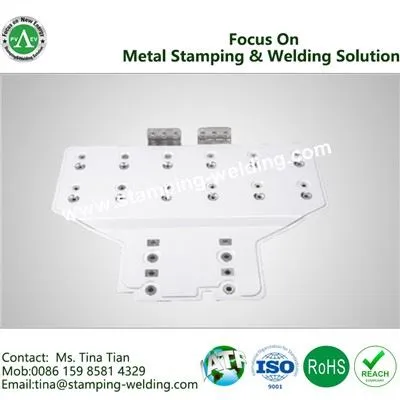
Steel Stampings: Versatile Components Driving Industry
May 21, 2025
The manufacturing sector is witnessing a surge in the application of steel stampings across various industries, including automotive, electrical, and electronics. Stainless Stamping, manufactured from materials such as stainless steel and carbon steel, are gaining prominence due to its superior strength, durability, and cost-effectiveness. This industry news aims to explore the latest trends and applications of Stainless Stamping, highlighting their impact on innovation and efficiency in multiple sectors.

The Rise of Steel Stampings
Stainless Steel Sheet Metal Stamping has become indispensable in modern manufacturing due to its ability to be shaped into complex and precise components. The process involves using dies to cut, bend, and form steel sheets or coils into the desired shapes at high speeds and with high precision. This method is particularly advantageous for producing parts with intricate designs that would be difficult or costly to achieve using other manufacturing techniques.
The details of Steel Stamping Parts
Precision Engineering:
Stainless steel stamping parts are manufactured with high precision, ensuring that each component meets exact specifications. This precision is crucial for applications where components must fit together seamlessly.
Durability and Strength:
These parts are renowned for their strength and durability. Stainless steel's resistance to wear and tear makes these parts ideal for long-term use without degradation.
Corrosion Resistance:
Stainless steel's natural resistance to corrosion ensures that the parts maintain their integrity in harsh environments, which is vital for applications exposed to moisture, chemicals, or other corrosive elements.
Smooth Surface Finish:
The surface of stainless steel stamping parts is typically smooth, which reduces friction and wear. This smoothness is also beneficial for applications where a clean, polished look is necessary.
Resistance to Deformation:
The parts are designed to resist deformation under stress, ensuring that they retain their shape and function even in challenging conditions.
Versatility in Design:
Stainless steel allows for a wide range of design possibilities, enabling the creation of complex shapes and intricate details that meet specific application requirements.
Compatibility with Welding:
These parts can be easily welded, facilitating strong and secure connections in assemblies. This is particularly important in structural applications or where parts need to be joined permanently.
Consistent Quality:
The manufacturing process ensures consistent quality across all parts, which is essential for maintaining performance standards in series production.
Sustainability:
Stainless steel is recyclable, contributing to sustainable manufacturing practices. This aligns with environmental goals and reduces waste.
These characteristics of stainless steel stamping parts make them indispensable in industries such as automotive, aerospace, electronics, and consumer goods, where high performance, reliability, and longevity are critical.

Applications Across Industries
Automotive Sector
In the automotive industry, Stainless Steel Sheet Metal Stamping are extensively used for manufacturing body panels, chassis components, and engine parts. The high strength-to-weight ratio of steel makes it an ideal material for components that require durability and resistance to impact. Additionally, the ability to produce complex shapes allows for the creation of parts that enhance vehicle aesthetics and performance.
Electrical and Electronics
The electrical and electronics industries rely heavily on Stainless Stamping for components such as connectors, brackets, and casings. These parts must withstand electrical stress and environmental factors such as heat and moisture. Steel's corrosion resistance and ability to maintain structural integrity over time make it a preferred material for these applications.
General Industrial Applications
Beyond the automotive and electronics sectors, stamping sheet metal is used in a wide range of industrial applications. They can be found in household appliances, construction equipment, and even in the manufacturing of tools and machinery. The versatility of steel allows it to be tailored to specific needs, whether it's for high-strength components in heavy machinery or for aesthetically pleasing parts in consumer products.
Advantages of Steel Stampings
| Cost-Effectiveness | The high volume production capabilities of stamping processes make Stainless Metal Stamping an economical choice for many applications. |
| Strength and Durability | Steel's inherent strength and resistance to wear and tear make it suitable for parts that require longevity and reliability. |
| Precision Engineering | The stamping process allows for the production of parts with tight tolerances and complex geometries, ensuring precision and consistency. |
| Surface Finish | Stamping sheet metal can achieve a high-quality surface finish, which is essential for both functional and aesthetic reasons. |
| Sustainability | The recyclability of steel contributes to sustainable manufacturing practices, aligning with the growing emphasis on environmental responsibility. |
Future Outlook
As technology advances, the demand for Stainless Metal Stamping is expected to grow further. Innovations in stamping technology are enabling the production of even more complex and precise components, pushing the boundaries of what is possible in manufacturing. Additionally, the ongoing development of new steel alloys with enhanced properties is expected to broaden the applications of Stainless Steel Sheet Metal Stamping even more.
Conclusion
Steel stampings are a cornerstone of modern manufacturing, playing a critical role in various industries. Their versatility, strength, and cost-effectiveness make them an invaluable resource for manufacturers looking to produce high-quality components efficiently. As industries continue to evolve, the role of stamping sheet metal is likely to expand, driving innovation and enhancing the capabilities of products across the board.
This industry news serves as a testament to the importance of stamping sheet metal in today's manufacturing landscape, highlighting its contributions to the advancement of technology and the economy. As the demand for these components continues to rise, so too will the opportunities for growth and development within the manufacturing sector.

contact us