Aluminum: the ideal choice for low-voltage distribution busbars
Jan 15, 2026
Since the millennium, the iteration of materials and forms for low-voltage distribution busbars has accelerated further. Large manufacturers have started using aluminum to produce vertical profiled busbars with different rated currents (630A, 800A, 1000A, etc.), while the latest trend in the industry is to use aluminum to manufacture horizontal profiled busbars. At the same time, the current rating range of vertical busbars has been further expanded to meet more diverse distribution scenarios.
In the past 50 years, busbars have achieved rapid development in the industrial power distribution field, especially in the past 10 years, gradually replacing the traditional hard-wired distribution mode. One of the core driving forces of this transformation is the rise of Aluminum Busbar Electrical Power Connector. In today's fiercely competitive market environment, the low-cost advantage of aluminum is particularly prominent, and it has the characteristic of recyclability, which is not easily affected by resource scarcity or commodity market fluctuations. Using aluminum to manufacture busbars can achieve up to 35% cost savings, which has become a key foundation for its widespread application in the industry.
The core advantage of aluminum as a busbar material
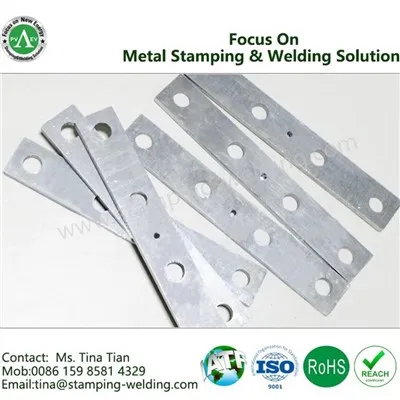
Compared to copper, Aluminum Busbar Electrical Power Connectors has inherent application advantages. Firstly, in terms of weight, aluminum busbars are 70% lighter than copper, and their material is softer. They can be extruded into various customized design forms through molds, such as flat and hollow shapes, just like Italian pasta. This feature also makes the mass production of 6061 Aluminum Busbar possible. At the same time, the lightweight feature greatly reduces installation difficulty, and operators can quickly slide or join the aluminum busbar in place, significantly improving construction efficiency.
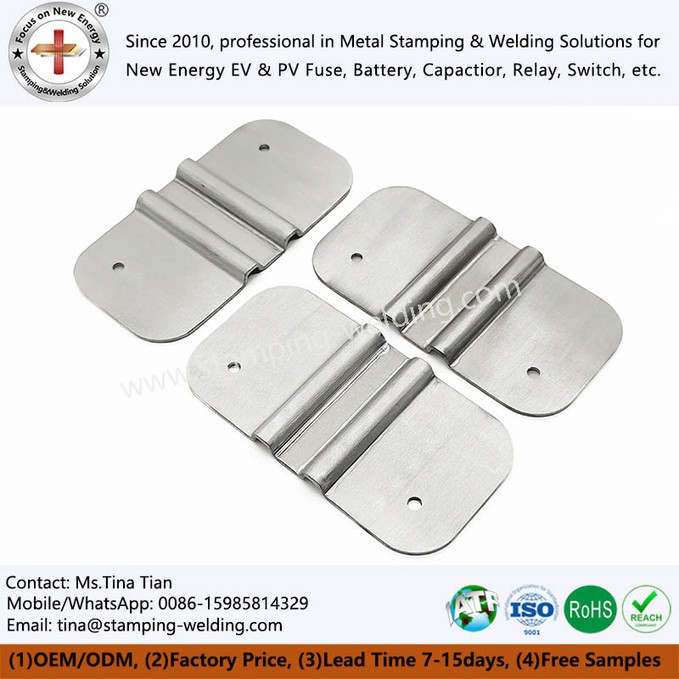
The adaptability of Flexible Aluminum Connections complements the physical properties of aluminum, and the heat dissipation performance of aluminum busbars is one of its core advantages in adapting to low-voltage distribution scenarios. The surface area of aluminum busbars with hollow and extruded profiles is much larger than that of standard rectangular sections, providing a larger heat exchange area and better heat dissipation efficiency. This characteristic is particularly critical in narrow distribution spaces. In addition, natural convection heat dissipation can be enhanced by stretching the busbar; for example, slender busbars with additional fins can effectively improve the mixing flow of heat and air. Thanks to the optimized hollow and raised surface design, aluminum busbars have excellent heat resistance. Even at ambient temperatures above 35 ° C, they can withstand a temperature rise of 60 ° C and still operate stably. At the same time, they can also reduce electrical resistivity and further improve energy transmission efficiency.

Performance Q&A of Aluminum Busbars
From the perspective of material properties and adaptability to application scenarios, specific types of aluminum materials, such as 6101 Aluminum Bus Bar and 6101 T61 Aluminum Bus Bar, have further expanded the application boundaries of aluminum busbars due to their excellent conductivity and mechanical stability. Aluminum Flexible Connections, on the other hand, utilize the flexibility advantage of materials to adapt to more complex installation environments, making the application of aluminum busbars in low-voltage distribution systems more flexible and diverse.

summary
In summary, aluminum's low cost, lightweight, recyclability, ease of processing, and excellent heat dissipation and conductivity make it an ideal material for low-voltage distribution busbars. With the continuous optimization of manufacturing processes, various Aluminum Busbar Electrical Power Connectors, such as 6061 Aluminum Bus Bar, will play a more important role in the industrial power distribution field, promoting the development of low-voltage distribution systems towards higher efficiency, economy, and environmental protection.
contact us