


Analysis of the technical characteristics of Laminated Copper BusBar
Apr 28, 2026
In the field of electrical connections, the performance of core current transmission components directly determines the safety and stability of the system. The multi-layer laminated insulated soft busbar is a composite conductive material that combines flexible structure and insulation protection. Through the multi-layer metal sheet superposition and insulation layer composite process, it achieves flexibility and safety protection capabilities that traditional hard copper busbars cannot have. It is especially suitable for scenarios with high requirements on space layout, earthquake resistance or insulation level, such as power electronics applications such as Laminated Bus Bar for Power Electronics.

Structural design and technical principles
The conductive body of this product is usually made of T2 copper, and a flexible conductive layer is formed by stacking and pressing multiple layers of thin copper sheets. Compared with a single-layer thick copper bar, the multi-layer laminated structure can disperse the current density, reduce the risk of local heating, and significantly improve the fatigue resistance of the material. Its typical structure is divided into three layers: conductive layer (multi-layer copper sheet), insulating layer (flame-retardant epoxy resin or silicone rubber) and optional outer sheath (high temperature resistant material). Among them, the insulating layer is made of a high dielectric strength material, which can withstand power frequency voltage of thousands of volts, effectively isolates the conductive layer from the external environment, and prevents the risk of short circuit or arc. This structure is widely suitable for the electrical connection needs of power modules such as Laminated Bus Bar for IGBT-based Motor Drive.
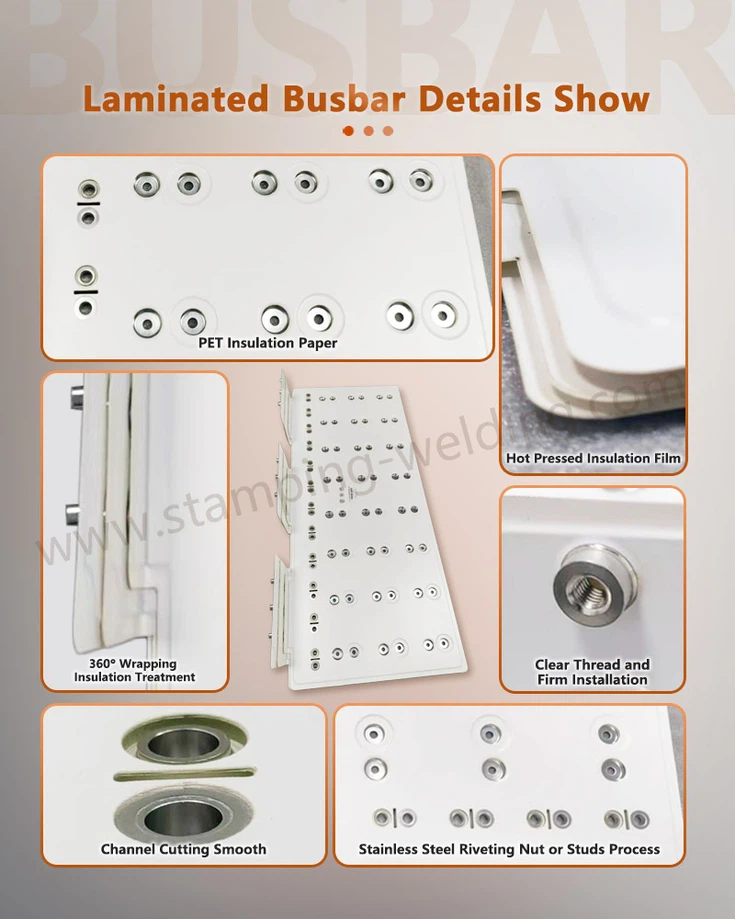
Advantages of flame-retardant insulation and flexible connections
The product breaks through the application limitations of traditional copper busbars through flame-retardant insulation design. The insulation layer usually meets the UL94 V-0 flame retardant standard and will self-extinguish within 30 seconds after contact with an open flame without melting, significantly reducing the risk of fire spread. The flexibility is reflected in the bending radius that can be as small as 5 times the product thickness, supporting installation in small spaces or complex paths, such as internal connections in frequency converters, Laminated Bus Bar for High Current Inverter and other high-current inverter scenarios. In addition, the multi-layer laminated structure can absorb equipment vibration, avoid loosening or breaking of hard copper bars due to long-term vibration, and improve the long-term reliability of the system.

Application scenarios
This product is mainly used in electrical connection scenarios that require high flexibility and high insulation protection, including rail transit traction systems, data center uninterruptible power supplies (UPS), photovoltaic inverters, and BusBar for Electric Locomotive. Three parameters need to be focused on when selecting the model: first, the cross-sectional area (such as 63×1mm specification), which needs to be calculated based on the actual current load; second, the insulation level, which needs to match the system operating voltage; third, environmental adaptability. If used in high temperature or humid environments, you should choose a model with a temperature resistance of 150°C or above or a three-proof coating. During the installation process, it is necessary to avoid scratching the insulation layer with sharp objects and use special torque tools to tighten the terminal blocks to ensure stable contact resistance.

contact us
Our company has long been focused on the R&D and manufacturing of high-performance busbars in the field of power electronics. Our product lines include Laminated Copper BusBar, Bus Bar Solutions for Electrical Power Distribution, and customized laminated busbars suitable for aerospace power inverters, high-frequency welding power IGBT and other scenarios. We can provide one-stop solutions from structural design to mass production based on customers' specific needs for cross-sectional area, insulation level and environmental adaptability. Welcome to contact us for technical selection support and sample testing services.


