Precision Steel Stamping Parts in EV Power Distribution Units (PDU) & Control Modules
Aug 26, 2026
EV power distribution units require Precision Steel Stamping Parts that maintain structural position, electrical isolation interfaces, shielding geometry, and mounting accuracy under vibration and thermal cycling. HSLA steel can provide higher structural strength than conventional low-carbon sheet, while precision stamping, deep forming, self-clinching stud installation, and 3D CMM inspection address the dimensional requirements of PDU housings and control modules.
EV PDU Structural Requirements: ±0.01 mm Interface Control
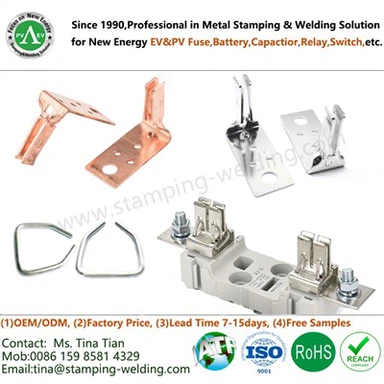
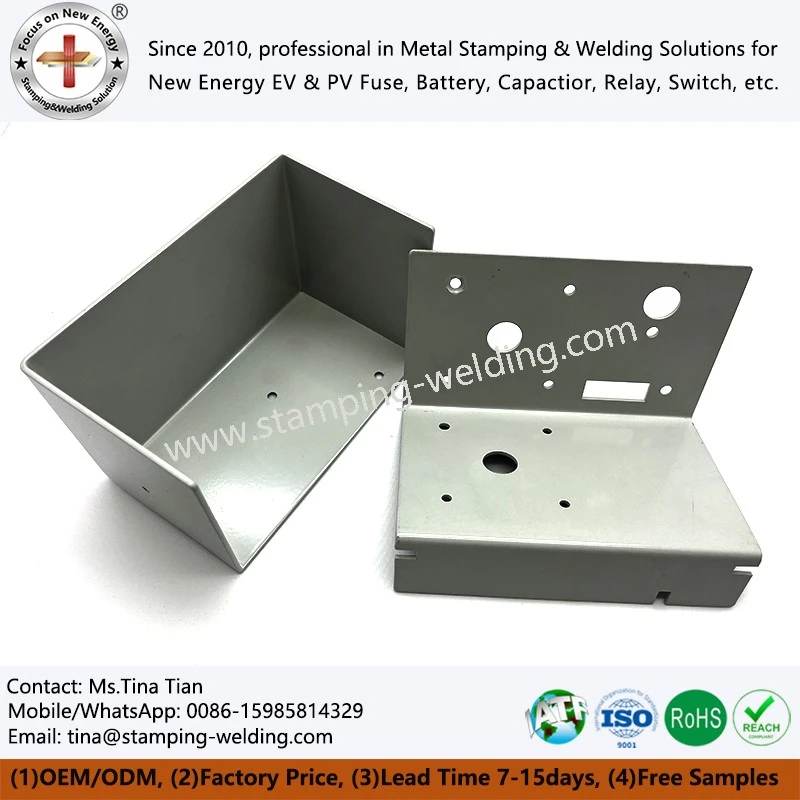
Steel stamping parts used inside high-voltage PDUs commonly include mounting brackets, reinforcement plates, shielding components, terminal supports, busbar support structures, and fastening interfaces. Their function is not limited to mechanical support; dimensional variation can directly affect busbar clearance, connector alignment, creepage distance, enclosure assembly, and the position of electrical components.
For precision steel electrical brackets, the main engineering variables include:
- Material thickness and yield strength matched to structural load requirements
- Hole position tolerance controlled for connector and fastener alignment
- Flatness control for enclosure and mounting interfaces
- Forming radius selected to reduce cracking during deep forming
- Springback compensation incorporated into stamping-die design
- Self-clinching stud position controlled for repeatable module assembly
- 3D CMM inspection applied to critical dimensional features
For EV PDU applications, tolerance should be assigned according to functional requirements rather than applying ±0.01 mm indiscriminately to every feature. Critical mounting holes, datum interfaces, and connector locations normally receive tighter controls than non-functional edges.
HSLA Steel Selection for EV PDU Metal Stamping
High-strength low-alloy steel is suitable when the stamped component must maintain structural rigidity while limiting material thickness. Grade selection should consider yield strength, tensile strength, elongation, forming depth, bend radius, and corrosion protection requirements.
| Material Consideration | Engineering Effect | PDU Application Relevance |
|---|---|---|
| Yield Strength | Determines resistance to permanent deformation | Mounting brackets and reinforcement parts |
| Tensile Strength | Influences structural load capacity | Shielding and load-bearing components |
| Elongation | Determines forming capability | Deep-drawn or complex profiles |
| Sheet Thickness | Affects stiffness and component mass | Housing supports and structural plates |
| Surface Treatment | Controls corrosion resistance | Automotive under-hood and enclosure environments |
For a Steel Stamping Part OEM, material selection should therefore be completed together with forming analysis. Increasing steel strength without adjusting punch radius, die clearance, forming sequence, and springback compensation can increase cracking or dimensional deviation.
Complex Geometry: Deep Drawing, Bending & Progressive Stamping
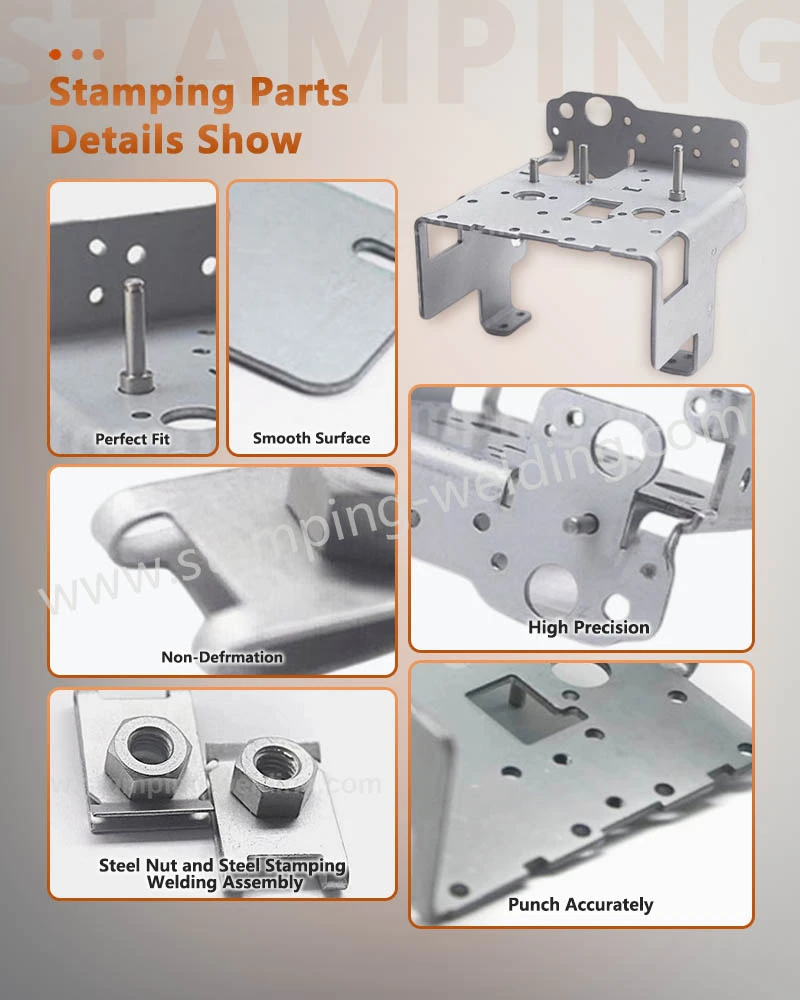
EV PDU components often combine several geometric features within one Precision Steel Stamping Parts. A single component may require blanking, piercing, embossing, bending, drawing, and fastening-element installation.
Deep Drawing & Forming
Deep forming creates recessed sections, stiffening structures, channels, and three-dimensional mounting profiles. Material flow must be controlled to avoid excessive thinning, wrinkles, tearing, and dimensional distortion.
Punching & Piercing
Precision punching produces mounting holes, slots, terminal openings, and reference features. Punch-to-die clearance is selected according to steel grade and sheet thickness to control burr height and edge quality.
Bending & Springback Compensation
HSLA materials can generate greater springback than conventional mild steel. Die geometry and forming sequence therefore require compensation based on material properties and measured production results.
Progressive Die Stamping
For high-volume EV PDU components, progressive dies can combine blanking, piercing, forming, bending, and other operations into a continuous production sequence. This reduces intermediate handling and improves feature-to-feature consistency.
Need tighter PDU bracket geometry without increasing tooling complexity?
Request OEM DFM Review & Stamping Quote

3D CMM Inspection for Precision Steel Electrical Brackets
Dimensional inspection should focus on functional datums rather than isolated dimensions. A 3D CMM can measure hole locations, mounting planes, formed profiles, angular relationships, flange heights, and stud positions against the approved CAD model.
| Inspection Item | Typical Control Method | Functional Purpose |
|---|---|---|
| Mounting Hole Position | 3D CMM | Connector and enclosure alignment |
| Bracket Flatness | CMM / Surface Measurement | Stable assembly interface |
| Formed Height | CMM / Height Gauge | Component clearance |
| Bend Angle | CMM / Optical Measurement | Assembly positioning |
| Stud Position | CMM / Dedicated Gauge | Fastener alignment |
| Burr Condition | Visual / Microscopic Inspection | Assembly and handling safety |
| Surface Coating | Coating Thickness Gauge | Corrosion protection |
For automotive programs, inspection results can be linked to drawing revisions, material batches, tooling conditions, and production lots to support dimensional traceability and corrective-action analysis.
Is bracket variation affecting PDU assembly or connector alignment?
Send CAD Drawings for Dimensional Review
Steel Stamping Process Control for EV PDU Components
A controlled production route for EV PDU steel components typically includes:
Material Verification
Incoming sheet is checked against the approved material specification, thickness requirement, surface condition, and batch documentation before production.
Tooling Development
Progressive or compound dies are developed around critical datums, forming sequence, material flow, clearance, and springback behavior. Tool tryout data is used to adjust forming surfaces and dimensional compensation.
Stamping Production
Production parameters are controlled according to the approved process. Critical dimensions are monitored using gauges, CMM inspection, or automated inspection systems depending on production volume and feature requirements.
Final Inspection
Finished parts undergo dimensional, visual, surface-treatment, and functional checks before packing and shipment. Inspection records can be maintained according to automotive customer documentation requirements.

Application in EV PDU & Control Modules
Precision Steel Stamping Parts can be engineered for several internal and external PDU functions:
- PDU Mounting Brackets: Position contactors, relays, busbar supports, and electrical modules inside the enclosure.
- High-Voltage Shielding Components: Maintain defined separation and structural shielding around high-voltage electrical assemblies.
- Load-Bearing Reinforcement Parts: Increase local structural rigidity around mounting and fastening areas.
- Connector Support Structures: Maintain connector position and alignment during vehicle assembly.
- Control Module Brackets: Provide fixed mounting interfaces for control electronics and auxiliary components.
- Battery Electrical Distribution Systems: Support structural components associated with HV distribution and protection assemblies.
The appropriate steel grade, sheet thickness, stamping sequence, surface treatment, and dimensional tolerance should be defined from the actual assembly loads, environmental conditions, and interface requirements.
OEM Engineering & Production Transfer
Xiamen Apollo supports steel stamping development from customer drawings, 3D CAD data, samples, or assembly specifications. Engineering review can cover material selection, forming feasibility, hole and flange positioning, progressive-die layout, self-clinching stud locations, and inspection requirements.
For EV PDU programs, the production transition can be organized around:
- DFM review before tooling investment
- Prototype and tooling validation
- Progressive die development
- Dimensional correlation against 3D CAD
- Self-clinching fastener validation
- Process inspection planning
- Pilot production
- Mass-production transfer
This approach allows a Steel Stamping Part OEM project to be evaluated according to both component geometry and downstream PDU assembly requirements.

FAQ
Q: What steel is suitable for EV PDU stamped brackets?
A: HSLA steel is suitable when the component requires higher structural strength and controlled deformation. The final grade should be selected according to yield strength, tensile strength, elongation, sheet thickness, forming depth, corrosion requirements, and the PDU mounting load.
Q: How is dimensional accuracy controlled for precision steel electrical brackets?
A: Critical mounting holes, formed surfaces, flange heights, and fastening locations can be measured using 3D CMM equipment against approved CAD data. Tooling compensation and process inspection are used to control repeatability during production.
Q: Can progressive die stamping be used for EV PDU components?
A: Yes. Progressive dies are suitable for high-volume components requiring repeated blanking, piercing, bending, embossing, and forming operations. The die sequence is designed around material flow, feature positioning, springback, and production volume.
Q: What information is required for a Steel Stamping Part OEM quotation?
A: A 2D drawing, 3D CAD file, material grade, sheet thickness, annual volume, surface-treatment requirement, critical tolerances, and assembly requirements provide the basis for DFM review, tooling evaluation, process planning, and quotation.
Contact Us
Send us your PDU stamping requirements or 2D/3D drawings for a fast DFM review, prototype plan, and factory-direct quotation.