
Selection Guide For Cap And Contact For EV Charging Fuse: Focusing On Key Adaptation Points For Core High-Voltage Protection Components
Feb 11, 2026
In the high-voltage power distribution system of new energy vehicles, the high-voltage fuse serves as the "first line of defense" for circuit safety. The rationality of the selection of its core component, the Cap and Contact for EV Charging Fuse, directly determines the conductivity stability and overload protection reliability of the vehicle's high-voltage circuit. This is related to the safe operation of key equipment such as power batteries and motor controllers, and has become a key consideration for automakers and supporting enterprises in their selection and layout.
Primary considerations for selection: composition and material properties
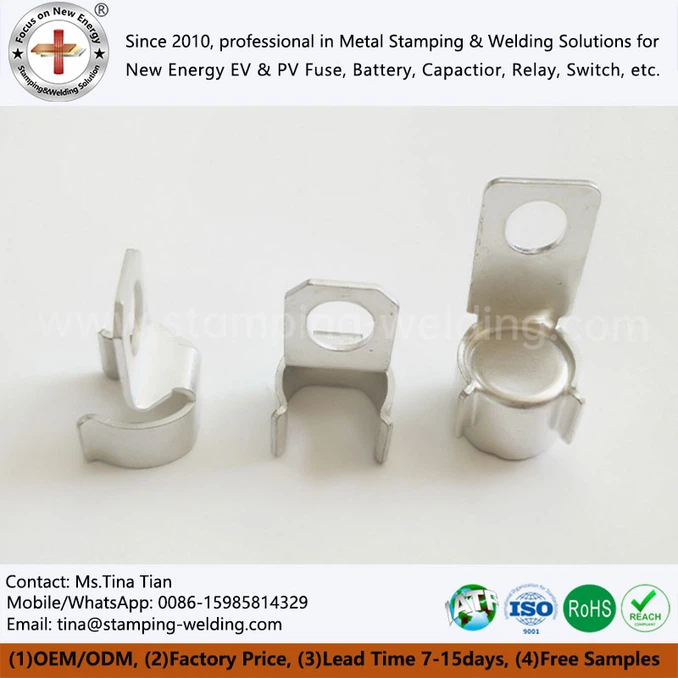
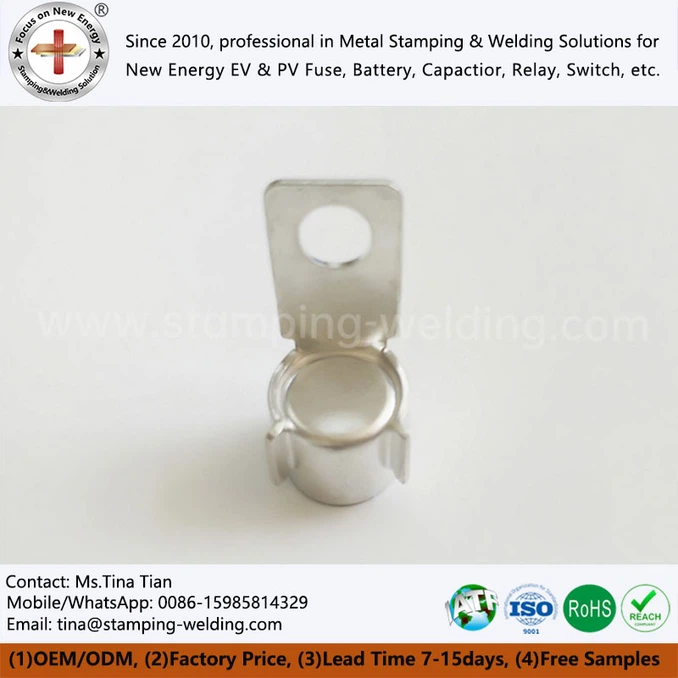
During the selection process, the core components and manufacturing characteristics of the components are the primary considerations. Contact cap components are generally made of highly conductive metal materials to meet the high-voltage, high-current, and low-loss operating requirements of new energy vehicles. The contacts are mostly made of high-purity copper or brass alloys, serving as conductive terminals inserted into circuit slots to ensure smooth current conduction. The contact cap, as a metal cover covering both ends of the fuse tube, plays a crucial role in fixing the internal fusible element, sealing the tube, and connecting the contacts. The purity of the material and the precision of the structure directly affect the sealing protection and conductivity performance of the component.
Core selection criteria: Functionality adapted to the scenario
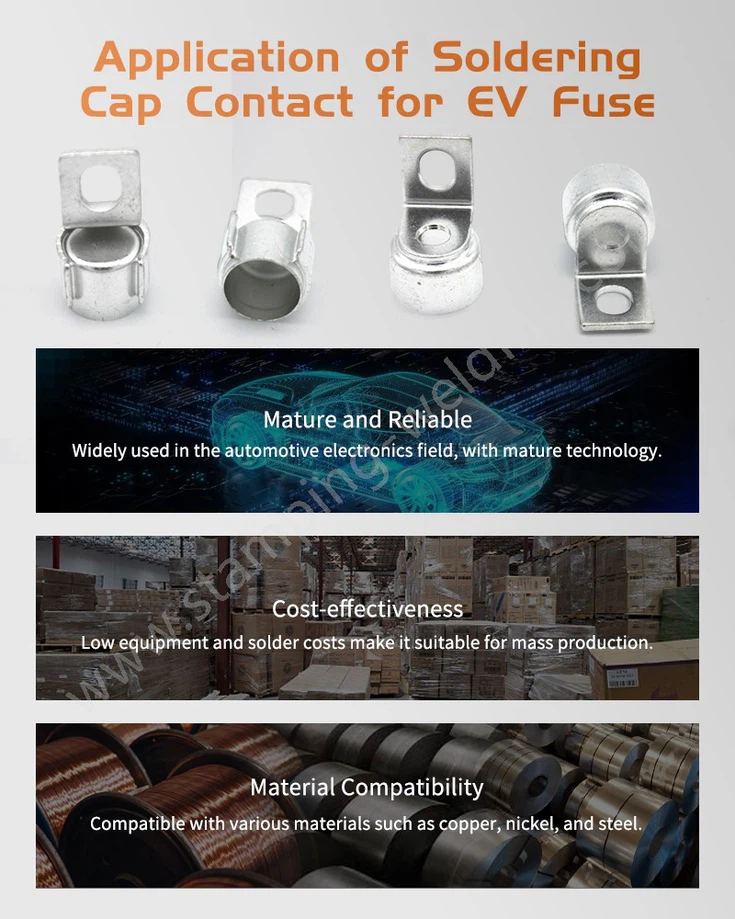
The functional adaptation of the contact cap assembly needs to be compatible with various high-voltage scenarios in the vehicle, and its core functions correspond to specific application requirements. In the scenario of power battery charging and discharging, it is adapted to the Cap and Contact for Battery Pack Fuse, taking into account both high current carrying capacity and overload protection; in the circuits of on-board chargers and motor controllers, it focuses on ensuring conductive stability, arc extinguishing safety, and environmental protection; in complex vehicle usage scenarios, it relies on its sealing performance to withstand harsh environments, achieving precise matching between function and scenario.
Common Selection Mistakes and Future Development Trends
Industry experts caution that the selection of Cap and Contact for EV Charging Fuse should avoid the misconception of prioritizing a single parameter. A comprehensive consideration should be given to material properties, manufacturing precision, functional compatibility, and overall vehicle operating conditions. Attention should also be paid to component consistency and durability to prevent high-voltage circuit failures caused by improper selection, which could affect the safe operation of the entire vehicle. As the high-voltage platform of new energy vehicles upgrades to 800V, the selection criteria for contact cap assemblies will be further refined. Future development will focus on high conductivity, high stability, and miniaturization, providing more reliable support for the safety of the vehicle's high-voltage system.
Contact Us
If you need to accurately select suitable Cap and Contact for EV Charging Fuse and related supporting solutions based on the operating conditions of your new energy vehicle's high-voltage circuit, please feel free to contact us for details