Analysis of application technology of Flexible copper busbar
Apr 11, 2026
Flexible copper busbar product structure and composition
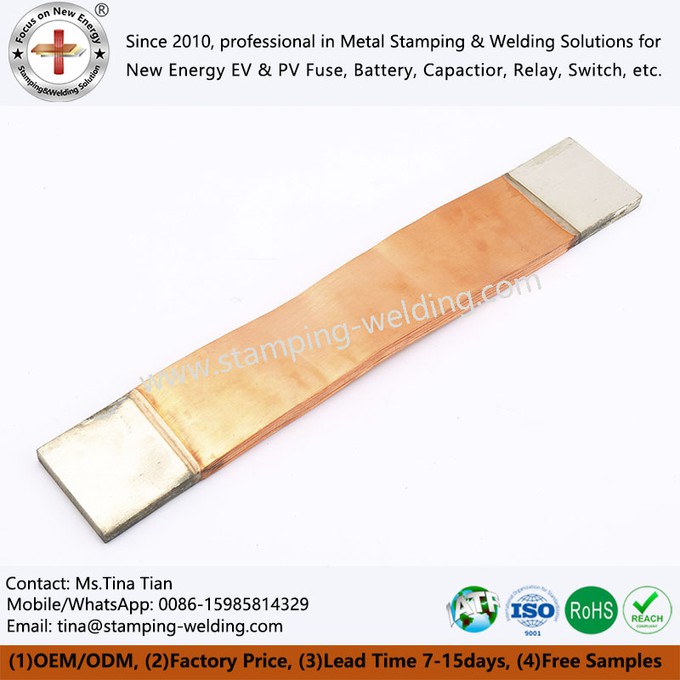
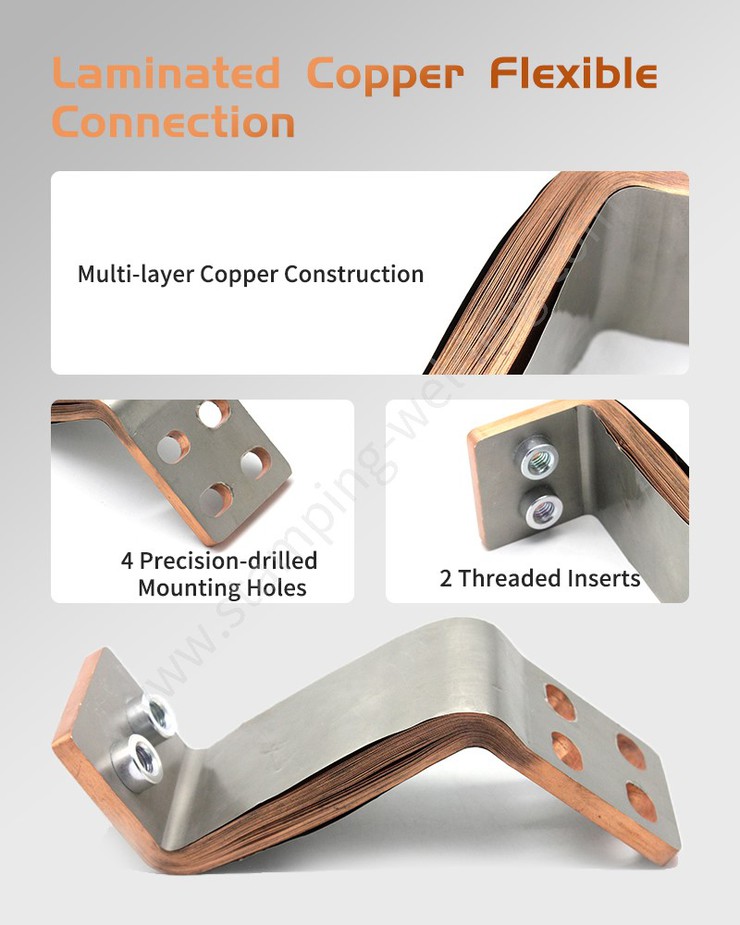
Multilayer copper foil flexible busbars are a type of electrical connection component that uses copper foil as the conductive core and is coated with highly flexible insulation material on the outer layer. The overall structure consists of two parts: a conductor and an insulation layer. The conductor is made of T2 copper thin copper sheet, with a conventional thickness of about 1mm and a width covering the range of 16mm to 100mm, which can meet different current levels and installation space requirements; The insulation layer is made of high flexibility materials such as special PVC and TPE thermoplastic elastomers, with a thickness controlled between 1.8-2.1mm, providing stable protection and flexible support for the conductor.
Core usage characteristics
Flexible copper busbars have multiple outstanding performance advantages in practical applications. The copper conductor inside the product can slide relatively and has excellent bending and twisting capabilities. It can be formed into any spatial structure by hand or with the help of simple tools, greatly reducing the difficulty of installation and wiring. At the same time, the Flexible copper laminated busbar protrudes flexibly in the thickness direction, making it easy to bend, while maintaining high rigidity in the width direction, balancing high current carrying capacity and equipment installation adaptability. Some models use halogen-free low smoke flame-retardant insulation materials, which have good fire resistance and can improve the safety of electrical system operation.
The application advantages of T2 copper in electrical connection products
T2 copper is the mainstream substrate for electrical connection components, with a copper purity of over 99.95%, belonging to high-purity industrial pure copper. The most prominent feature of this material is its excellent electrical conductivity, with a conductivity of up to 98% IACS, and stable performance in both conductive and thermal scenarios. At the same time, the Automotive copper busbar has good corrosion resistance and can adapt to most conventional working environments. In terms of physical properties, T2 copper has a density of 8.96g/cm ³ and a melting point of about 1083 ℃. It has suitable strength and durability, and can meet the requirements of applications in fields such as automobiles and rail transit.
T2 Copper Processing Performance and Industry Applications
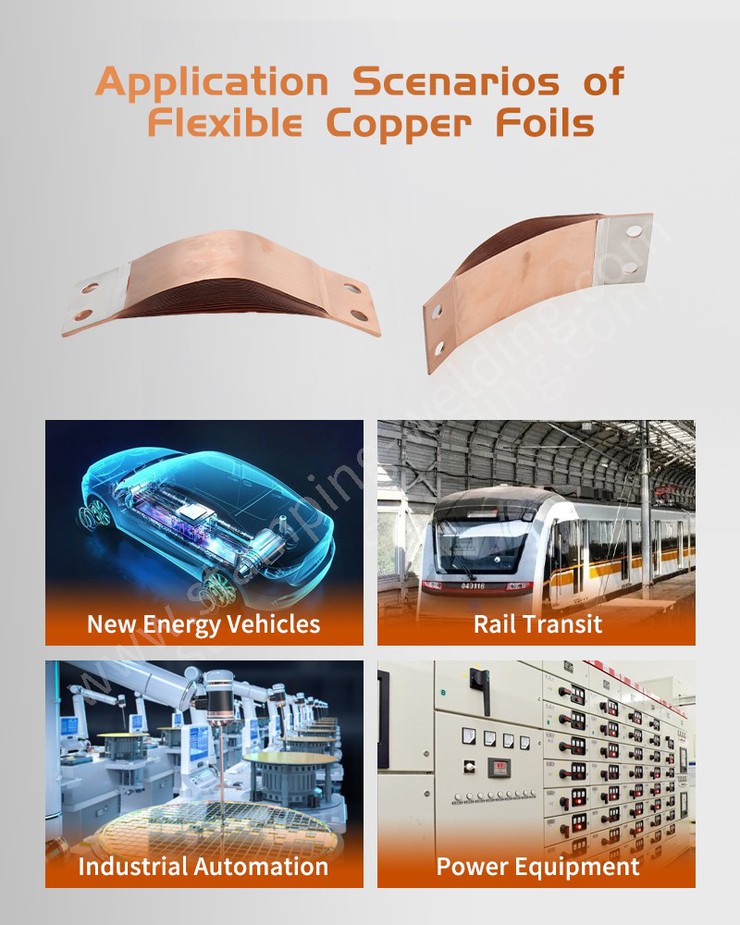
T2 copper has good plasticity and ductility, suitable for cold deformation processing and welding forming, and is an ideal material for making flexible conductive components. Thanks to its excellent elasticity, stretchability, and surface smoothness, T2 copper is commonly used in the production of Press-welded flexible copper connections and is widely used for connecting wires in electrical devices, switchgear, electric furnaces, batteries, and other equipment. Although this material cannot be strengthened by heat treatment and is prone to hydrogen sickness in high-temperature reducing atmospheres, it is not suitable for processing and use in high-temperature environments. However, its comprehensive performance still makes it a core raw material for flexible conductive products such as insulated soft busbars and copper braided wires.
contact us
If you have customization, procurement, and technical consulting needs for Flexible copper busbars, please feel free to contact us at any time. We will provide you with professional solution support and accurate quotations, and efficiently coordinate various engineering project cooperation.