Detailed explanation of basic knowledge of Industrial electrical cabinet
Apr 01, 2026
Definition and core functions of Industrial electrical cabinet
Access control cabinets are an important component of complete power distribution equipment, characterized by small size, light weight, compact structure, and convenient installation and use. They are widely used in power plants, substations, power departments of industrial and mining enterprises, and other power users, mainly responsible for the reception and distribution of electrical energy.
From a definition perspective, it is a combination of one or more low-voltage switchgear devices, as well as their corresponding control, measurement, signal, protection, regulation, and other equipment. The manufacturer completes all internal electrical and mechanical connections, and the components are fully assembled through structural components. The core functions of a Climate controlled cabinet include energy distribution and conversion, motor control, reactive power compensation, while also protecting personal safety, preventing direct and indirect electric shock, protecting equipment from external environmental influences, and ensuring stable operation of the power system.
Core Standards and Classification
The production, design, and use of Industrial electrical cabinets must comply with three core standards, namely GB7251.1 "Low voltage switchgear and control equipment" Part 1, IEC60439.1 "Low voltage switchgear and control equipment" Part 1, and GB/T15576-2008 "Low voltage reactive power compensation devices", to ensure equipment compliance and safety.
Control panel ac units can be divided into three categories based on their use: power supply cabinets (PC) for distribution, motor control cabinets (MCC) for control, and reactive power compensation cabinets (capacitor cabinets) for compensation; According to their structure, they can be divided into fixed, movable (fixed partition), and withdrawable types. Among them, movable and withdrawable types can be safely connected or disconnected when the main circuit is live, with stronger flexibility.
Structural composition and technical parameters
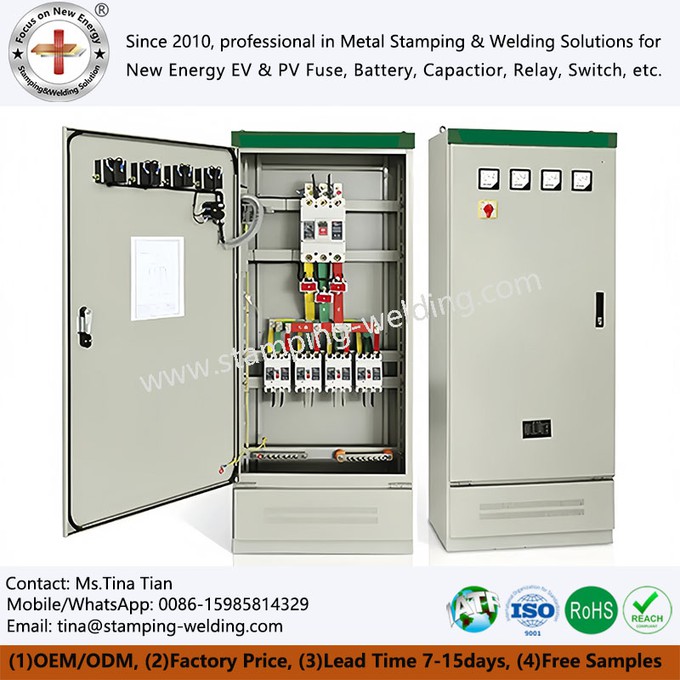
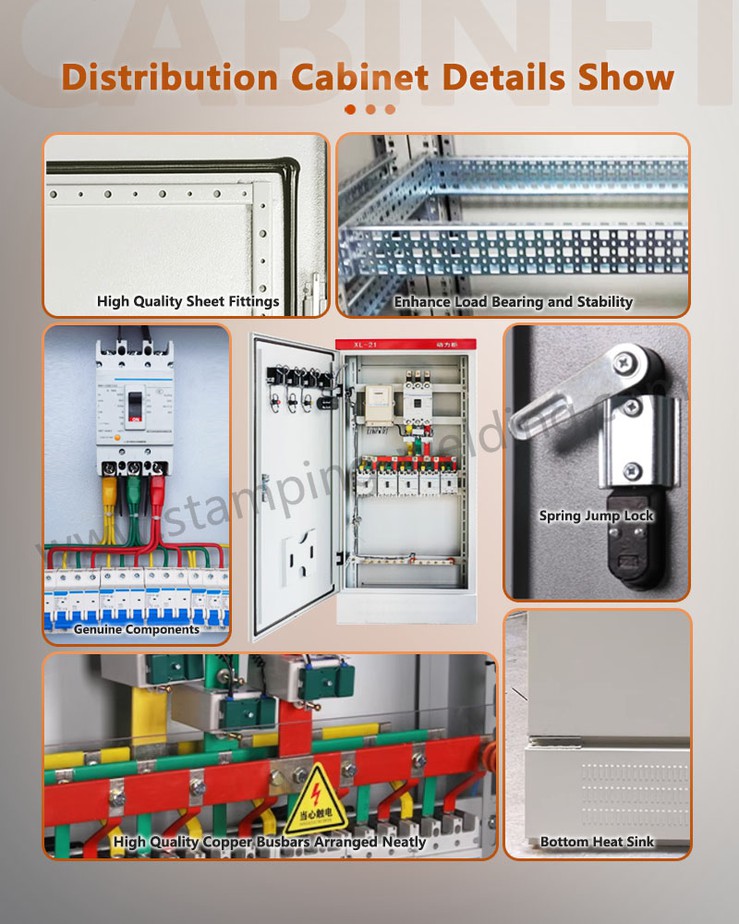
The basic structure of an Electrical control cabinet is mainly divided into compartments. To ensure personal and equipment safety, it is usually divided into busbar rooms, functional unit rooms (switch compartments), cable outlet rooms, and secondary equipment rooms. Its main components include the cabinet, busbar, and functional units. The cabinet serves as the shell skeleton and is responsible for installation and support.
Busbars are divided into main busbars (horizontal busbars) and distribution busbars (vertical busbars), which are the core carriers of electrical energy transmission. They need to meet core requirements such as rated current and short-time withstand current, and some will undergo surface treatments such as silver plating and tin plating; The functional unit of an Industrial control cabinet is a combination of electrical equipment and mechanical components that perform the same function, including incoming and outgoing units. The core technical parameters include rated current, rated voltage/insulation voltage, incoming and outgoing line methods, rated short-time withstand current, enclosure protection level, installation location and method, external dimensions, grounding system, etc., which need to be reasonably matched according to on-site requirements.
Requirements for installation and appearance of Low voltage distribution cabinet
The installation of Traffic control cabinet needs to be planned reasonably based on the installation location and method. The installation location is divided into indoor and outdoor areas, and the installation methods include wall mounted and off wall installation. The fixing method can be bolted or welded. The entry and exit methods are flexible and diverse. The entry line can be an upper entry line, a lower entry line, a side entry line, or a rear entry line. The exit line can be a front exit line (top or bottom, reliable wall installation) or a rear exit line (top or bottom, unreliable wall installation). In terms of appearance, each Optical distribution cabinet has standard recommended colors and can also be customized according to needs. The surface treatment mainly adopts spray painting or epoxy resin electrostatic powder spraying, which not only ensures aesthetics but also improves protective performance.
contact us
If you have any questions or inquiries regarding Industrial electrical cabinet selection, installation specifications, or technical consultation, please feel free to contact us at any time. We will combine our professional experience to provide you with targeted solutions to help ensure the safe and stable operation of your power system.