How to scientifically select Nickel Plated Copper Flat BusBar: A comprehensive guide from electrical parameters to environmental compatibility
May 02, 2026
With the increasing demands for reliability in connection components from new energy vehicles, energy storage systems, and high-voltage power distribution equipment, Nickel Plated Copper Flat BusBar are attracting widespread attention in the industry due to their excellent conductivity, wear resistance, and high-temperature resistance. How to correctly select suitable nickel-plated copper flat busbars in practical engineering projects? Industry experts have provided systematic recommendations from four dimensions: electrical parameters, mechanical structure, environmental adaptability, and plating process.
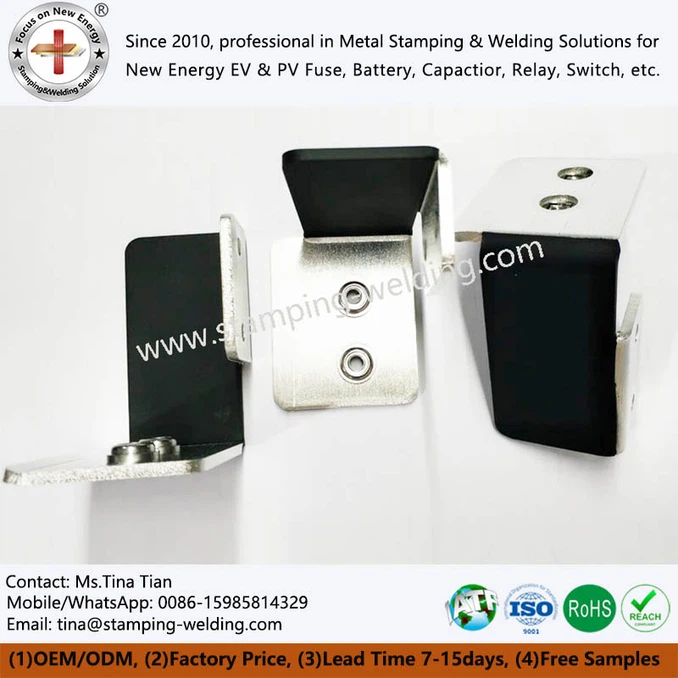
Busbar specifications are determined based on electrical parameters
The first step in selecting a busbar is to define the load current and temperature rise requirements. The cross-sectional area (width × thickness) of the bar is determined based on the system's maximum long-term operating current; the larger the current, the larger the required cross-sectional area. Simultaneously, it's necessary to verify whether the surface temperature rise of the bar under rated load meets the insulation class limitations. Generally, for the same width, a thicker bar has lower DC resistance and better heat dissipation. Furthermore, the system voltage level determines the minimum safe distance between bars and the insulation design. In this process, the application of Nickel Plated Copper Bars must prioritize a balance between current carrying capacity and thermal stability.
Choose rigid or flexible structure based on mechanical properties
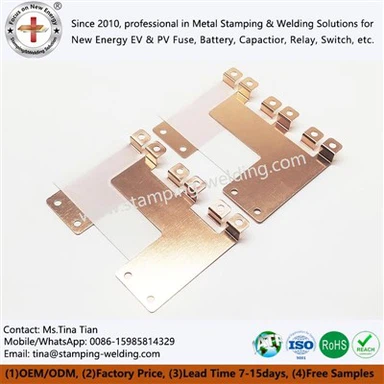
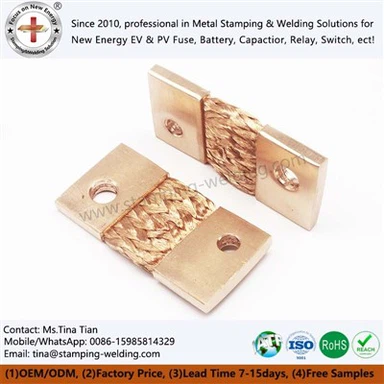
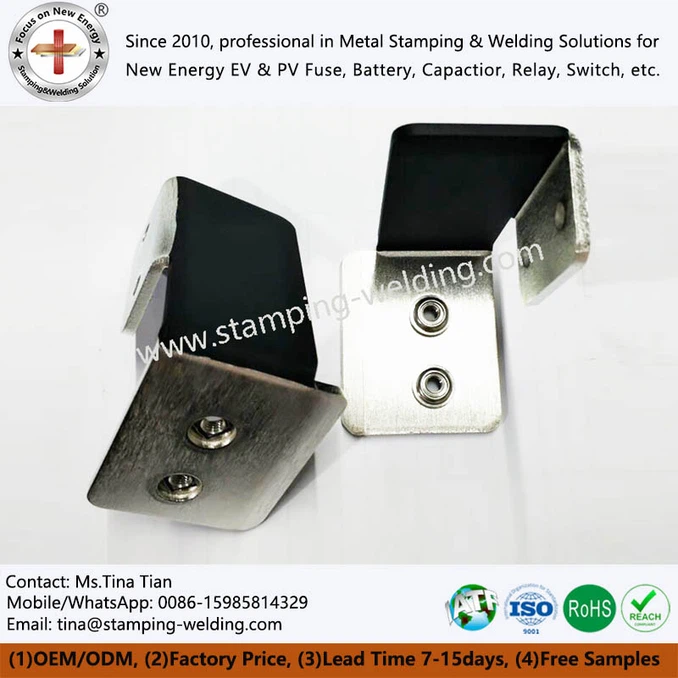
Busbars can be categorized into rigid and flexible bars for different applications. Rigid bars are suitable for fixed installation environments with stable structures and high power distribution; while flexible bars are made of multiple layers of ultra-thin copper foil, which can absorb assembly tolerances through bending, making them particularly suitable for applications with frequent vibrations, such as electric vehicle battery packs, or where relatively moving parts need to be connected. Furthermore, a flat design (e.g., 60mm × 8mm) facilitates heat dissipation and saves space; when selecting a model, the dimensions of the punching and tapping interfaces at the joints must be clearly defined. Regardless of whether the structure is rigid or flexible, the Nickel Plated Copper Flat Bus Bar must ensure that the plating does not crack or peel off during the bending process.
Focus on the environmental adaptability advantages of nickel plating
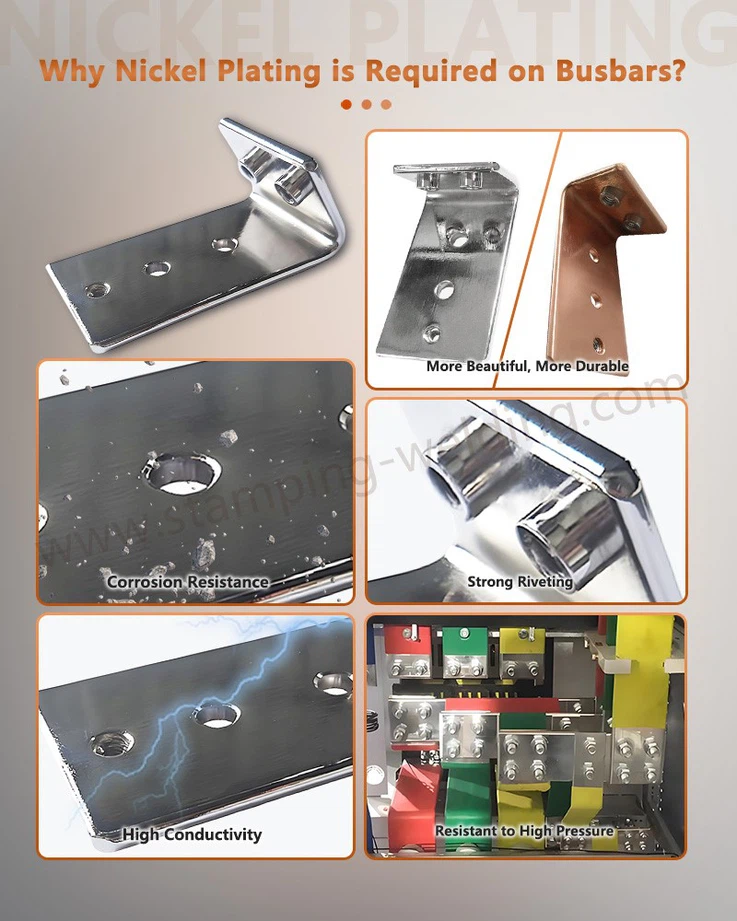
Compared to tin plating, nickel plating offers higher hardness, superior wear resistance, and resistance to high-temperature oxidation, making it particularly suitable for high-reliability, frequent connection, or high-temperature operating environments. Although nickel has lower conductivity than pure copper, a thin, dense nickel layer effectively protects the copper substrate from oxidation, thus maintaining low contact resistance over the long term. When the system operates at high temperatures or in the presence of corrosive gases, choosing nickel-plated copper bars can significantly extend their service life. The industry-recommended Standard Nickel Plating Flat Busbar process should control the uniformity of plating thickness and adhesion to ensure durability in humid or salt spray environments.
The purity of raw materials and processing performance cannot be ignored
The substrate should be made of high-purity conductive copper (such as C11000 or T2 copper) to ensure low resistivity. For busbars requiring complex three-dimensional bending, their processing performance should be tested to prevent cracking of the plating due to excessive deformation. Some high-end applications also require Flat Bar Red Pure Copper Nickel Plating, which combines a red copper substrate with a pure nickel plating, addressing both conductivity and protection requirements.
summary
In conclusion, the selection of Nickel Plated Copper Flat BusBar is not determined by a single parameter, but rather by a comprehensive consideration of current-carrying capacity, temperature rise control, mechanical strength, installation space, and environmental corrosion levels. As high-voltage electrical systems develop towards higher power density and higher reliability, scientific selection will become a crucial link in ensuring the safety and long-term stable operation of the entire system.
Contact Us
If you encounter any difficulties in selecting or customizing Nickel Plated Copper Flat BusBar, please feel free to contact us for professional advice.