Performance and production process analysis of Carbon steel sheet metal stamping parts
Mar 26, 2026
Core advantages and application characteristics of Carbon steel sheet metal stamping parts
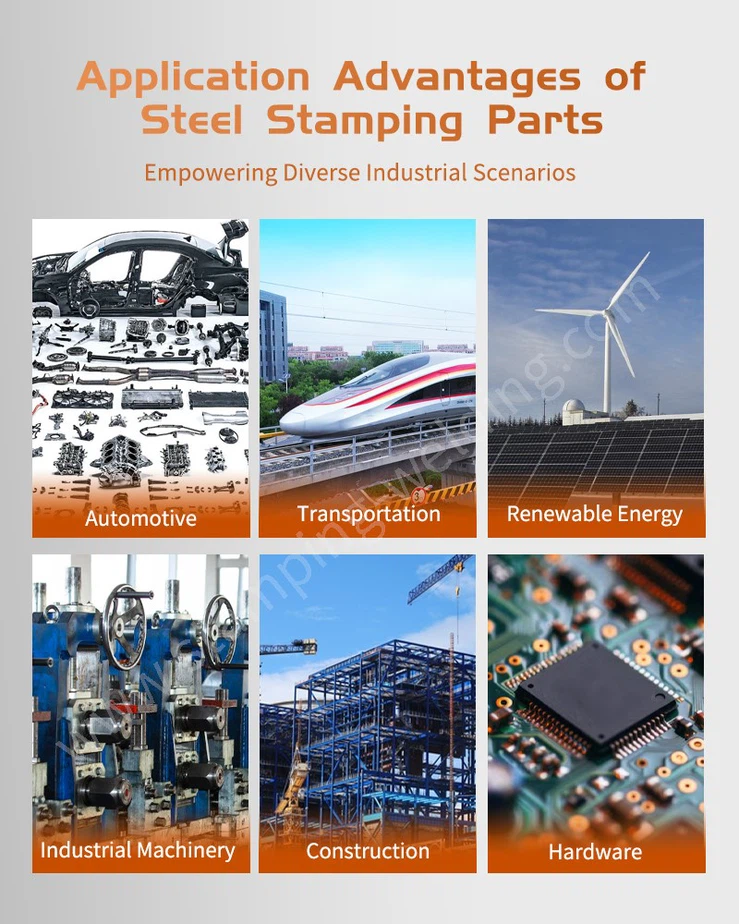
Precision metal stamping is widely used in modern manufacturing due to its advantages of efficient molding and good dimensional consistency. By relying on specialized molds, complex structures can be quickly processed in bulk, while also having high material utilization and suitability for large-scale continuous production. It is a core process solution in the manufacturing of automotive bodies, home appliance casings, electronic structural components, and other products, and can achieve efficient production while ensuring accuracy.
Applicable scenarios and process limitations
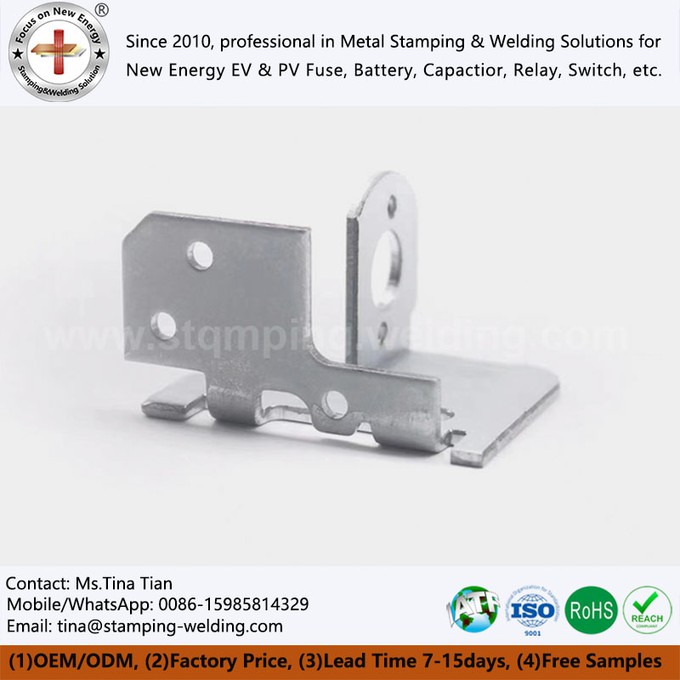
Carbon steel sheet metal stamping parts are mainly used in industries such as automotive, electronics, and home appliances that have comprehensive requirements for lightweight and strength. They are suitable for various needs ranging from precision small parts to large covering parts. However, this process also has certain limitations, as it is sensitive to the thickness and hardness of the sheet metal. Materials that are too thick or too hard can exacerbate mold wear and even make it difficult to form smoothly; Some workpieces with complex structures require multiple stamping processes or subsequent machining to meet the final requirements.
Common quality issues and optimization directions
During the production process, Custom metal stamping parts are prone to issues such as cracking, wrinkling, and dimensional deviations, which are often directly related to material selection, mold structure, and process parameter settings. To address such issues, cracking can be reduced by selecting raw materials with better ductility, avoiding wrinkling by adjusting the edge pressure reasonably, and optimizing the mold structure and stamping lubrication method, which can significantly improve molding stability and product qualification rate.
Causes and control improvement measures of springback in bent parts
Steel welding stamped part bends often have shape and size deviations, mainly caused by material rebound and positioning deviations. During bending, the inner and outer sides of the material are subjected to tension and compression respectively. After unloading, the direction of elastic recovery is opposite, resulting in significant rebound. Especially when the width of the workpiece is greater than three times the thickness of the material, it is also prone to bow bending along the bending line.
In actual Metal stamping techniques production, effective suppression of springback and improvement of bending accuracy can be achieved by setting reinforcement ribs, selecting materials with appropriate mechanical properties, adopting correction bending processes, optimizing mold gaps and structural shapes, conducting annealing treatment, and increasing correction pressure.
Contact us
Scientifically controlling the performance of stamping parts and the key points of production processes can effectively improve product quality and production stability. Our company can provide customized processing and process optimization services for various Carbon steel sheet metal stamping parts. We welcome inquiries and cooperation based on drawings and samples.